Lettuce
Lactuca sativa
The Gardening Year
Best months in UK gardens · full planting calendar →
🖨 Printable care card (PDF)At a Glance
| Botanical name | Lactuca sativa |
|---|---|
| Common name(s) | lettuce |
| Family | Asteraceae |
| Plant type | annual (Generally grown as a hardy annual; lives 65–130 days from planting to harvesting.) |
| Height × Spread | 15–30 cm × 15–30 cm |
| Position | Partial shade |
| Soil | moist, well-drained soil with plenty of organic matter |
| Flowering | June–August |
| Toxicity | No specific toxicity is listed by the RHS. This is not a guarantee of safety — check with a vet or the ASPCA before pets or children eat any plant. |
| Native range | Mediterranean to Siberia |
Overview
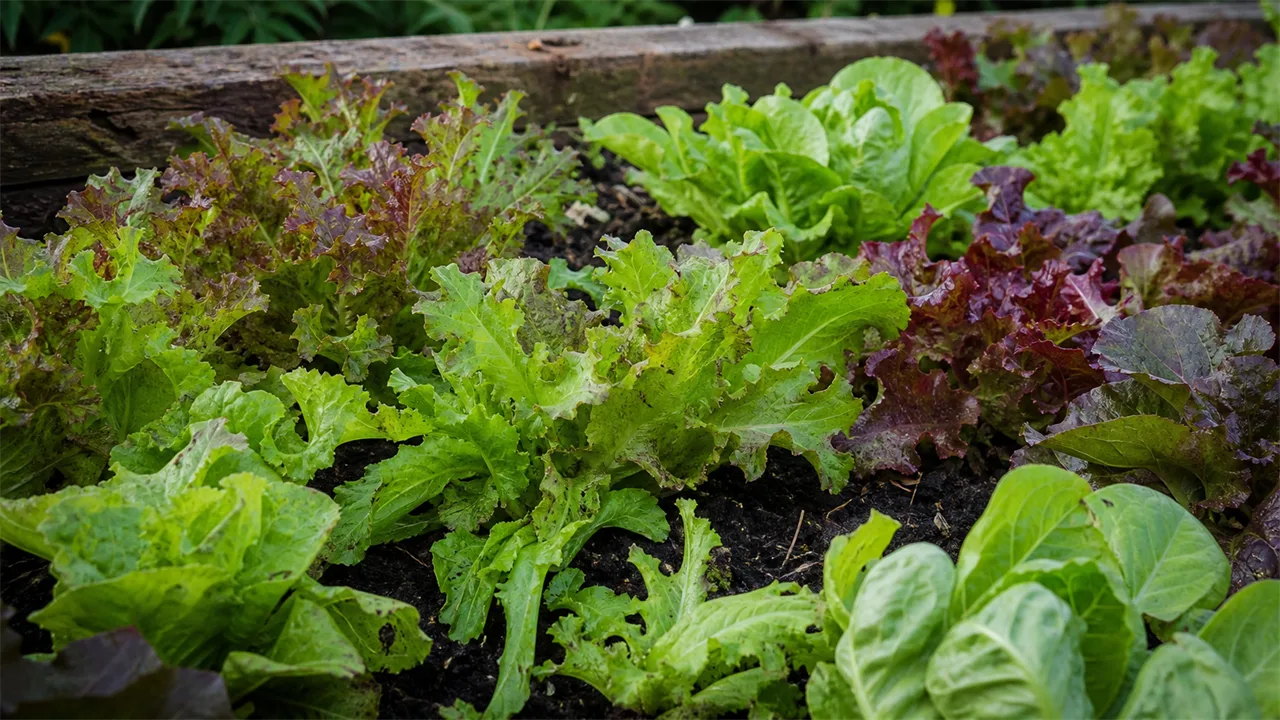
Lettuce (Lactuca sativa) is the UK's most-grown salad leaf — an annual cultivated crop in the daisy family (Asteraceae), descended from wild lettuce (Lactuca serriola) but bred over centuries into the loose-leaf, butterhead, cos/romaine, and crisphead forms we eat today. It is one of the fastest crops a UK gardener can produce: cut-and-come-again leaves are ready in as little as four weeks from sowing, and full heads in roughly eight to twelve. That speed, plus a tolerance of cool weather, makes lettuce the workhorse of the early-spring and autumn kitchen garden and a reliable gap-filler between slower crops.
It is worth growing at home rather than buying because supermarket heads lose sweetness quickly after cutting and the variety on offer is narrow. A single packet of seed gives successive sowings from spring into autumn, a far better flavour than the bagged commodity trade, and — grown under cover in winter — fresh leaves through to the new year.
Sowing
Lettuce is a cool-season crop that bolts (runs to flower and turns bitter) in midsummer heat and long days, so the UK growing calendar is built around avoiding the worst of that heat. Sow little and often rather than once in bulk.
UK region-aware sowing windows:
- Mild south-west and south coast (Cornwall, Devon, Dorset, Hampshire, the Channel Islands): outdoor sowing can begin under cloches or fleece from late February, with the main outdoor run from mid-March to early August. Winter lettuce (hardy varieties such as 'Winter Density' and 'Arctic King') is sown in September and early October for harvesting the following February to April.
- South-east, central and eastern England, the Midlands: outdoor sowing from mid-March, with the last useful sowing around late July. Winter types sown late August to mid-September.
- Wales, the North of England, the Midlands uplands, Northern Ireland: outdoor sowing from late March or early April, ending by mid-July. Winter-hardy sowings in late August.
- Scotland, the far north, and exposed upland sites: reliable outdoor sowing from mid-April to early July. For most Scottish growers, winter lettuce means an unheated greenhouse or polytunnel sowing in late August to early September — outdoor overwintering is a gamble above the Highlands line.
Indoor sowings for an earlier start are worth doing everywhere: sow in modules or seed trays at 13–18 °C from late January (with heat) or February (unheated but covered) for transplanting out under cloches from late March. A second indoor sowing in late summer (late July to mid-August) carries the crop into autumn and early winter under cover.
How to sow:
- Direct sow into a prepared, raked seedbed in short drills 1 cm deep and 15–20 cm apart for cut-and-come-again leaves, or 30 cm apart for headed types. Thin seedlings in stages to the final spacing for the variety.
- For modules, sow two or three seeds per cell, thin to one, and transplant at three to four true leaves — handle by the leaves, not the stem, as the stem is brittle.
- Germination needs light and a soil temperature of at least 7 °C; below that, sow indoors. In high summer, shade newly-sown drills with fleece or scaffold netting — temperatures above 25 °C drive dormancy and germination fails.
Recommended cultivars for UK growers (inline, not an ornamental table):
- Loose-leaf (fastest, cut-and-come-again): 'Salad Bowl', 'Lollo Rossa', 'Red Salad Bowl', 'Fristina'.
- Butterhead: 'All The Year Round' (the reliable standby), 'Buttercrunch'.
- Cos / Romaine: 'Little Gem' (compact, sweet, the UK's most-grown cos), 'Lobjoit's Green Cos', 'Romaine Ballon'.
- Crisphead: 'Webb's Wonderful' (the classic UK crisphead), 'Iceberg 4'.
- Winter-hardy: 'Winter Density' (a cos–butterhead cross, the winter workhorse), 'Arctic King', 'Valdor'.
Growing
Lettuce is shallow-rooted and quick-growing, so the whole season is about keeping the top few centimetres of soil moist, weed-free, and fed enough to support steady leaf growth without forcing the plant into premature bolting.
Soil and bed preparation. Lettuce wants a fertile, moisture-retentive but free-draining soil with a pH around 6.5–7.0. A bed manured for the previous crop is ideal; for lettuce itself, dig in well-rotted compost in late winter and rake to a fine tilth a week or two before sowing. Fresh manure or excess nitrogen produces lush soft growth that bolts easily and attracts slugs.
Watering. The single biggest cause of bolting and bitterness in UK lettuce is drought stress. In dry spells — increasingly common from late May through July — give a deep soak every three to five days rather than a daily sprinkle, aiming the can at the soil rather than the leaves to reduce rot. A 5–7 cm mulch of garden compost or chopped straw between plants cuts evaporation sharply and suppresses weeds.
Feeding. On reasonably fertile ground, additional feeding is rarely needed. On light or hungry soils, a single liquid feed with a balanced organic fertiliser (e.g. seaweed or comfrey tea) about three weeks after sowing will keep growth steady. Stop feeding once heads start to form — excess nitrogen at that stage makes the leaves coarse and bitter.
Thinning and spacing. Thin direct-sown seedlings in two passes: first to 5–7 cm once they have two true leaves (the thinnings go straight to the salad bowl), then to the final spacing once they begin to crowd. Final spacings: loose-leaf 15–20 cm, butterhead 25 cm, cos 30 cm, crisphead 30–35 cm. Crowded plants bolt earlier and are more prone to grey mould and botrytis.
Weeding. Because lettuce is shallow-rooted, hoe gently and shallowly — no deeper than 2 cm — and hand-pull anything closer to the stem. A thick mulch does most of the work from late spring on.
Pests and diseases.
- Slugs and snails are the main enemy, especially in damp spells and on clay soils. Ferric phosphate pellets, beer traps, night-time hand-picking, and keeping the bed tidy of debris are the standard UK organic controls.
- Aphids (root aphid and lettuce aphid) cluster on the heart and underside of leaves; rub off small infestations, or use a fatty-acid spray if heavy.
- Rabbits and pigeons will graze young plants — net to 2 cm mesh where needed.
- Grey mould (Botrytis) and downy mildew show in damp, poorly-ventilated stands. Avoid overhead watering, give the right final spacing, and remove infected leaves promptly. Resistant varieties exist for downy mildew (look for the resistance codes on seed packets — e.g. 'Lettuce Downy Mildew' races 1–32).
Successional sowing. For a continuous supply, sow a short row every two to three weeks from the start of your season to about six weeks before the last sowing date for your region. In hot midsummer, switch to heat-tolerant types such as 'Fristina' or 'Jericho', or pause sowings and resume from late July.
Harvesting
UK harvesting runs from late April / early May (overwintered and earliest cloche crops) through to late October, and under cover or with hardy varieties right through to March or April of the following year.
Cut-and-come-again leaves are ready roughly four to six weeks after sowing. Pick the outer leaves once they are 8–10 cm long, leaving the central growing point intact — a single sowing gives three or four cuts over six to eight weeks before the plants tire.
Heads (butterhead, cos, crisphead) are ready eight to twelve weeks after sowing, when the heart is firm and the head has filled out but before it has started to elongate or push up at the centre — that elongation is the first sign of imminent bolting. A gentle squeeze at the base tells you: a solid, packed heart is ready; a soft one needs another week.
How to harvest. Cut whole heads in the early morning while the leaves are turgid and cool — that is when the sugars are at their highest. Slice through the stem 2 cm above the soil with a sharp knife; cut-and-come-again types will often reshoot from the stump for a second, smaller harvest. Lift the stump to the compost heap once it has finished, as it will rot and attract slugs if left.
Signs of bolting (when to stop harvesting a plant): the central stem starts to elongate and push up, the leaves turn bitter and milky sap appears when cut. Pull the plant up the moment you see this — bolted lettuce is inedible.
Region-aware harvest timing summary:
- Mild south-west: outdoor harvest April to October; with winter varieties and a cold frame or polytunnel, November to March.
- South-east, central England, Midlands: outdoor May to October; overwintered under cover, March to May.
- Wales, northern England, Northern Ireland: outdoor late May to September; tunnel harvest October to April for winter sowings.
- Scotland: outdoor June to September; the main extended harvest comes from polytunnel or greenhouse sowings, October to May.
Eating
Lettuce grown in good conditions and eaten within an hour or two of cutting has a sweetness and crunch that shop-bought heads rarely match — the sugars begin converting to starch and the leaves wilt as soon as the plant is severed from its roots.
The classic UK uses are well known — a dressed Cos or Little Gem heart with a thick mayonnaise, anchovy, and parmesan (a Caesar-style wedge); a butterhead torn into a green salad with a vinaigrette; Lollo Rossa mixed with rocket and watercress for a peppery leaf salad. But home-grown lettuce is far more versatile than the salad bowl suggests:
- Wilted warm salads: shred a cos heart, dress with hot bacon fat and a splash of cider vinegar, top with a poached egg — a British take on a French salade lyonnaise.
- Stir-fried lettuce: a Cantonese home-cooking staple. Cut a cos or romaine in chunks, stir-fry for 90 seconds with garlic and ginger in a little groundnut oil, finish with a splash of soy and oyster sauce. The heat takes the edge off any slight bitterness from older outer leaves.
- Wraps and cups: large outer cos or little gem leaves make excellent low-carb wraps for spiced mince, grilled fish, or herbed rice.
- Soup: blend a buttered onion, a couple of cos hearts, stock, and a handful of soft lettuce with a small potato for body; finish with crème fraîche. A useful way to use bolted or slightly past-their-best leaves — strip out the tough central stem first.
- Smoothies: a handful of mild green leaves disappears into a fruit smoothie with no bitterness, useful for using up thinnings.
Growing at home also means access to mixed-leaf and heritage blends (red-tinged oak-leaf, freckled 'Forellenschluss', mizuna-crossed 'Saladini') that supermarkets rarely stock. Sow a mixed packet every three weeks for a cut-and-come-again leaf mix from spring to autumn — the single most cost-effective crop per square metre in the UK kitchen garden.
Pests and Diseases
| Problem | Symptoms | Management |
|---|---|---|
| Downy mildew | Yellow angular patches on upper leaf surfaces with fuzzy white mould on the underside. | Remove infected leaves promptly and choose resistant varieties for outdoor crops. |
| Slugs and snails | Irregular holes chewed in leaves and silky trails left across foliage and soil. | Use physical barriers like copper tape or apply iron phosphate pellets to control populations. |
| Grey mould (Botrytis) | Soft, watery rot covered in grey fuzzy spores, often starting at the base of the plant. | Ensure good air circulation and avoid wetting foliage when watering to reduce humidity. |
| Lettuce root aphid | Stunted growth and distorted leaves caused by small white aphids feeding on roots. | Improve soil drainage and rotate crops annually to break the pest lifecycle. |
| Bolting | Premature flowering stalks emerging from the centre, causing leaves to turn bitter. | Sow successively in short rows and use shade cloth during hot spells to delay flowering. |
For step-by-step help, read Controlling Aphids Naturally, Dealing with Slugs and Snails and Treating Powdery Mildew. Or browse the full plant problem solver to diagnose an issue by symptom.
Companion planting
✔ Grows well with: beet, bulb onion, carrot, Pea, Pot Marigold, runner bean, strawberry.
Full companion planting chart →
Lettuce in our guides
- Container Gardening for Beginners: Pots, Compost and Care
- Containers for Growing Vegetables
- How to Build and Plant Your First Raised Bed
- How to Build and Plant Your First Raised Bed
- How to Grow Cucumbers in a UK Greenhouse or Garden
- How to Grow Lettuce and Salad Leaves
Recommended Products
GardenWizz earns a commission from qualifying purchases made through affiliate links on this page (including links within the article) — as an Amazon Associate, and from Thompson & Morgan via the Awin network. This does not affect the price you pay. See our disclaimer for details.