Snapdragon
Antirrhinum majus · great snapdragon · lion's-mouth · rabbit's mouth
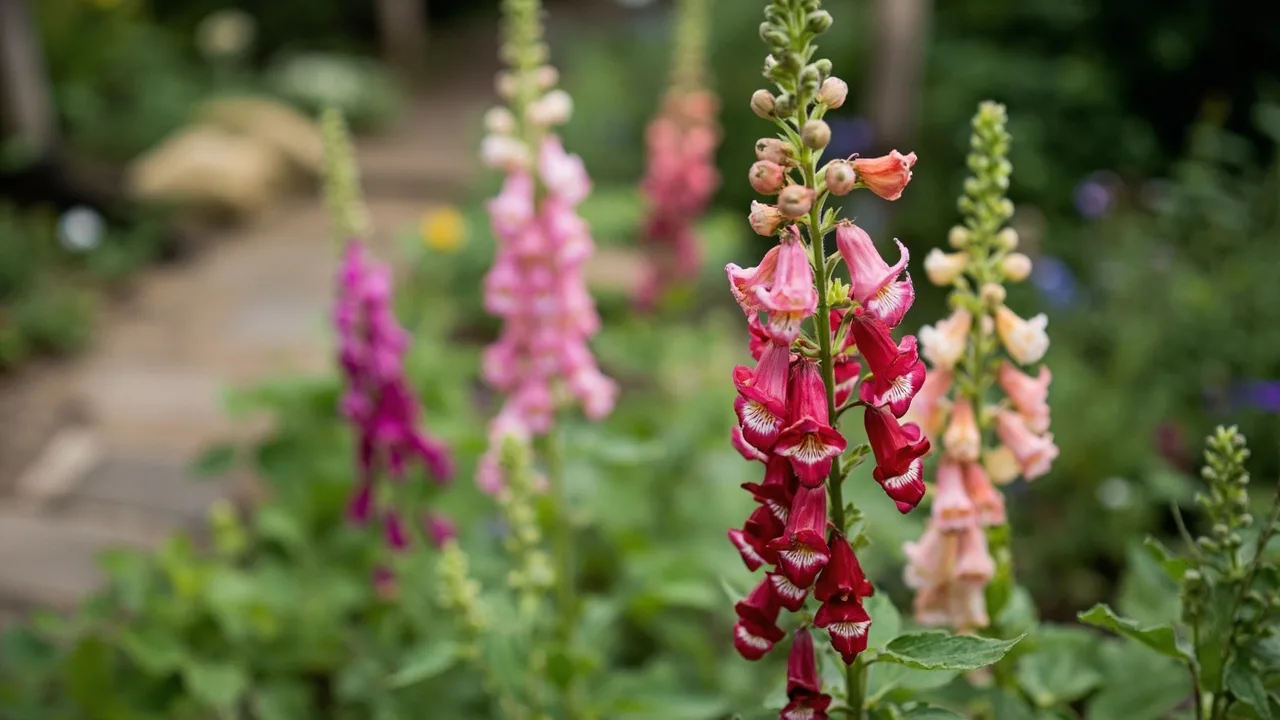
The Gardening Year
Best months in UK gardens · full planting calendar →
🖨 Printable care card (PDF)At a Glance
| Botanical name | Antirrhinum majus |
|---|---|
| Common name(s) | snapdragon, great snapdragon, lion's-mouth, rabbit's mouth |
| Family | Plantaginaceae |
| Plant type | perennial (Often cultivated as an annual plant in colder areas where it may not survive the winter.) |
| Height × Spread | 0.5–2 m × 10–50 cm |
| Position | Full sun |
| Soil | well-drained soil |
| Flowering | April–September |
| Toxicity | No specific toxicity is listed by the RHS. This is not a guarantee of safety — check with a vet or the ASPCA before pets or children eat any plant. |
| Native range | south-central France and the eastern Pyrenees to north-eastern Spain and the Balearic Islands |
The snapdragon is a short-lived perennial widely grown in UK gardens for its distinctive spurred flowers, which open like a mouth when squeezed at the sides. Native to the Mediterranean region, it is most often cultivated in Britain as a hardy annual or biennial, valued for long summer colour in borders, containers and cut-flower arrangements.
Overview
Antirrhinum majus belongs to the Plantaginaceae family and is the most widely cultivated species of a genus of around twenty. Although a perennial in its native range and in mild UK microclimates, particularly coastal or sheltered urban gardens, it is generally treated as an annual because flowering performance declines after the first year and winter losses are common on heavy or wet soils.
Snapdragons are a staple of the traditional English cottage garden, alongside plants such as Alchemilla mollis, Lupinus and Digitalis purpurea. Their tall, tapering flower spikes provide vertical structure in mixed borders and are a reliable source of cut flowers from midsummer into early autumn. The species is also widely used in children's gardens because the bilabiate flowers open responsively when gently squeezed.
In the UK, snapdragons are available as seed from most major seed merchants, as seedling trays from garden centres in spring, and as named cultivars in 9 cm or 1-litre pots throughout the growing season.
Appearance
The plant forms a clump of upright, often branching stems clothed in narrow, lance-shaped leaves arranged in opposite pairs. Leaves are typically 2–7 cm long, smooth-edged, and mid- to dark green with a slightly glossy surface. The stems are robust, sometimes woody at the base in older plants.
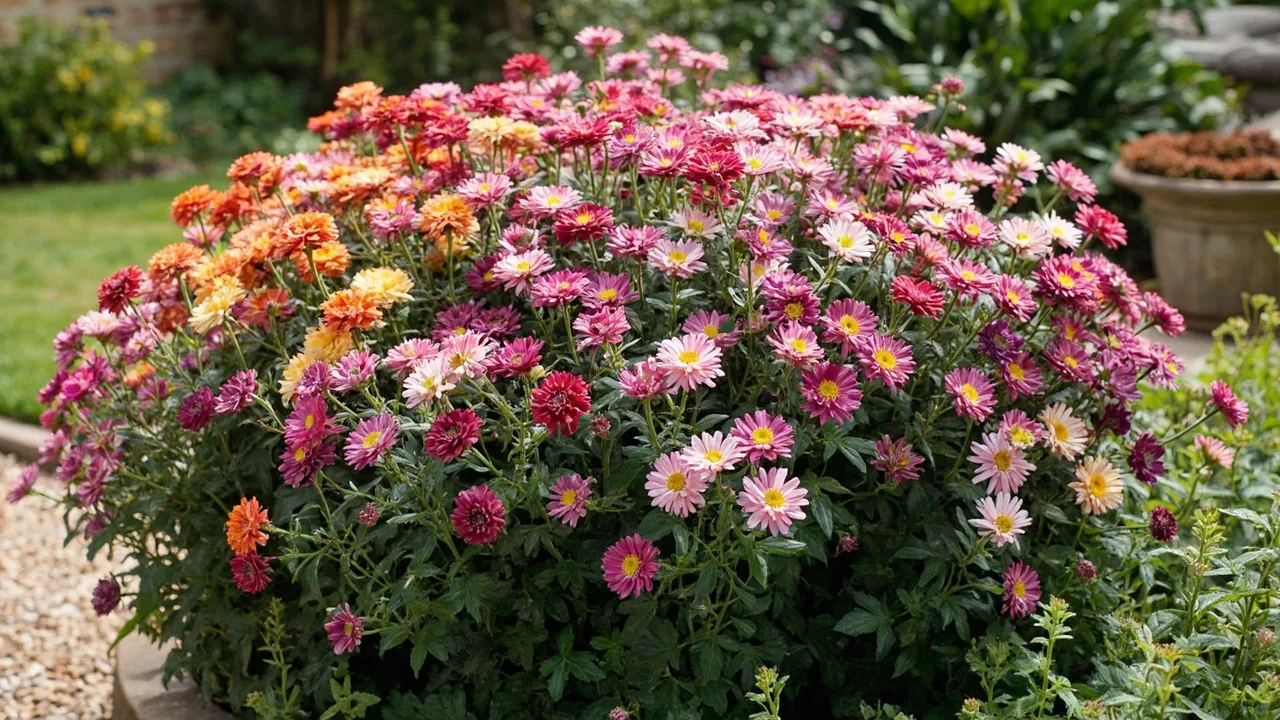
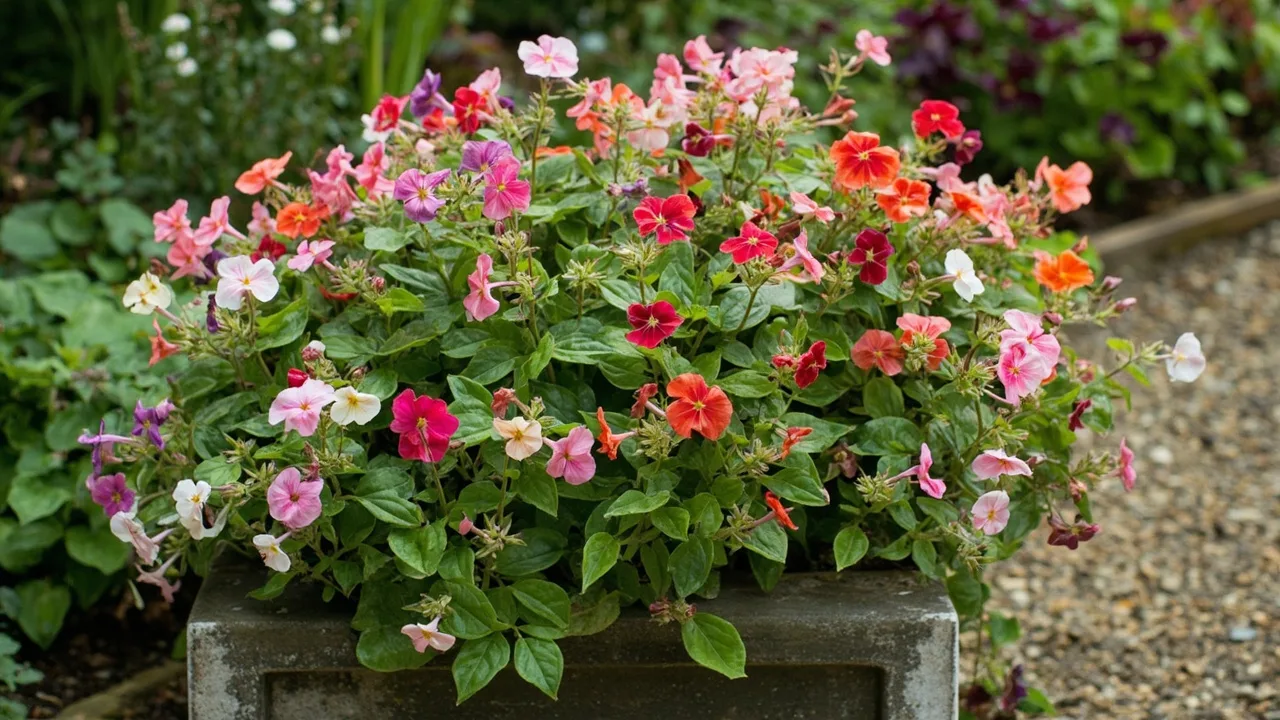
Flowers are borne in terminal racemes and are the species' most recognisable feature. Each bloom has two lips: an upper hood of two lobes and a lower lip of three lobes, with a prominent palate that closes the throat. The colour range in cultivated forms includes white, cream, yellow, orange, pink, red, and bicolors. The flowers are followed by ovoid seed capsules containing numerous small seeds.
Height and habit vary considerably by cultivar group. Tall or "cut-flower" types reach 75–90 cm, intermediate types 45–60 cm, and dwarf or "bedding" types 20–30 cm. The cultivar group system used in the UK trade roughly follows the American classification into I–IV groups, though British seed catalogues often use simpler descriptive labels.
Growing Conditions
Snapdragons prefer a position in full sun but tolerate light, dappled shade, particularly in southern England where afternoon shade can reduce stress during heatwaves. In cooler, cloudier parts of the UK such as the North East and Scotland, full sun is essential for compact, floriferous growth.
Soil should be moist but free-draining. The plants dislike waterlogged winter conditions, which lead to crown rot, but they also suffer in dry, impoverished ground. A fertile loam with reasonable organic matter is ideal. The species tolerates a soil pH from mildly acidic to mildly alkaline, roughly pH 6.0–8.0.
Hardiness in the UK is borderline. The Royal Horticultural Society assigns Antirrhinum majus the rating H3, meaning it is half-hardy and capable of withstanding temperatures down to around -5 °C in well-drained soil with protection. Some references, particularly for established or sheltered plants, give a rating of H4. In practice, most UK growers treat the plant as an annual or lift and overwinter cuttings under glass. Coastal gardens in southern and western England often succeed in overwintering plants in the open ground.
Planting and Care
Sowing and planting. Seed can be sown indoors from January to March at about 18–21 °C, with seedlings pricked out once the first true leaves appear. Harden off before planting out after the last frosts, typically late May in the south and early to mid-June further north. Direct sowing outdoors is possible in April or May once the soil has warmed. Autumn-sown plants, started in late summer and overwintered in a cold frame, flower earlier and more strongly the following year.
Watering. Water newly planted seedlings regularly until established. Mature plants prefer a steady supply of moisture; in dry summers, soak deeply once or twice a week rather than sprinkling daily. Container-grown plants need daily watering in warm weather.
Feeding. Apply a general-purpose fertiliser such as blood, fish and bone at planting, followed by a high-potash liquid feed (such as tomato feed) every two to three weeks through the flowering season to maintain strong colour and continuous blooming.
Pruning and deadheading. Regular deadheading is the single most important task for prolonging flowering. Remove spent flower spikes as soon as the last floret fades, cutting back to a healthy pair of leaves. A harder cut after the first main flush, in late July, often produces a strong second display in September. Leave a few spikes to set seed in autumn if self-sowing is desired.
Propagation. Named cultivars do not come true from seed and must be propagated by cuttings. Take 5–8 cm basal or side-shoot cuttings in late summer, remove the lower leaves, and root in a 50:50 mix of compost and perlite under a propagator lid. Overwinter rooted cuttings in a cold frame or unheated greenhouse and plant out the following spring. Seed is the usual method for mixed-colour bedding strains.
Seasonal care. In spring, watch for slug and snail damage on young growth. In summer, maintain watering and deadheading. In autumn, cut back top growth once flowering finishes, or leave seed heads for birds and self-sowing. In winter, expect losses on heavy soils; mulch crowns of overwintered plants with straw or bracken in cold districts.
Common Problems
Rust (Puccinia antirrhini) is the most widespread snapdragon disease in the UK, producing small yellowish-brown pustules on the undersides of leaves. It weakens plants and spreads quickly in damp weather. Resistant cultivars are available, and infected plants should be removed and destroyed rather than composted.
Powdery mildew appears as a white coating on leaves in dry, warm summers, especially where plants are spaced too closely or are water-stressed. Improve air circulation, water at the base, and consider mildew-resistant cultivars in known problem sites.
Botrytis (grey mould) affects plants in cool, wet conditions, particularly in greenhouses and during mild, damp winters. Remove affected material and improve ventilation.
Damping off kills seedlings at the seedling stage. Use clean trays and fresh compost, avoid overwatering, and water with a copper-based or appropriate fungicide if necessary.
Pests. Aphids, particularly the peach-potato aphid, colonise shoot tips in summer. Inspect regularly and squash small colonies or treat with a soft soap spray. Slugs and snails damage young seedlings in spring. Rabbits and deer occasionally browse snapdragons, though they are not a preferred food.
Toxicity. There is limited reliable information on the toxicity of Antirrhinum majus to humans, pets or livestock. The plant is not listed by the RHS as a plant of concern for cats or dogs, and it has no well-documented history of poisoning. As a precaution, treat it as an ornamental not intended for consumption.
Popular Varieties
UK gardeners can choose from a wide range of cultivars, traditionally grouped by height. The following are widely available in the British trade and have been grown reliably in UK conditions for many years.
- 'Madame Butterfly' — a tall double-flowered mix reaching around 70–80 cm, with azalea-shaped blooms in mixed colours. Popular for cutting and for the unusual flower form.
- 'Sonnet Mixed' — an intermediate F1 mix to about 60 cm, valued for its weather tolerance and early flowering under UK conditions.
- 'Rocket Series' — tall cultivars reaching 75–90 cm with strong, straight stems, widely used in UK cut-flower production.
- 'Liberty Classic' — a tall series (around 70–80 cm) with a broad colour range, popular for cutting and for the back of the border.
- 'Twinny' — a dwarf double type to about 30 cm, with peony-like flowers, well suited to patio containers and small gardens.
- 'Chimes' — a compact series to around 20–25 cm, frequently used for edging and bedding schemes.
Rust-resistant cultivars, including selections from the 'Rust Resistant' mixes and the F1 'Admiral' series, are particularly useful in gardens with a history of snapdragon rust.
Cultivars and Varieties
| Cultivar | Height | Flower | Notes | AGM |
|---|---|---|---|---|
| 'Floral Showers Deep Bronze' | — | — | Gained the Royal Horticultural Society's Award of Garden Merit. | |
| 'Liberty Classic Light Pink' | — | — | RHS AGM (H3) | ✓ |
| 'Montego Pink' | — | — | Gained the Royal Horticultural Society's Award of Garden Merit. |
Pests and Diseases
| Problem | Symptoms | Management |
|---|---|---|
| Aphids | Target and consume terminal growth and underside of leaves, causing a darkened or spotted appearance on the leaves. | — |
| Frankliniella occidentalis | Causes small lesions in shoots and flower buds, removes pollen from anther. | Managed with predatory mite Neoseiulus. |
| Anthracnose | Targets leaves and stem causing yellow with a brownish border to the infected spot. | Destroy infected plants and space existing ones farther apart. |
| Botrytis | Causes wilting of flower spikes, light browning of stem below cluster of flowers, quick localized drying and browning in flower, leaves, and shoots. | Cut off infected stock and clear surrounding area. |
| Pythium | Causes wilting if plant is receiving adequate water. | — |
| Rust | Light-green circles on stem or underside of leaves that turn brown and form pustules, causes premature blooming, smaller flowers, and earlier decomposition. | — |
| Stem rot | Cottony growth on stem near soil, suggests destroying infected plant. | — |
For step-by-step help, read Controlling Aphids Naturally. Or browse the full plant problem solver to diagnose an issue by symptom.
Snapdragon in our guides
Recommended Products
GardenWizz earns a commission from qualifying purchases made through affiliate links on this page (including links within the article) — as an Amazon Associate, and from Thompson & Morgan via the Awin network. This does not affect the price you pay. See our disclaimer for details.