ladyslippers
Cypripedium boots
The Gardening Year
Best months in UK gardens · full planting calendar →
🖨 Print-friendly care cardAt a Glance
| Botanical name | Cypripedium boots |
|---|---|
| Common name(s) | ladyslippers |
| Family | Orchidaceae |
| Plant type | perennial |
| Height × Spread | 15–60 cm |
| Position | Partial shade |
| Soil | leaf-mould rich, moist, free-draining |
| Toxicity | Not yet established. Do not assume this plant is safe for people or pets. |
| Native range | — |
Overview
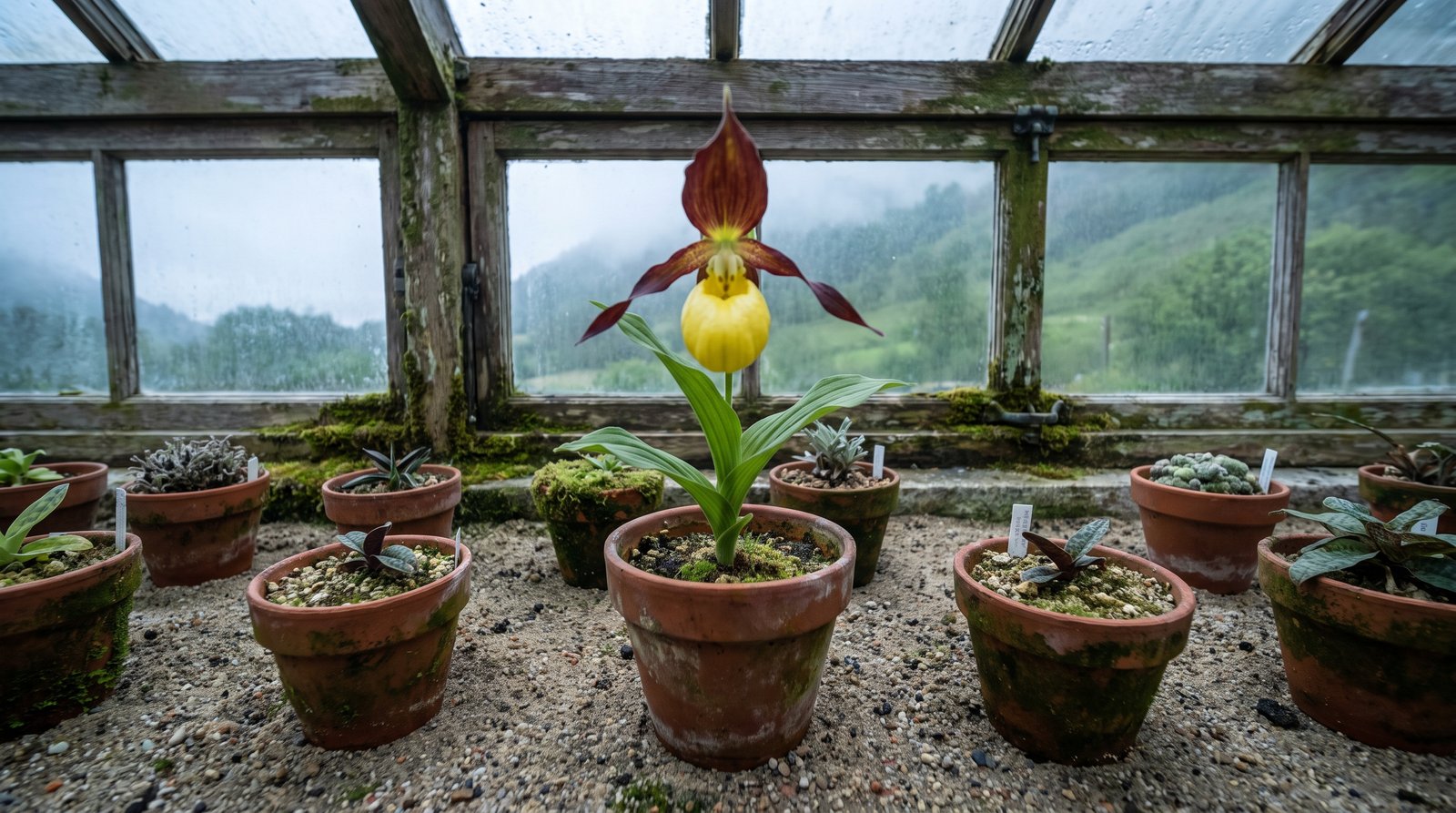
Cypripedium hybrids are terrestrial orchids that emerge from a dormant underground rhizome each spring, leaf up, flower in late spring, and then die back for a summer rest. Their flowers have the distinctive pouch-like labellum that gives slipper orchids their common name, often paired with contrasting sepals and twisting lateral petals. They are not comparable with tender houseplant orchids such as Phalaenopsis: hardy Cypripedium hybrids need a pronounced winter dormancy, cool roots and a growing medium that stays evenly moist without becoming waterlogged.
In the UK, success depends more on soil structure and summer moisture than on feeding or coddling. A cool, sheltered site beneath light deciduous shade is usually more suitable than an exposed, dry border or a hot patio container. Morning sun or gently filtered light helps flowering, while dense, dry shade can reduce vigour. Treat them as specialist woodland perennials and place them where their shallow root zone will not be forked, hoed or trampled.
The word "boots" describes the presentation at point of sale. It does not mean that the orchid should be grown permanently inside the novelty container. The planting instructions below are therefore essential horticultural guidance, not optional decoration advice. Forgetting to remove the boot is the single most common reason Cypripedium boots fail in their first season.
Appearance
The pleated, prominently veined leaves are arranged alternately along upright stems, forming a fresh green clump in spring. Each leaf is broad, slightly folded and held at a gentle outward angle, giving the plant a substantial, lush appearance before the flowers open. Stems commonly reach 25–60 cm depending on the hybrid, with vigorous garden forms on the taller end of that range.
Flowers are carried singly or in small numbers near the top of each stem. The inflated slipper-shaped pouch may be yellow, white, pink, burgundy or marked with spots, stripes or deeper veining. Narrow lateral petals and a dorsal sepal extend around it, sometimes twisting slightly and giving the bloom a more elaborate silhouette. Flowering is generally from late May into June in Britain, with the exact window influenced by spring weather and the hybrid's parentage.
After flowering, the foliage continues to manufacture energy for the rhizome. It should remain intact while it is green and healthy. The above-ground growth naturally yellows and collapses later in the season, leaving the plant fully dormant until the following spring. A well-established clump can gradually produce several flowering stems, but newly planted orchids often need two or three seasons to settle before flowering reliably.
Growing Conditions
Choose light or dappled shade, ideally beneath deciduous trees or alongside shrubs that do not create dense, dry root competition. A site with gentle morning light and protection from strong afternoon sun can work well. Avoid places that bake against a south-facing wall, sit in standing winter water, or are frequently walked over and compacted.
The soil should be open and well aerated, yet capable of holding steady moisture through late spring and summer. Incorporate leaf mould or well-rotted, lignin-rich organic matter into poor mineral soil, but do not create a rich, airless pocket of standard potting compost. Coarse grit, fine bark and other durable mineral components improve drainage and reduce compaction. Heavy clay is unsuitable unless it is substantially redesigned as a raised, free-draining woodland bed.
Many Cypripedium hybrids prefer neutral to alkaline conditions. Test the soil before applying lime, since an unnecessary alteration can damage surrounding plants. Where native soil is strongly acidic, a dedicated raised bed or large container using an appropriate specialist medium is often more reliable than repeated amendments. The essential qualities are stable moisture, good drainage and abundant air around the rhizome.
Regular summer moisture is particularly important while stems and leaves are developing. Water at the base during prolonged dry spells, preferably with rainwater, and mulch lightly with leaf mould. Keep mulch away from emerging shoots and avoid burying the rhizome. Good air movement helps foliage dry after rain and reduces the likelihood of fungal problems in cool, damp springs.
Planting and Care
Plant container-grown specimens in spring, or in early autumn while the soil is still workable and warm. First, remove the decorative boot completely. The boot is a temporary ornamental container; if left in place it restricts drainage, retains excess water around the rhizome and prevents the orchid from establishing naturally. Slide the root ball out carefully, disturbing the roots as little as possible, and inspect for any damaged or rotting material.
Set the rhizome horizontally or just below the surface according to the supplier's planting instructions, with the emerging buds at the correct shallow depth. Do not plant deeply: burying the rhizome too far is a common cause of rot. Backfill with the prepared open soil and water gently to settle it. Leave enough room for the clump to expand and mark the position with a short cane or label, because dormant plants disappear completely in winter and are easily damaged by later digging.
Water newly planted orchids thoroughly, then keep the root zone evenly moist during active growth. Do not follow a rigid daily schedule: check the soil and respond to the weather. A light organic mulch of leaf mould helps moderate temperature and evaporation, but a thick wet layer pressed against the shoots encourages decay. Reduce watering as the foliage dies back, while ensuring the rhizome does not become bone dry during an unusually dry autumn.
Feeding should be restrained. On fertile ground, an annual mulch of leaf mould is usually preferable to high-nitrogen fertiliser. Excess nutrients produce soft growth and disturb the open, woodland-like balance the plant needs. If growth is weak in a poor bed, use a dilute, balanced feed during active growth and never apply concentrated fertiliser directly against the rhizome.
No routine pruning is required. Do not cut green stems or leaves after flowering, because they are replenishing the underground rhizome. Remove only damaged or diseased material with clean tools. Once the stems have naturally yellowed and collapsed in late summer or autumn, cut them back close to ground level. This is a tidy-up rather than a hard prune. Clear fallen debris if it is diseased, but retain clean leaf mould around the plant as natural protection over winter.
Propagation is normally by division of an established clump, rather than from seed. Divide during the plant's dormant period, usually in autumn, and only when there are multiple healthy growth points and sufficient roots for each section. Lift the clump carefully, separate it with minimal damage, and replant divisions immediately at the same depth, watering them in well. Seed propagation is highly specialised, slow and dependent on orchid-associated fungi, so it is generally unsuitable for routine home propagation.
Seasonal care follows the herbaceous perennial cycle. In February and March, watch for emerging shoots and protect them from slugs and accidental disturbance. Through April, May and June, maintain moisture as leaves and flowers develop. In July and August, prevent drought stress, especially under established trees. In September and October, allow the foliage to finish naturally, then cut back the spent stems. Divide only established plants when conditions are cool and workable. Through winter, keep the bed well drained and avoid repeatedly treading over the dormant crown.
Common Problems
Poor flowering often follows excessive shade, drought during active growth, or disturbance of a recently planted rhizome. Check light levels and soil moisture before adding feed. A plant may need several seasons to establish, particularly after division or a change of site, and a quiet first spring is normal.
Root and rhizome rot is associated with stagnant, saturated soil or any container that drains badly. The decorative boot is a specific risk if it is retained at planting. Remove the boot, improve bed structure with grit and organic matter, and avoid frequent light watering that leaves the surface wet while the deeper layer remains saturated.
Slugs and snails may graze emerging shoots and young leaves in spring. Inspect plants after dusk, reduce nearby hiding places and use only control methods suitable for the wider garden. Avoid cultivating roughly around the shallow rhizome, which can sever emerging buds.
Leaf spotting or general collapse of foliage can be encouraged by poor air circulation, leaves that stay wet for long periods and damaged tissue. Water at soil level, remove affected material promptly and improve spacing. Do not compost diseased material unless the composting system reaches conditions capable of destroying the pathogen.
A plant that wilts in summer may be drought-stressed, but wilting can also indicate damaged or rotting roots. Test the soil below the surface rather than watering automatically. If it is wet, investigate drainage; if it is dry, water deeply and apply a thin organic mulch. Sudden decline after a wet winter is worth investigating by gently exposing the rhizome during dormancy.
Popular Varieties
The term Cypripedium boots is not a cultivar name, and the hybrid inside can vary between nurseries and seasons. Keep the original label because flower colour, mature size and vigour differ between named selections. Cypripedium hybrids sold in the UK under specialist labels include Cypripedium 'Gisela' (pale yellow with a soft pink flush), Cypripedium 'Sabine' (large white pouch, often flushed pink), Cypripedium 'Ulla Silkens' (cream with a bold burgundy lip), Cypripedium 'Michael' (rich pink and white), Cypripedium 'Kentucky' (a hardier American-bred type, white with pink markings) and Cypripedium 'Anna' (compact form with pink tones). Availability varies year to year, and plants sold in boot-shaped containers are often sold without a specific cultivar name attached.
When choosing a specimen, select a healthy plant with firm shoots, unblemished foliage and a clear botanical label. Avoid relying on the boot or a generic flower photograph alone to identify the hybrid. Confirm the mature size and preferred soil reaction with the specialist nursery, then remove the ornamental container and plant the orchid in a permanent, carefully prepared position suited to woodland conditions.
Pests and Diseases
| Problem | Symptoms | Management |
|---|---|---|
| Slugs and snails | Irregular holes chewed in new spring shoots and young leaves, often causing stunted growth. | Protect emerging shoots with physical barriers like copper tape or apply iron phosphate pellets. |
| Vine weevil | Notched edges on leaves above ground and root damage below, leading to wilting and plant collapse. | Apply a biological control containing Steinernema carpocapsae nematodes to the soil in late summer. |
| Root rot | Yellowing, soft leaves and general decline due to waterlogged or poorly draining soil conditions. | Ensure planting in free-draining soil with grit and avoid overwatering during the dormant period. |
| Powdery mildew | White, dusty fungal growth on leaf surfaces, potentially causing distortion and reduced vigor. | Improve air circulation around plants and apply a suitable fungicide if infection becomes severe. |
| Leaf scorch | Browning or crisping of leaf margins caused by exposure to strong direct sunlight or drought stress. | Plant in partial shade with dappled light and maintain consistent moisture without waterlogging. |
Or browse the full plant problem solver to diagnose an issue by symptom.