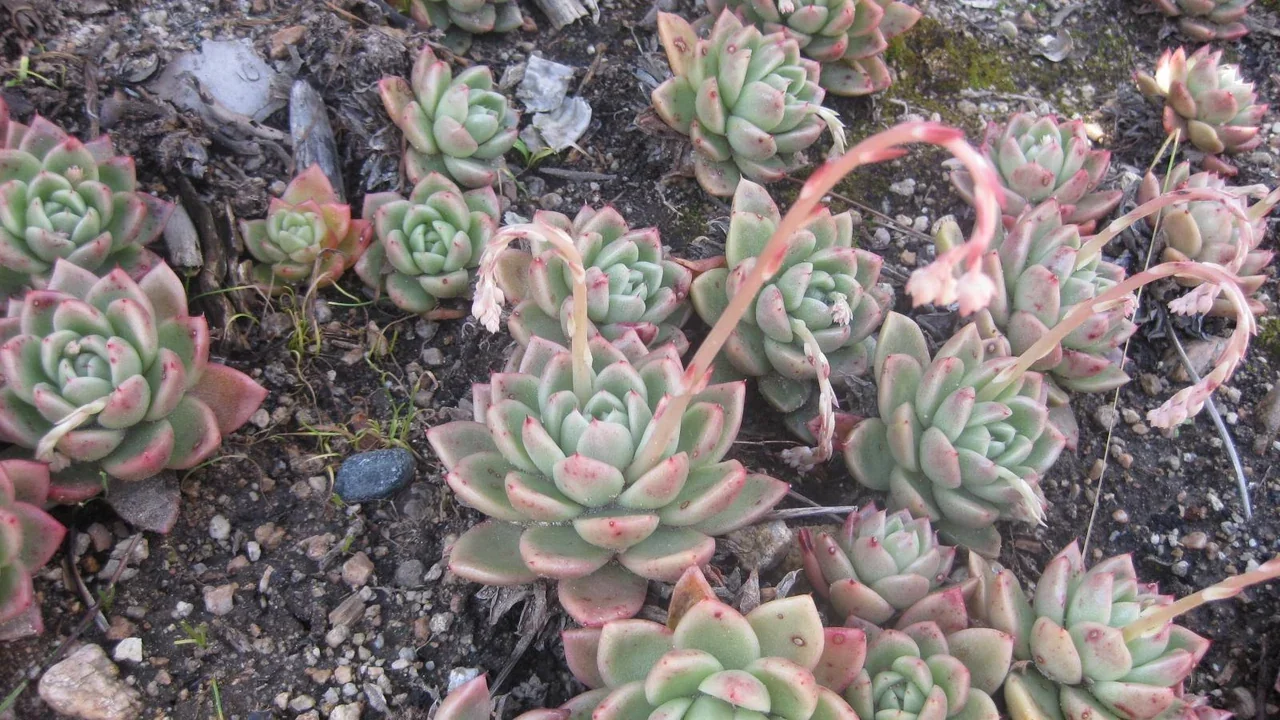
wax rosette
Echeveria x gilva
The Gardening Year
Best months in UK gardens · full planting calendar →
🖨 Print-friendly care cardAt a Glance
| Botanical name | Echeveria x gilva |
|---|---|
| Common name(s) | wax rosette |
| Family | Crassulaceae |
| Plant type | succulent (Evergreen tender succulent rosette; usually grown as a houseplant in the UK.) |
| Height × Spread | 10–50 cm × 10–50 cm |
| Position | Full sun |
| Soil | free-draining potting mix suitable for cacti and succulents |
| Flowering | June–August |
| Toxicity | Not yet established. Do not assume this plant is safe for people or pets. |
| Native range | semi-desert areas of Central America, Mexico and northwestern South America |
Growing Echeveria × gilva in a pot
Wax rosette produces neat clusters of fleshy leaves that can show stronger red tints in bright light. Give it a sharply draining peat-free cactus compost, a container with drainage holes and a bright, sheltered position. A movable pot is particularly useful in UK gardens so it can be taken under cover before frost.
Watering through the seasons
Water moderately during active growth, allowing excess to run out of the pot. Reduce watering as temperatures fall; in winter keep the mix on the dry side and never leave the roots waterlogged. Move plants outside only when conditions are reliably mild and acclimatise them gradually to brighter sunlight.
Propagation and trouble spots
Echeveria × gilva can be propagated using leaf, stem or root cuttings under suitable conditions in spring. Remove shrivelled lower leaves when loose, and watch for mealybugs and vine weevil. Brown, soft leaf bases often point to moisture or drainage trouble rather than a need for more feeding.
Source: RHS gardening guidance. Advice is adapted to UK growing conditions.
Pests and Diseases
| Problem | Symptoms | Management |
|---|---|---|
| Root rot | Leaves become soft, mushy, and discoloured while the stem collapses. | Ensure sharp drainage with gritty compost and water only when the soil is completely dry. |
| Mealybugs | White, cottony wax-like masses appear in leaf axils and on stems. | Isolate the plant and dab insects with a cotton bud dipped in methylated spirits. |
| Vine weevil | Notched edges on leaves above ground and root damage causing wilting below. | Use biological nematodes or systemic insecticides in the compost during active growth. |
| Aphids | Clusters of small green or black insects on new growth and flower stalks. | Spray off with a strong jet of water or apply a suitable insecticidal soap. |
| Etiolation | Stems become weak, spindly, and leaves stretch apart due to insufficient light. | Provide bright, indirect light or full sun exposure to maintain compact growth. |
Or browse the full plant problem solver to diagnose an issue by symptom.