Echeveria minima
Echeveria minima
The Gardening Year
Best months in UK gardens · full planting calendar →
🖨 Print-friendly care cardAt a Glance
| Botanical name | Echeveria minima |
|---|---|
| Common name(s) | Echeveria minima |
| Family | Crassulaceae |
| Plant type | succulent (winter-dormant) |
| Position | Full sun |
| Soil | Well-drained cactus compost in a pot with drainage holes. |
| Flowering | March–May |
| Toxicity | Not yet established. Do not assume this plant is safe for people or pets. |
| Native range | northeastern Mexico |
Growing miniature echeveria
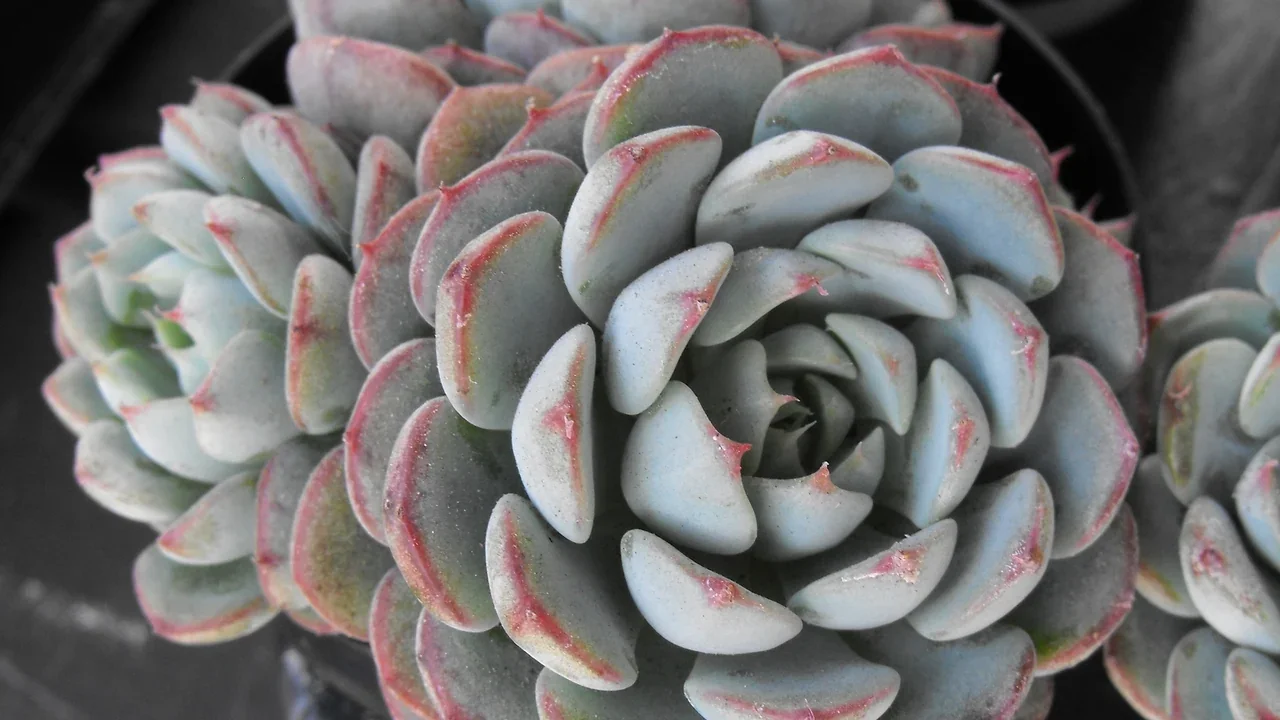
Echeveria minima forms tight clusters of small blue-green rosettes, often with pink-red leaf margins. Grow it in bright light in a gritty cactus compost with excellent drainage. It works well in a small container where water and winter conditions are easier to control.
Watering, feeding and frost
Water moderately during active growth, allowing the mix to begin drying between waterings. Avoid leaving the roots wet for prolonged periods. Keep the plant nearly dry during its winter rest and protect it from frost; outside summer displays should be returned to shelter before cold nights.
Making new plants and spotting pests
Offsets can be separated when sufficiently developed, and leaf cuttings or seeds may also be used. No routine pruning is needed. Examine leaf joins for mealybugs and inspect roots if a plant fails despite appropriate light, warmth and drainage.
Source: RHS gardening guidance. Advice is adapted to UK growing conditions.
Pests and Diseases
| Problem | Symptoms | Management |
|---|---|---|
| Powdery mildew | White, dusty fungal growth appears on leaves and stems, potentially causing distortion. | Ensure good air circulation and avoid overhead watering; treat with a suitable fungicide if severe. |
| Root rot | Leaves become soft, mushy, and translucent as the stem base decays from excess moisture. | Plant in sharp, free-draining compost and allow soil to dry completely between waterings. |
| Vine weevil | Notched edges on leaves above ground; grubs feed on roots underground causing plant collapse. | Check pots for grubs before planting and use biological nematodes or systemic controls. |
| Mealybugs | White, cottony wax-like clusters appear in leaf axils and on stems, weakening the plant. | Isolate affected plants and treat with insecticidal soap or alcohol-dipped cotton buds. |
| Sunburn | Leaves develop bleached, brown, or scorched patches due to sudden intense sunlight exposure. | Acclimate plants gradually to full sun and provide shade during peak summer heat. |
Or browse the full plant problem solver to diagnose an issue by symptom.