Common Spurge
Euphorbia peplus
The Gardening Year
Best months in UK gardens · full planting calendar →
🖨 Print-friendly care cardAt a Glance
| Botanical name | Euphorbia peplus |
|---|---|
| Common name(s) | Common Spurge |
| Family | Euphorbiaceae |
| Plant type | annual |
| Height × Spread | 5–30 cm × 0–10 cm |
| Position | Full sun |
| Soil | well-drained soil; tolerates moist soils |
| Toxicity | Sap is toxic to rapidly replicating human tissue; irritant to skin/eye, harmful if eaten |
| Native range | most of Europe, northern Africa and western Asia |
Recognising petty spurge
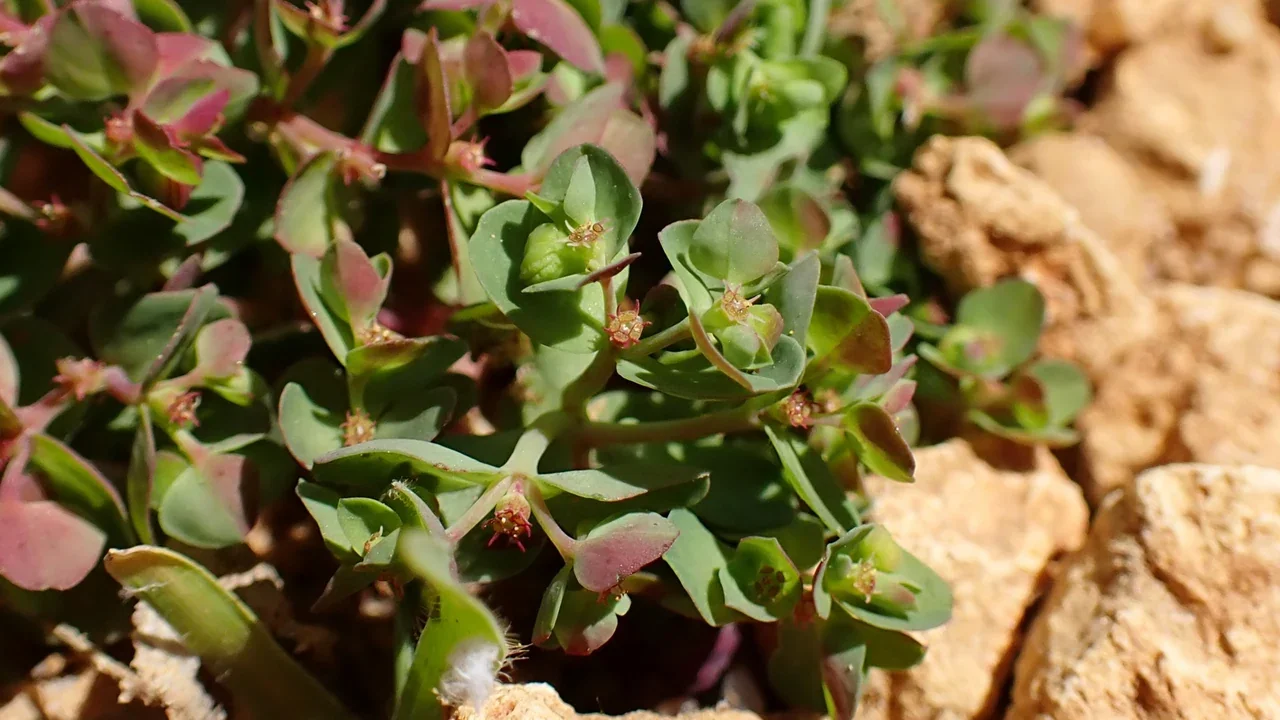
Euphorbia peplus is a small annual often encountered as a self-seeding garden plant or weed. It produces upright branching stems, greenish bracts and small pale flowers. It tolerates a range of soils, generally growing best where water drains away rather than standing around the roots.
Managing unwanted seedlings
Plants can spread through seed, especially in disturbed ground. If petty spurge is not wanted, remove young plants before flowers set seed and avoid leaving uprooted seeding material where it can spread. It rarely requires fertiliser or formal pruning as a garden plant.
Safety when handling
Like other euphorbias, petty spurge contains irritating milky sap. Avoid contact with eyes or broken skin, wear gloves when weeding and do not use it as an edible plant. Seek appropriate medical or veterinary help if exposure causes symptoms.
Source: RHS gardening guidance. Advice is adapted to UK growing conditions.
Pests and Diseases
| Problem | Symptoms | Management |
|---|---|---|
| Powdery mildew | A white, dusty fungal growth appears on leaves and stems, potentially causing distortion. | Improve air circulation and water at the base; apply a fungicide if severe. |
| Slugs and snails | Irregular holes chewed in young foliage and silky trails left on leaves. | Use physical barriers, iron phosphate pellets, or hand-pick at night. |
| Root rot | Foliage turns yellow and wilts despite moist soil due to waterlogged roots. | Ensure well-drained soil and avoid overwatering; remove affected plants. |
| Vine weevil | Notched leaf margins on young plants and root damage causing sudden collapse. | Apply nematodes to the soil in autumn or use systemic insecticides. |
Or browse the full plant problem solver to diagnose an issue by symptom.