Lachenalia corymbosa
Lachenalia corymbosa
The Gardening Year
Best months in UK gardens · full planting calendar →
🖨 Printable care card (PDF)At a Glance
| Botanical name | Lachenalia corymbosa |
|---|---|
| Common name(s) | Lachenalia corymbosa |
| Family | Asparagaceae |
| Plant type | bulb |
| Height × Spread | 5–15 cm × — |
| Position | Full sun |
| Soil | Well-drained soil |
| Flowering | March–May |
| Toxicity | — |
| Native range | southwest Cape Provinces of South Africa |
Lachenalia corymbosa is a small winter-growing bulb from the south-western Cape of South Africa, grown in the UK for its compact head of scented lilac-pink flowers and its tolerance of cool alpine-house conditions. It belongs to the family Asparagaceae, sits within the genus Lachenalia, and was widely known for many years under the synonym Polyxena corymbosa — a name that still appears in older catalogues and reference books. In cultivation it is treated as a specialist container or alpine-house plant rather than a hardy border bulb, because its winter-growing, summer-dormant rhythm is the opposite of the British garden year.
Overview
Lachenalia corymbosa grows from a small tunicate bulb and produces a low, dense rosette of narrow green leaves followed by a flattened cluster of star-shaped flowers held on very short stems. In its native range it is a plant of seasonally moist sandy flats in the Western Cape, where it completes its entire growth cycle between the first autumn rains and the onset of the dry summer. In UK gardens that seasonal rhythm is the key to success: the bulb expects moisture and cool temperatures from autumn through to late spring, and a warm, dry rest in summer.
Because the species is small and the flowering display brief but pretty, it is best treated as a pot-grown specimen where the flowers can be appreciated at close range. Alpine houses, cold greenhouses, frost-free conservatories and bright porches suit it well. Gardeners in exceptionally mild, sheltered parts of the UK — coastal south-west or central London, for example — can experiment with a sunny plunge bed outdoors, but the bulb will not tolerate several degrees of frost on its own.
Appearance
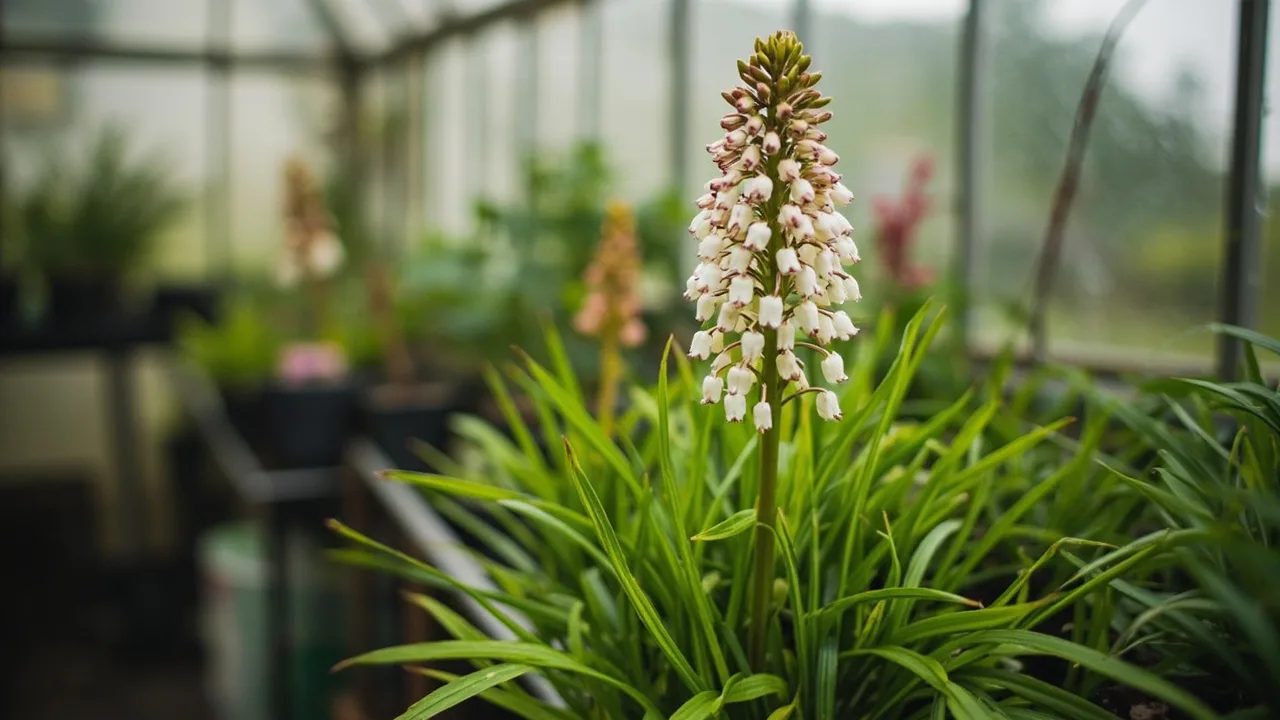
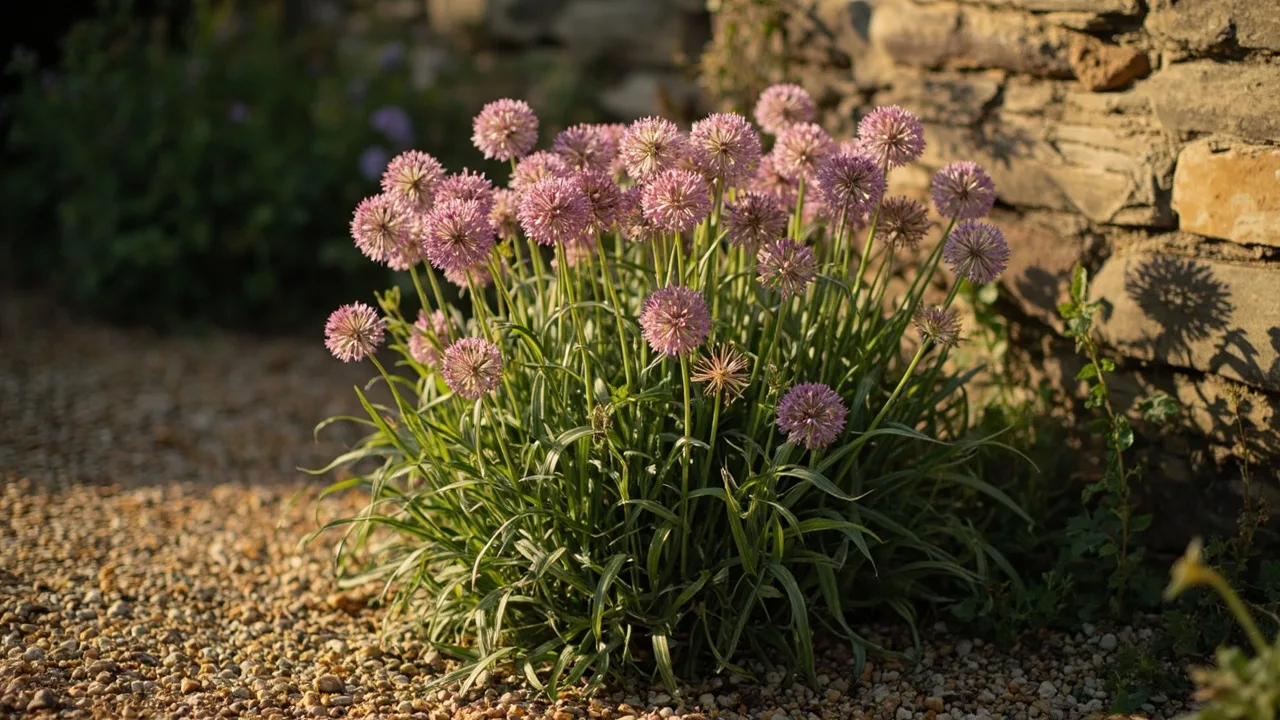
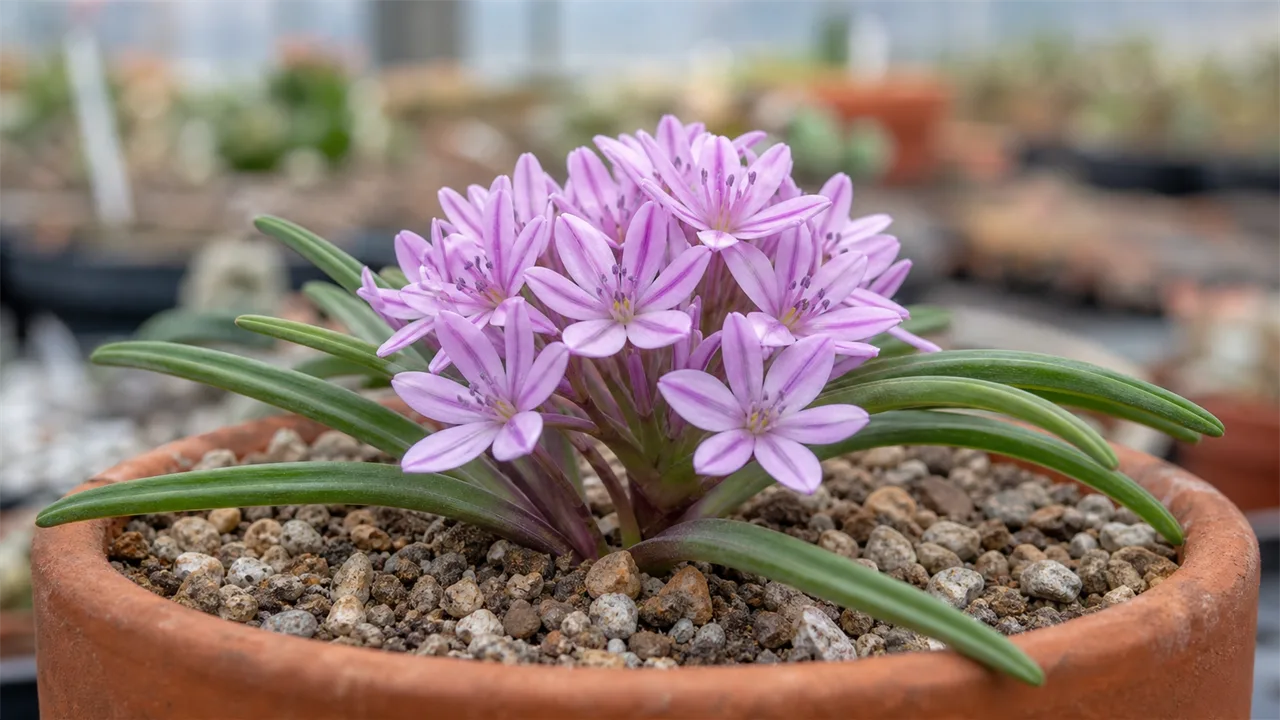
The bulb itself is small, usually less than 2 cm across, and produces four to six narrow, linear, channelled leaves that emerge at the same time as the flower spike. Each leaf is mid-green, often with a faint purple base, and tends to lie close to the soil surface rather than standing upright. The inflorescence is the plant's signature: a compact, almost flat-topped corymb of small, six-tepalled flowers, each roughly 15 mm across, in a soft lilac to pink shade with a darker purple central stripe running down the middle of each tepal.
The flowers carry a strong, sweet honey scent that is unusually generous for a bulb of this size, and individual blooms last for around ten days under cool conditions. A single mature bulb typically produces one inflorescence per season, but established clumps can throw several flower heads together, giving a low cushion of colour at the surface of the pot. After pollination, small seed capsules form on short stalks; the ripe seed is dark and angular, and is shed close to the parent plant.
In its South African habitat the species is associated with fynbos and renosterveld communities, where it shares its winter growing season with other small bulbous plants such as Moraea and Sparaxis species. The habit of opening its flowers at a low level, rather than on a tall stem, is a useful field character that separates it from the more familiar Lachenalia species with upright tubular spikes.
Growing Conditions
Lachenalia corymbosa wants the brightest position available through its growing season. A sunny alpine-house bench, a south-facing greenhouse shelf or a frost-free windowsill will all provide the strong light it needs to flower well. Shade at any point from autumn to spring tends to produce softer, drawn leaves and fewer flowers.
The growing medium should be sharply drained and on the lean side. Many UK growers mix equal parts John Innes No. 2 and coarse horticultural grit, or use a 50/50 blend of loam-based bulb compost and sharp sand. The point is to keep the bulb moist but never waterlogged while roots are active, and to dry out quickly when water is withdrawn. Terracotta pots suit the species well because they allow the compost to dry from the sides as well as the top.
Watering follows the growth cycle. From late summer, when new roots begin to push, water sparingly at first to settle the compost and then increase as the leaves emerge. Keep the plant moderately moist through autumn and into the early winter flowering period, then reduce watering as the leaves start to yellow in spring. By the time the foliage has died back completely the pot should be allowed to dry out and stay dry through the summer months. In a UK alpine house this dormant rest is straightforward: simply move the pot to a dry, shaded bench and withhold water until growth resumes the following autumn.
Planting and Care
Plant bulbs in late summer or early autumn, ideally while they are still dormant but beginning to swell at the base. Set each bulb so that its tip sits roughly 1 cm below the compost surface, and space congested clumps so that the bulbs are just touching each other — they prefer a tight fit and tend to flower better when slightly pot-bound. After planting, water once to settle the compost and then wait for the first green tips before resuming a normal watering routine.
Feeding should be light. A single low-nitrogen liquid feed at the start of the active season, followed by a balanced potash-rich feed once the flower spike is visible, is more than enough for a plant that is adapted to nutrient-poor sandy soils. Over-feeding produces lush leaves at the expense of flowers and can also make the bulb more susceptible to rot.
After flowering, allow the foliage to yellow and collapse on its own. Removing green leaves starves the replacement bulb and reduces next year's display. Once the leaves have died back fully, dry the pot off completely and store it somewhere cool, dry and shaded through the summer. Repot or divide congested clumps during this dormant period, replanting the largest bulbs into fresh compost and growing on the smaller offsets separately; a sizable flowering bulb can usually be expected after one or two further growing seasons.
Propagation is straightforward by division of established clumps, and the species also grows readily from fresh seed. Seed should be sown on the surface of a gritty, dampened mix in autumn, covered with a thin layer of grit, and kept in a cool, bright place. Germination usually takes a few weeks, and seedling bulbs typically reach flowering size from their second or third growing season.
Common Problems
Lachenalia corymbosa is not troubled by any single species-specific pest in the UK, and the parent genus is generally regarded as pest- and disease-free when grown under good conditions. The most serious risk by far is bulb rot, almost always triggered by poor drainage, persistent over-watering or moisture reaching the bulb during summer dormancy. Affected bulbs turn soft and discoloured, the leaves yellow prematurely or fail to emerge, and the compost often smells sour. Discarding badly rotted bulbs, repotting healthy stock into a grittier mix and reducing watering are the only reliable remedies.
Greenhouse specimens can occasionally attract standard sap-feeding pests such as aphids, mealybugs or vine weevil. Mealybugs tend to appear as small white, cottony tufts in the leaf axils; aphids colonise the soft new growth in autumn. Both can be managed with a soft brush, a mist of dilute soapy water, or — under cover — biological controls. Vine weevil is a particular concern in pots, where the grubs attack the bulb from below; a routine drench with a suitable nematode-based treatment in late summer helps keep the pest in check.
Frost is a constant risk in the UK, both for the dormant bulb and for the emerging foliage. A sharp autumn frost can blacken the leaves and damage the flower spike; a hard winter freeze in an unheated frame can kill the bulb outright. For this reason the plant is best kept under cover from late September through to the end of April in most UK regions, and only placed outside for the summer rest where conditions are reliably dry.
Popular Varieties
Lachenalia corymbosa is a species rather than a cultivated series, and there are no widely-grown named cultivars of the type Lachenalia corymbosa in mainstream UK horticulture. Most specialist bulb growers offer the species simply as Lachenalia corymbosa, occasionally listed under the older name Polyxena corymbosa, and the differences between stocks tend to relate to bulb size and flower colour rather than named selections.
For gardeners interested in the wider corymbosa group, the former genus Polyxena contains a handful of closely related species — including Polyxena ensifolia, Polyxena longituba and Polyxena pygmaea — that share the same low corymb habit and cool-greenhouse cultivation requirements. These are sometimes sold by specialist bulb suppliers alongside true Lachenalia corymbosa and make a useful comparison collection, but they are distinct species rather than cultivars of this plant.
Within the broader genus, more widely available relatives such as Lachenalia aloides (the opal-flower) and Lachenalia quadricolor offer a different colour palette of yellows, oranges and reds on taller spikes, and are useful cultural companions in the same cold greenhouse. None of these are L. corymbosa varieties, but they help demonstrate the range of the genus and are an easier find in general UK bulb catalogues.
Sources & Further Reading
- Royal Horticultural Society plant profile: https://www.rhs.org.uk/plants/327527/lachenalia-corymbosa/details, accessed 2026-07-25
- Plants of the World Online (Royal Botanic Gardens, Kew), accepted name: https://powo.science.kew.org/taxon/urn:lsid:ipni.org:names:60432047-2, accessed 2026-07-25
- South African National Biodiversity Institute, PlantZAfrica: https://pza.sanbi.org/lachenalia-corymbosa, accessed 2026-07-25
- Southern African Bulb Group, cultivation notes: https://www.sabg.uk/help:cult:start, accessed 2026-07-25
- Alpine Garden Society plant portrait: http://archive.alpinegardensociety.net/plants/plant-portraits/Lachenalia+corymbosa+plant+of+the+month+Dec+/91/, accessed 2026-07-25
- Pacific Bulb Society wiki, Polyxena: https://www.pacificbulbsociety.org/pbswiki/index.php/Polyxena, accessed 2026-07-25
Pests and Diseases
| Problem | Symptoms | Management |
|---|---|---|
| Mealybugs | White, cottony masses appear on leaves and stems, often causing stunted growth. | Isolate the plant and treat infested areas with a systemic insecticide or alcohol-dipped cotton bud. |
| Root rot | Leaves turn yellow and mushy while the bulb becomes soft and discoloured. | Ensure well-drained compost and allow the soil to dry out completely between waterings. |
| Vine weevil | Notched edges on leaves above ground and damaged roots or bulbs below. | Use nematodes in warm soil or apply a systemic insecticide drench during active growth. |
| Slugs and snails | Irregular holes chewed into young shoots and emerging leaves. | Apply slug pellets or use beer traps around the base of the plant, especially in damp conditions. |
| Bulb rot | The bulb shrivels and emits a foul odour, often due to excess moisture. | Plant bulbs at the correct depth in sharp sand or loam-based compost with excellent drainage. |
For step-by-step help, read Dealing with Slugs and Snails. Or browse the full plant problem solver to diagnose an issue by symptom.
Recommended Products
GardenWizz earns a commission from qualifying purchases made through affiliate links on this page (including links within the article) — as an Amazon Associate, and from Thompson & Morgan via the Awin network. This does not affect the price you pay. See our disclaimer for details.