Aucamp's living stone
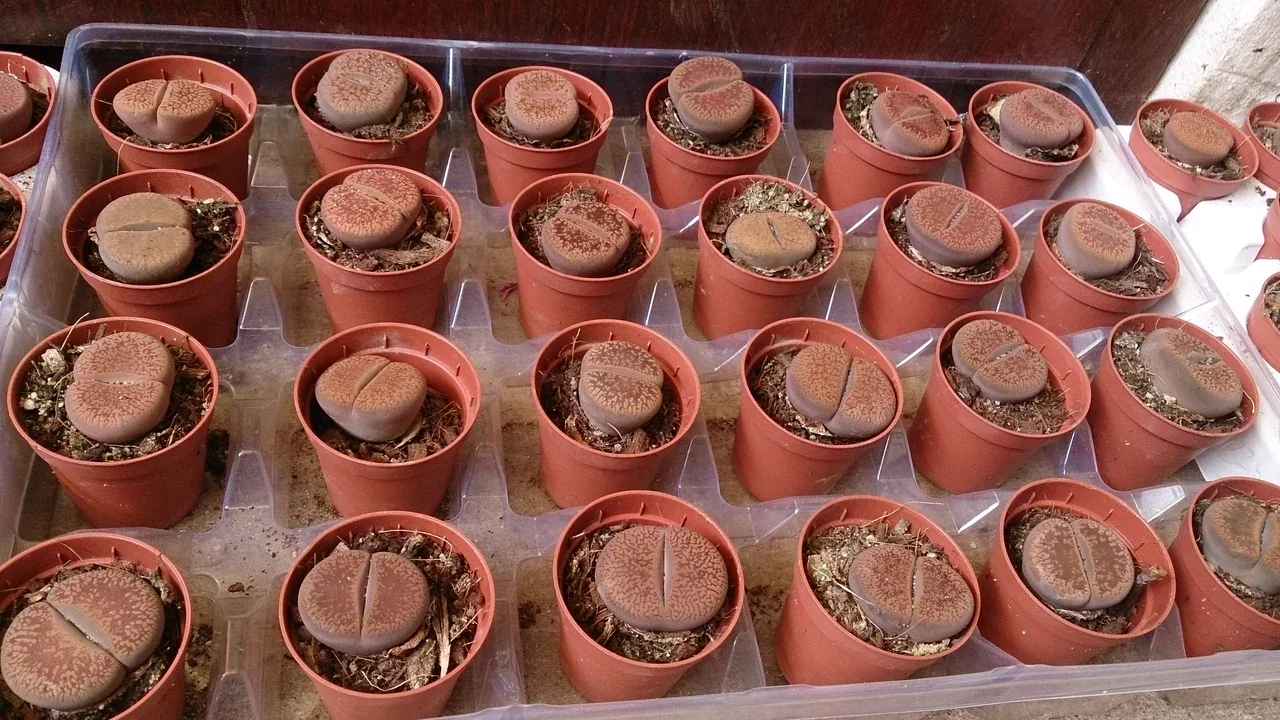
Lithops aucampiae
The Gardening Year
Best months in UK gardens · full planting calendar →
🖨 Print-friendly care cardAt a Glance
| Botanical name | Lithops aucampiae |
|---|---|
| Common name(s) | Aucamp's living stone |
| Family | Aizoaceae |
| Plant type | succulent (Grows in annual cycles; leaf-pairs flower and then each produces a new leaf-pair that replaces the old one which shrivels away.) |
| Height × Spread | ?–10 cm × 0–10 cm |
| Position | Full sun |
| Soil | Extremely well-drained soil; standard cactus compost with added leaf mould or free-draining cactus compost with additional grit. |
| Flowering | September–September |
| Toxicity | Not yet established. Do not assume this plant is safe for people or pets. |
| Native range | South Africa |
Growing Aucamp's living stone
Lithops aucampiae is a tiny succulent with paired, stone-like leaves. In the UK, grow it under glass in a small container with very sharp drainage and good airflow. A gritty cactus mix with suitable mineral material is preferable to rich, moisture-retentive compost.
Careful seasonal watering
Lithops do not want routine weekly watering. Follow the plant's active growth and leaf-replacement cycle: water moderately during active growth and keep the pot almost dry over winter. Avoid watering a dormant plant simply because the compost looks dry; excess moisture can split or rot the fleshy leaves.
Propagation and pests
Raise new plants from seed in suitable warmth or separate offsets when present. Pruning is unnecessary. Watch for aphids or mealybugs and protect the pot from freezing and wet winter windowsills.
Source: RHS gardening guidance. Advice is adapted to UK growing conditions.
Pests and Diseases
| Problem | Symptoms | Management |
|---|---|---|
| Root rot | Leaves become soft, translucent, and mushy as the base of the plant decays. | Ensure excellent drainage with gritty compost and water only when the soil is completely dry. |
| Mealybugs | White, cottony wax-like clusters appear in leaf crevices and on stems. | Isolate the plant and treat with a systemic insecticide or wipe pests away with alcohol-dipped cotton buds. |
| Aphids | Small green or black insects cluster on new growth, causing distorted leaves. | Spray off with a strong jet of water or apply insecticidal soap if infestations are heavy. |
| Overwatering | Plant body swells excessively then collapses and turns brown or black. | Reduce watering frequency significantly, especially during winter dormancy periods. |
| Sunburn | Leaves develop bleached white patches or scorched brown spots on exposed surfaces. | Acclimate plants gradually to full sun and provide shade during the hottest midday hours in summer. |
Or browse the full plant problem solver to diagnose an issue by symptom.