Blackthorn
Prunus spinosa
The Gardening Year
Best months in UK gardens · full planting calendar →
🖨 Printable care card (PDF)At a Glance
| Botanical name | Prunus spinosa |
|---|---|
| Common name(s) | Blackthorn |
| Family | Rosaceae |
| Plant type | shrub (deciduous, suckering shrub; can grow to become a tree) |
| Height × Spread | 2.5–6 m × 2.5–4 m |
| Position | Full sun |
| Soil | moist well-drained soil; Chalk, Clay, Loam, Sand; Acid, Alkaline, Neutral pH |
| Flowering | March–April |
| Toxicity | All parts other than the flesh of the fruits are harmful to pets and humans if eaten; seed contains trace amounts of hydrogen cyanide |
| Native range | Europe, West Asia, northwest Africa |
Overview
Prunus spinosa, the blackthorn, is the spiny suckering shrub that runs through almost every British hedgerow. It is one of our true native shrubs of the Rosaceae family, found across the British Isles from sea-level coastal scrub up to roughly four hundred metres in northern Britain, and across most of Europe into western Asia and north-west Africa. In the garden it earns its keep in two very different ways: as the backbone of a stock-proof mixed native hedge with hawthorn, hazel, dog rose and field maple, and as a wildlife plant whose early white blossom and autumn sloes feed pollinators, nesting birds and small mammals through the leanest months of the year. The flowers open in March and April, before the leaves emerge, often during a cold spell that gardeners still call "blackthorn winter" — the same feature that makes blackthorn so easy to confuse with hawthorn if you only meet it briefly. Plants can live for a hundred years and reach four to seven metres untrimmed, but a maintained hedge usually settles at two to three metres. As a member of the broader Prunus genus, it sits alongside domestic plum and damson, and is one of the wild ancestors of the cultivated orchard plums. For most UK gardeners it is the right plant to choose where space allows and a thorny, suckering character is an asset rather than a liability.
Appearance
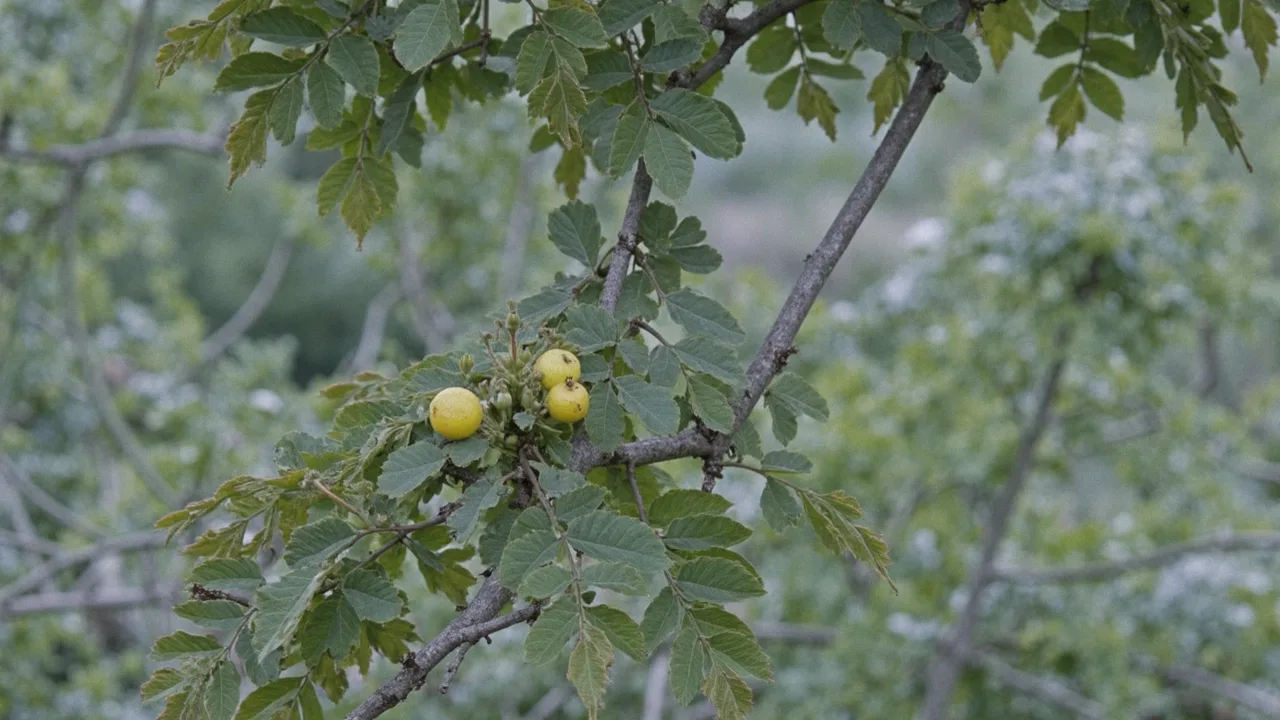
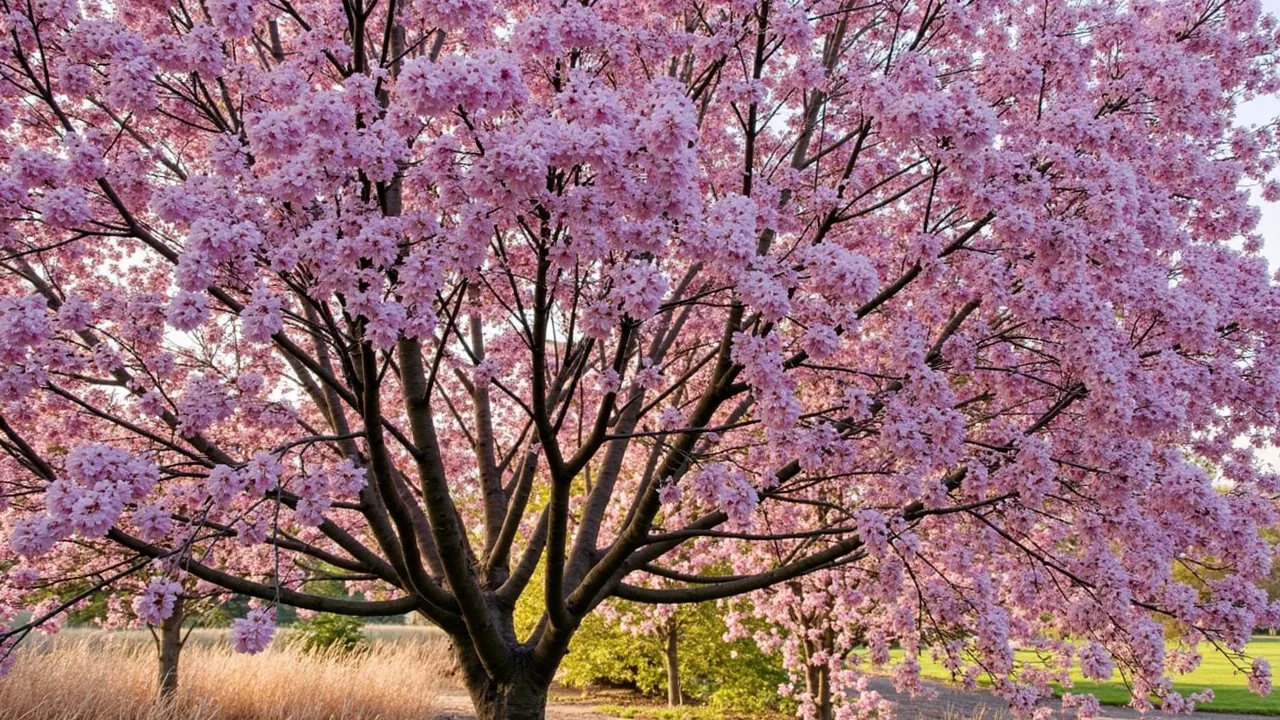
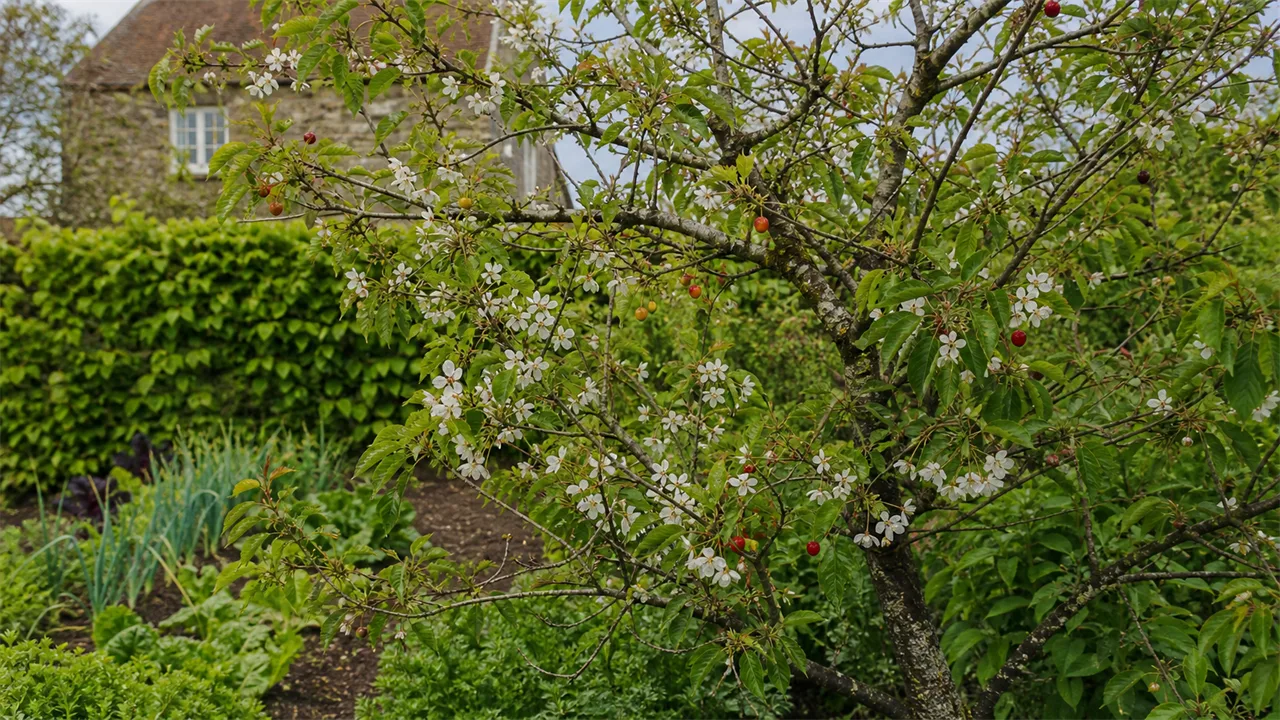
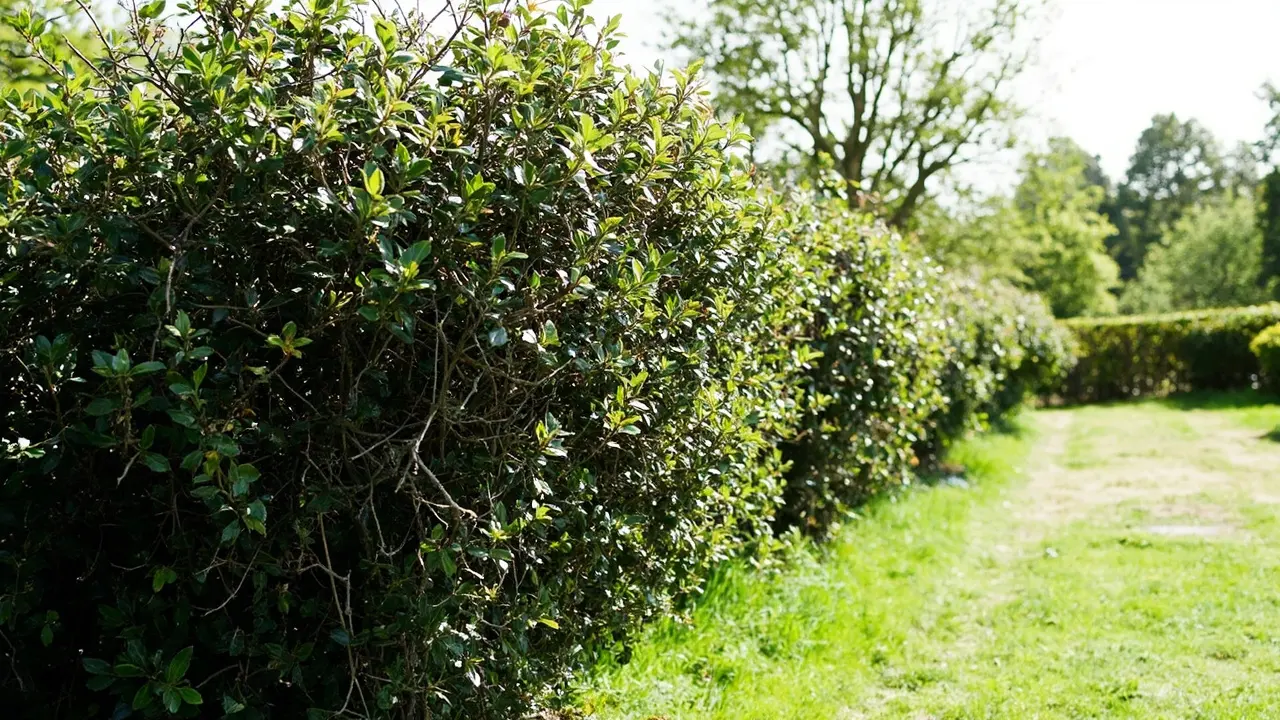
Blackthorn forms a dense, twiggy, rounded shrub with an irregular outline that pulls itself into a thicket wherever a branch touches the ground. The bark on older wood is a blackish-brown and slightly rough; the younger twigs that carry the spring flowers are a deep, almost black brown — the source of the common name. Every twig ends in a stiff sharp spine, technically a modified shoot rather than a true thorn, and the spines have a documented habit of breaking off in the skin and causing septic puncture wounds that only become obvious a day or two later. The leaves are small, oval to obovate, finely toothed and two to four centimetres long; they are a dull mid-green above, slightly paler beneath, and they emerge only after the flowers have finished. Flowers are white, five-petalled, about one and a half centimetres across, with a small cluster of yellow-tipped stamens, mildly almond-scented and carried singly or in pairs on the previous year's bare wood. They are hermaphrodite — both male and female parts in a single flower. Fruits are small bluish-black drupes about one to one and a half centimetres across, ripening from September into November, intensely astringent when raw. The simplest identification cue against hawthorn is that blackthorn flowers appear on bare branches before the leaves, while hawthorn leaves out first and flowers in May; against cherry plum, blackthorn's downy young shoots and thorny habit are distinctive.
Growing Conditions
Blackthorn is one of the most undemanding shrubs a British gardener can plant, accepting chalk, limestone, clay, loam and stony ground and a pH range from mildly acid to strongly alkaline. The single condition it dislikes is waterlogged ground, so on heavy clay it is worth planting on a slightly raised bed or working plenty of coarse organic matter into the base to keep the crown out of cold winter wet. It flowers most freely in full sun, tolerates light dappled shade in a mixed hedgerow, and copes well with exposed and coastal sites including salt-laden wind. Established plants are notably drought-tolerant, though new plantings need regular watering for their first growing season, especially in dry springs. The plant is fully hardy across the UK in practice — UK authoritative sources place it at RHS hardiness ratings H6 to H7 (−15 to −20 °C and below), which covers every region of Britain including northern England and Scotland. Avoid very small gardens unless the gardener is prepared to manage the suckers, and site the plant well away from play areas and narrow paths because the spines catch clothing and skin.
Planting and Care
Bare-root whips are the traditional way to plant a blackthorn hedge, and they go in between November and March while dormant, whenever the soil is neither frozen nor waterlogged. Container-grown plants can be set at any workable time but autumn through early spring is preferable. Prepare a strip sixty to ninety centimetres wide and one spit deep, removing perennial weeds by hand; on heavy ground form a ridge fifteen to twenty centimetres high to plant into. For a single-row hedge, space plants thirty to sixty centimetres apart; for a stock-proof mixed hedge, set them in a staggered double row about thirty to forty-five centimetres apart in each direction. On a boundary, plant the row about ninety centimetres inside the property line so the hedge can fill out without overhanging a neighbour. Cut the tops back by roughly a third to a half at planting to encourage bushy regrowth from the base, mulch with well-rotted compost, water in well, and keep the new hedge watered for its first two years — a thin mulch of bark or compost each spring is enough feeding on reasonable soil. Prune immediately after flowering in April or May, taking out dead, damaged or crossing stems and a few of the oldest stems at the base; cut only into sound wood because heavy cuts into very old, thick blackthorn stems do not always reshoot reliably. Avoid autumn and winter pruning, which leaves fresh cuts open to silver-leaf infection, and use thick gloves and eye protection at all times. Sucker containment is the one piece of long-term care most gardeners underestimate: install a root barrier at planting time, mow around the plant in summer to exhaust emerging shoots, and plan for a five- to seven-year coppice rotation to keep an overgrown clump within bounds. Routine pruning basics for UK gardens, a sensible garden mulch routine, and natural aphid control cover the rest of the annual care.
Common Problems
Blackthorn in a mixed native hedge is generally resilient and needs little routine spraying, but a handful of problems are worth knowing. Pocket plum, caused by the fungus Taphrina pruni, makes the developing fruits elongate, become hollow and develop without stones; infected twigs also thicken and form small witches' brooms. There are no fungicides available to amateur gardeners for this disease, so non-chemical control is the answer: cut out infected branches, witches' brooms and affected fruit well before the spores are produced and dispose of them rather than composting them. Blossom wilt, in the broad Monilinia group of brown-rot fungi, can wither flowers and leaves suddenly in May or kill branches that then fail to leaf out the following spring; prune back into clean wood at least fifteen centimetres below any visible discolouration and dispose of infected material. Bacterial canker (Pseudomonas syringae) and silver leaf (Chondrostereum purpureum) are related Prunus problems, so improve airflow by thinning congested growth and prune only in mid-summer so wounds heal before fungal spores are active. Leaf-curling plum aphid and mealy plum aphid colonise young shoots in late spring; on a mature hedge they are rarely serious and natural predators usually hold them in check. Bullfinches strip the flower buds in late winter and can noticeably reduce the spring display on a garden specimen, where netting or siting in a less exposed part of the garden is the usual remedy. Gardeners managing a blackthorn hedge for wildlife should also be aware that annual flailing of blackthorn destroys overwintering brown hairstreak butterfly eggs and contributes to the decline of this rare UK Biodiversity Action Plan species, so leave a margin uncut each year wherever the conservation case applies. The spines themselves are a recurring practical hazard rather than a disease: they can penetrate ordinary garden gloves, snap off in the skin and cause infected puncture wounds that present days later, so always use thick gloves and eye protection when pruning or handling. As a last note on safety, all parts of Prunus spinosa except the ripe fruit flesh are harmful if eaten, because the stone contains trace cyanogenic compounds that release hydrogen cyanide when crushed or chewed, and the foliage and fresh shoots are hazardous to browsing livestock in quantity; ripe sloe flesh is safe to eat once cooked or sweetened, and sloes picked for [sloe gin](#sloe-harvest) should be left whole.
Popular Varieties
The species Prunus spinosa is the form almost always planted in UK gardens and hedging mixes, and for a mixed wildlife or stock-proof boundary it remains the right choice. Prunus spinosa 'Purpurea' is a purple-leaved selection whose young foliage emerges a deep reddish-purple and contrasts strongly with the white spring blossom; it is slower and more compact than the type, typically reaching two to three metres, and is the form most often chosen for a smaller ornamental garden. Prunus spinosa 'Plena' is a double-flowered form with fuller, longer-lasting blossoms; the display is more sustained than the single-flowered type, though the individual flowers are less useful to early pollinators and the plant is less widely stocked — specialist nurseries may carry it on request. Prunus spinosa var. macrocarpa, sometimes sold under the clonal name 'Macrocarpa', is a large-fruited selection grown specifically for heavier sloe crops and is worth seeking out where the fruit is the main reason for growing the plant. Blackthorn is closely related to bullace and damson (both Prunus domestica subsp. insititia) and to cherry plum (Prunus cerasifera), and natural hybrids with bullace occur; named clonal cultivars of those hybrids should not be invented, and the species itself should be sourced as Prunus spinosa with a clear nursery label. For a mixed native hedge rather than a single-species planting, the standard UK pattern is roughly sixty to seventy per cent hawthorn as the structural backbone with ten to twenty per cent blackthorn and smaller amounts of dog rose, hazel and field maple — supplier mixes vary, so the exact percentages should be taken as a guide rather than a fixed rule.
Sloe harvest
Sloes are traditionally picked after the first frost from late September into October and November, when the skins split easily for the gin. In a mild autumn when the first frost is late, the practical UK fallback is to bag the fruit and pop it in the freezer overnight to mimic the effect of frost — the skins split just the same. Pick only where plants are abundant, leave plenty behind for wildlife, and never eat the stone. In England and Wales sloes may be picked by hand for personal use from common land where the local byelaws allow, and from any ground where the picker has lawful access — under section 13 of the Wildlife and Countryside Act 1981 a wild plant may not be uprooted without the landowner's permission, so take the fruit only and leave the shrub, the roots and the ground around it undisturbed.
For a broader look at how blackthorn fits into a planting designed for pollinators, nesting birds and autumn fruit, see how to create a wildlife-friendly garden.
Recommended Products
GardenWizz earns a commission from qualifying purchases made through affiliate links on this page (including links within the article) — as an Amazon Associate, and from Thompson & Morgan via the Awin network. This does not affect the price you pay. See our disclaimer for details.