Crown Cactus
Rebutia canigueralii
The Gardening Year
Best months in UK gardens · full planting calendar →
🖨 Printable care card (PDF)At a Glance
| Botanical name | Rebutia canigueralii |
|---|---|
| Common name(s) | Crown cactus |
| Family | Cactaceae |
| Plant type | succulent |
| Height × Spread | 5–15 cm × — |
| Position | — |
| Soil | free-draining, cactus compost |
| Flowering | April–June |
| Toxicity | — |
| Native range | Bolivia |
Overview
Canigueral’s crown cactus is a compact, clustering cactus usually encountered under the name Rebutia canigueralii. Its botanical placement is not as straightforward as a single label might suggest. Plants of the World Online currently treats Rebutia canigueralii Cárdenas as a synonym of Weingartia canigueralii, while also recording that another major checklist has accepted the Rebutia name under an alternative taxonomy. Plants in collections and nurseries may therefore be labelled Rebutia, Sulcorebutia or Weingartia. These names reflect changing classifications and should not automatically be taken to mean that otherwise similar plants are different cultivars.
The plant belongs to a wider group of mountain cacti associated with Bolivia and Argentina. Specialist horticultural information places this particular cactus in Chuquisaca, Bolivia, but a dependable modern species description with stable diagnostic measurements was not identified in the evidence used for this guide. For gardeners, the most useful picture is therefore a small-headed, low-growing cactus that can form a clump and produce showy, funnel-shaped flowers. Exact dimensions, spine details and flower colours should not be used as guaranteed identifiers because plants and the labels attached to them can vary.
In the UK, Canigueral’s crown cactus is best treated as a protected container plant. A bright greenhouse, conservatory or sunny indoor position allows its growing conditions to be controlled far more reliably than an exposed garden bed. It needs strong light, free drainage and air movement while growing, followed by a cooler, much drier winter rest. There is no sound species-specific hardiness rating in the approved evidence, so it should be protected from frost and prolonged winter wet rather than assumed to be hardy outdoors.
Choose a traceable, nursery-propagated specimen. Kew’s trade overview reports that commerce in the wider Rebutia group is overwhelmingly based on artificially propagated plants. Buying from a responsible nursery supports legitimate cultivation and avoids pressure on wild populations; wild plants should never be collected.
Appearance
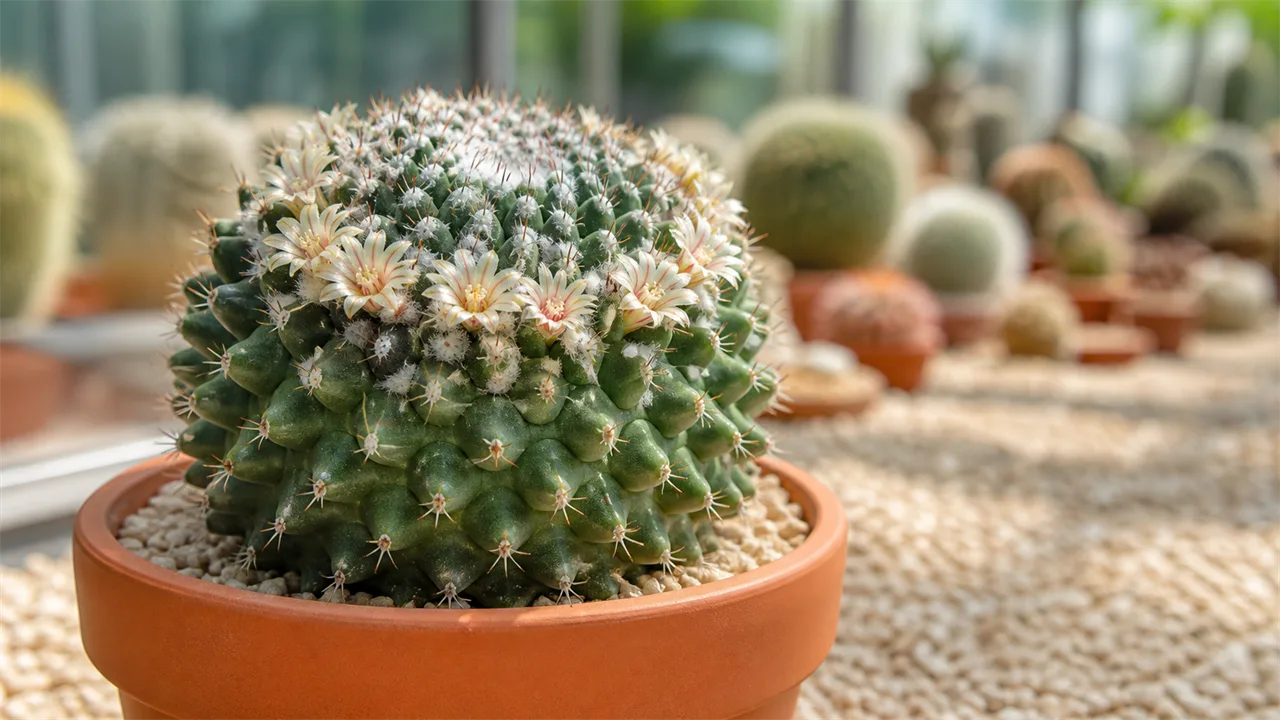
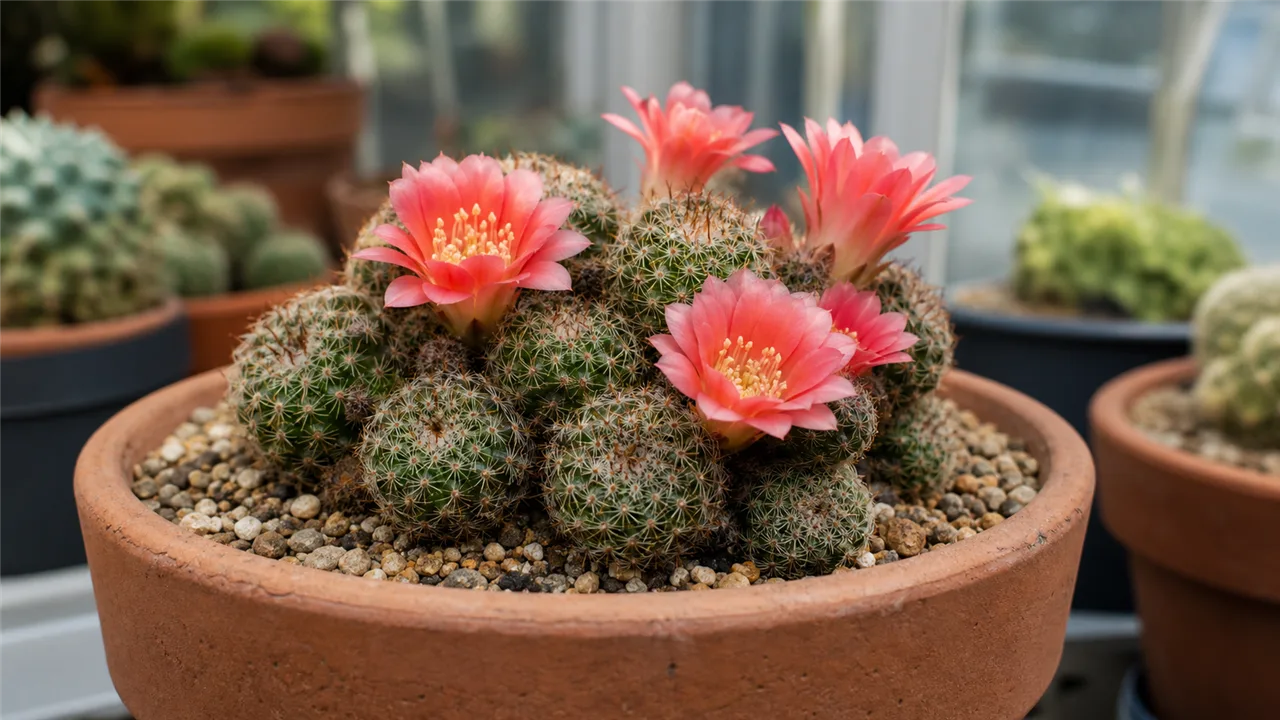
Canigueral’s crown cactus has the low, compact habit that makes the Rebutia group appealing in small collections. Rather than developing into a tall column, it produces small rounded heads and can gradually build a clustered mound. Kew characterises this wider group as low-growing, often freely clustering and ribless, with relatively sparse spines. That is useful context for recognising the overall character of the plant, but it is not a substitute for a modern species diagnosis.
The flowers are an important part of its appeal. They are funnel-shaped in the wider group and can create a strong display around a compact body. Specialist horticultural descriptions report variable, sometimes bi-coloured flowers for plants sold under the historical Rebutia canigueralii name. Flower colour and pattern should nevertheless be treated as variable rather than guaranteed. A plant that differs from a catalogue photograph is not necessarily unhealthy or wrongly named, and a striking colour variation does not by itself establish a named cultivar.
Avoid relying on exact body size, spine count, elevation or a fixed flower palette when checking a label. Those details were not securely established for this article from a current authoritative monograph. Instead, retain the nursery label, record where the plant came from and compare its development over several seasons. Photographs can help document a particular specimen, but they should be illustrative rather than treated as definitive taxonomic evidence.
Spines make even a small cactus awkward to handle. Keep the plant where children and pets cannot brush against it, and use folded paper, suitable gloves or cactus tongs when moving the pot. No authoritative toxicology evidence specific to this species was identified, so it should not be described as edible, pet-safe or poisonous. Seek appropriate medical or veterinary advice after an ingestion or a significant skin or eye injury.
Growing Conditions
Give the plant a warm, sunny position while it is growing. A sunny windowsill, bright conservatory or well-ventilated greenhouse can work, provided there is good air movement.
Free drainage is essential. Use a proprietary cactus compost or another open, gritty cactus mix in a pot with an unobstructed drainage hole. The container should release excess water promptly; never leave it standing in a saucer or decorative cover full of water.
During spring and summer, match watering to active growth, warmth and available light. The Royal Horticultural Society advises watering cacti thoroughly only when the compost surface is dry, then allowing all surplus water to drain. This is more reliable than giving frequent small sips on a fixed calendar. Check the compost and the weather before watering: a pot in a hot greenhouse may dry much faster than one on a cooler indoor sill.
Winter should feel distinctly different. From November to early March, RHS guidance for most cacti recommends a cooler rest, at roughly 8–10°C at night, with minimal or no water beyond what is needed to prevent excessive shrivelling. Cambridge University Botanic Garden maintains cool, well-ventilated winter conditions for its cactus collection, with a night minimum of 6°C, and cautions against watering plants that remain plump. These are collection-wide cultivation references, not a hardiness rating for W. canigueralii. For a home grower, the safe conclusion is to keep this plant frost-free, cool, airy and nearly dry rather than testing it outdoors.
Planting and Care
When repotting is needed, first check that the chosen container has a clear drainage hole and use fresh, free-draining cactus compost. Handle the plant carefully and keep its clustered heads above the compost.
Resume water gradually as light and warmth increase. Once the plant is clearly growing, water the whole root ball, let it drain and wait until the compost surface has dried before watering again. Reduce the frequency as autumn light falls, then keep the plant almost dry through its cool winter rest. This seasonal change is important: continued watering in weak winter light can leave roots in cold, damp compost and encourage decay. A dry rest may also help support later flowering.
Feed during the growing season rather than in winter. RHS guidance recommends a monthly high-potash liquid feed or a specialist cactus feed from April to September. Follow the product’s dilution directions and apply it to an actively growing, appropriately watered plant. Extra fertiliser cannot compensate for poor light or waterlogged compost and may encourage soft, unbalanced growth.
Repot when the root system, deteriorating compost or an unstable clump makes it necessary, not simply because another year has passed. Older cacti may need occasional repotting as they expand. Move up by only a modest pot size and take the opportunity to inspect the roots. Healthy offsets can make the clump attractive, so there is no need to divide it unless propagation, congestion or stability makes separation useful.
For propagation, select an offset that is already well rooted where possible. Detach it with a clean, sterile tool. Specialist collection guidance recommends allowing a removed offset or cutting to dry and form a callus before it is placed in rooting compost; this helps keep a fresh wound out of wet material. Seed can also be sown in spring in a gritty mix. RHS guidance uses John Innes No. 1 with added grit or sharp sand, leaving small seed uncovered and keeping it bright and moist but not wet. Seedlings require patience and careful moisture control.
Common Problems
Too much water is the most important avoidable problem, particularly during cool weather or low winter light. If the plant softens or becomes unstable in its pot, stop watering, isolate it from the collection and inspect the roots and stem. Prevention is better than rescue: use an open mix, a draining pot and a seasonal watering routine.
Do not interpret slight winter contraction as an automatic instruction to water. A modest amount of shrivelling can accompany a dry rest, whereas a plant that remains plump does not need extra water. The exception is excessive shrivelling, for which RHS guidance allows the minimum water needed. Conditions vary between homes, so respond to the plant, compost and temperature together rather than following dates alone.
Unsuitable conditions, including excess humidity and brightness, can contribute to corky scab in cacti. Improve ventilation and review watering and placement rather than reaching first for a treatment.
Mealybugs can hide around the plant body, pot rim and underside of the container, while root mealybugs may remain unseen in the compost. Quarantine new purchases before placing them among established plants, and inspect the pot as well as the cactus. The National Collection of Aylostera, Rebutia & Weingartia recommends de-potting and cleaning the roots if root mealybugs are found. Keep affected plants isolated and clean tools between specimens to reduce the chance of spreading pests.
Poor flowering is not necessarily a disease, and the approved evidence does not support guaranteed flowering dates or results for this species. Concentrate on bright growing conditions and the cool, dry rest recommended for most cacti, which RHS notes can encourage flowering.
Popular Varieties
No dependable list of formally named cultivars was established in the research for this article. It would therefore be misleading to turn every nursery name, field label or differently coloured plant into a “popular variety”. The names Rebutia canigueralii, Sulcorebutia canigueralii and Weingartia canigueralii may reflect taxonomic treatment or trade history rather than three horticultural varieties.
When comparing plants for sale, look for clear provenance and a nursery that propagates its own stock. Retain the full label, including any collection or field information, without assuming that a code is a cultivar name. If a seller offers a named selection, ask what the name represents and whether its origin is documented. Treat flower photographs as an example of that specimen or line, not a promise that every plant sold under the species name will look identical.
For most UK gardeners, the best choice is a healthy, nursery-propagated plant with firm growth, clean roots and no sign of mealybugs. A well-documented plant is more valuable than an eye-catching but unsupported name. Whatever label it carries, its core care remains the same: bright protected cultivation, excellent drainage, measured watering during active growth and a cool, nearly dry, frost-free winter rest.
Pests and Diseases
| Problem | Symptoms | Management |
|---|---|---|
| Root and stem rot | Stems become soft, mushy, and discoloured, often starting at the base. | Ensure excellent drainage and keep the plant almost completely dry during winter dormancy. |
| Mealybugs | White, cottony wax-like masses appear in crevices and around areoles. | Isolate the plant and treat with a systemic insecticide or dab spots with alcohol-soaked cotton. |
| Vine weevil | Semi-circular notches on leaf margins (if present) or sudden collapse due to root damage. | Use biological nematodes in the soil during warm months or apply a systemic granular treatment. |
| Spider mites | Fine webbing and stippled, yellowing foliage indicating dry indoor conditions. | Increase humidity around the plant and spray with water or use a miticide if infestation is severe. |
| Sunburn | White or brown bleached patches on stems exposed to sudden intense sunlight. | Acclimatise gradually to brighter light and avoid placing in direct midday sun initially. |
Or browse the full plant problem solver to diagnose an issue by symptom.
Recommended Products
GardenWizz earns a commission from qualifying purchases made through affiliate links on this page (including links within the article) — as an Amazon Associate, and from Thompson & Morgan via the Awin network. This does not affect the price you pay. See our disclaimer for details.