Pansy
Viola × wittrockiana Gams ex Nauenb. & Buttler · Garden pansy
The Gardening Year
Best months in UK gardens · full planting calendar →
🖨 Printable care card (PDF)At a Glance
| Botanical name | Viola × wittrockiana Gams ex Nauenb. & Buttler |
|---|---|
| Common name(s) | Pansy, Garden pansy |
| Family | Violaceae |
| Plant type | biennial (half-hardy annual or biennial (UK cultivation; perennial in mild conditions)) |
| Height × Spread | 25 cm × 60 cm |
| Position | Full sun, Partial shade |
| Soil | fertile, humus-rich, moist but well-drained soil |
| Flowering | January, February, March, April, May, June, October, November, December |
| Toxicity | unknown/not asserted |
| Native range | unknown/not asserted for this horticultural hybrid |
The garden pansy, Viola × wittrockiana Gams ex Nauenb. & Buttler, is the large-flowered, flat-faced pansy of British autumn, winter and spring bedding. It belongs to the family Violaceae and is the complex horticultural hybrid behind the named Ultima, Joker, Cool Wave, Matrix and Delta series recorded on the Royal Horticultural Society's Plants pages. UK readers meet it across municipal planters, hanging baskets, front-garden window boxes and beds from late summer through to the following spring. This A-Z encyclopedia entry sets out what a pansy actually is, how to tell it apart from smaller-flowered violas and from our native wild violets, and how to grow it across a UK cool-season calendar — with explicit notes on hardiness, dimensions and safety where the authoritative record is silent.
RHS plant pages and Kew Plants of the World Online both treat Viola × wittrockiana as the same hybrid; the Royal Horticultural Society simply renders the multiplication sign as the ASCII letter `x` in plant URLs (for example `/plants/175718/viola-wittrockiana-ultima-morpho-(ultima-series)/details`, `/plants/56768/viola-x-wittrockiana-joker-series-p/details` and `/plants/360339/viola-x-wittrockiana-cool-wave-series-p/details`). The A-Z slug here, `viola-x-wittrockiana`, follows that convention and remains consistent with the POWO-accepted name.
Overview
The garden pansy is a short-lived, cool-season bedding and container plant in the violet family Violaceae. The Royal Horticultural Society and Kew Plants of the World Online both accept Viola × wittrockiana Gams ex Nauenb. & Buttler as the name for this complex horticultural hybrid; modern molecular work (Marcussen et al., 2022) confirms the Gams ex Nauenb. & Buttler authority for the hybrid as it is used in today's trade. In UK cultivation it is recorded and sold by the RHS Plants pages as a half-hardy annual or biennial: raised from seed, planted out in autumn, carried over winter, deadheaded through the following spring and replaced with summer bedding usually in May or June.
In day-to-day use it is the large-flowered pansy of municipal planters, hanging baskets and front-garden window boxes — visually far more prominent than the wild heartsease (Viola tricolor) or our native common dog-violet (Viola riviniana). It pairs naturally with other cool-season flowering neighbours on the GardenWizz A-Z, including cyclamen, primrose, autumn crocus, winter-flowering heather and snowdrop, and links out of the autumn, winter and spring seasonal tasks articles (autumn garden jobs, winter garden preparation and spring garden tasks). The full pansy entry sits within the wider A-Z plants index.
The plant_record kept against this article does not assert a single RHS hardiness code, a single mature spread, an exact flower diameter or a toxicity figure for the hybrid as a whole. Authoritative RHS and Kew snippets consulted for this entry do not pin a single H-code across the modern cultivar series, and they do not establish a nursery-bought food-use recommendation; the structured record preserves hardiness and safety as explicit unknowns in line with the writer constraints. Cultivars referenced in this article are limited to RHS-verified series names.
Appearance
A mature garden pansy is a compact, low-growing, slightly tufted plant with green, softly hairy, heart-shaped leaves whose edges are gently scalloped or jagged — the form Kew's Garden pansy profile records. Growth is herbaceous rather than woody. Cultivar-recorded dimensions vary by series: Kew's profile of the garden pansy places it within a roughly 25 cm range for the upright garden form, while the RHS Plants pages for individual series record that the trailing Cool Wave series spreads sideways to roughly 60 cm across and that the more compact Ultima, Joker, Matrix and Delta series generally reach roughly 20 cm at maturity. Readers should treat any single figure as series-specific rather than universal across the hybrid.
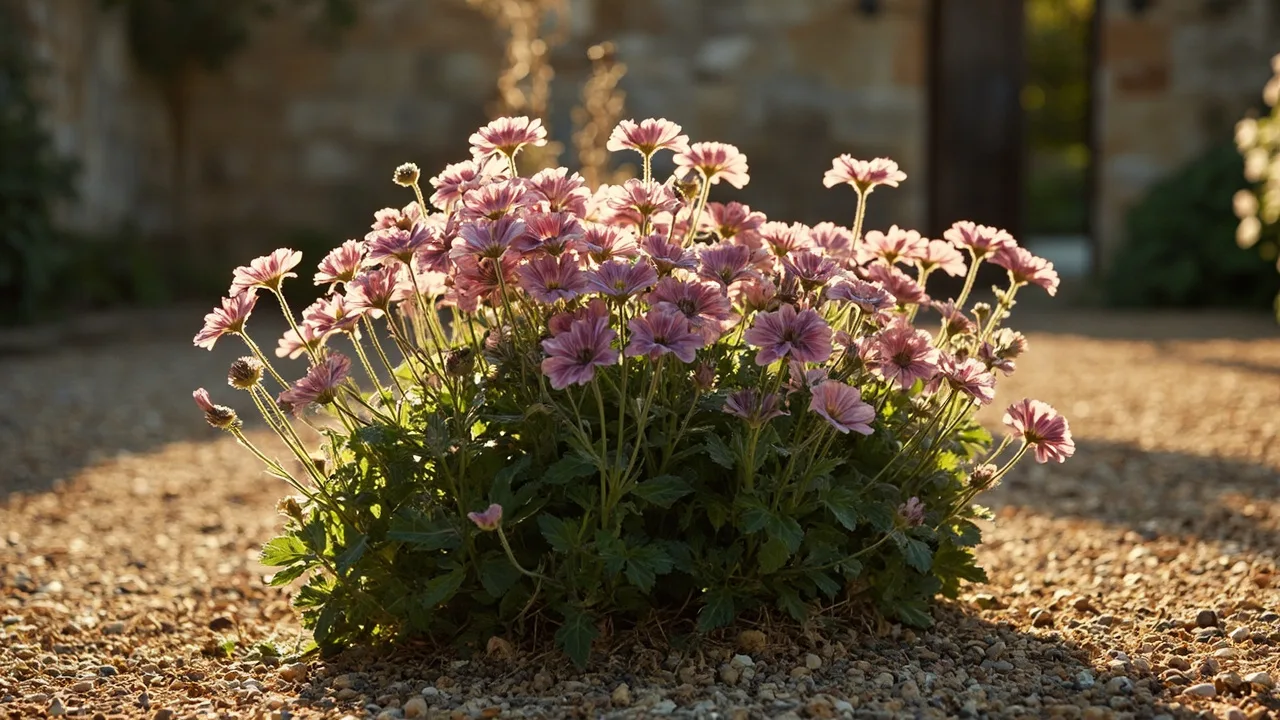
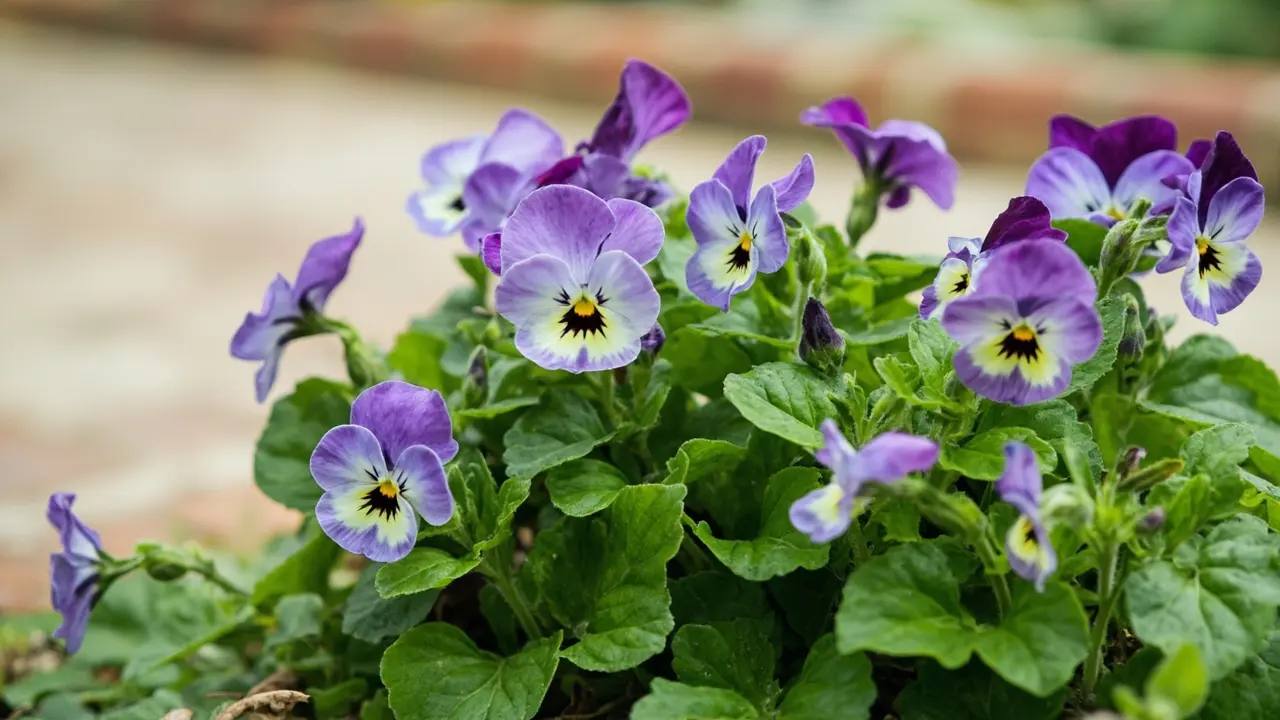
The flower is what distinguishes a garden pansy from every other Viola in cultivation. Each bloom is large, rounded and flat-faced, with five overlapping petals arranged so the lowest petal acts as a landing pad for pollinators; the exact bloom diameter is cultivar- and season-dependent and is not given a single universal figure in the inspected evidence. Most modern cultivars carry a darker, contrasting central blotch on the lower three petals, often called the "face", though blotchless, plain and picotee forms exist. Colour range spans white, cream, yellow, orange, blue, purple, mahogany and near-black, with bicolour and tricolour markings recorded across the Ultima, Joker, Matrix, Cool Wave and Delta series. The flower is borne on a slender stalk above the foliage, and regular deadheading is what keeps new buds coming.
Pansies are easily told apart from their near relatives. Viola cornuta (the horned viola, sometimes sold as "mini pansy" or "horned pansy") is a separate species: it has smaller, more numerous flowers, a narrow spur at the back and a tighter, mat-forming habit — it is a different plant, not a small pansy. Viola tricolor (wild heartsease) is the small, leggy wildflower of field margins and short grass, with noticeably smaller flowers and a weedy habit, and the native common dog-violet (Viola riviniana) is our wild violet of woodland edges and lawns with tiny, pale-violet flowers on long stalks — a charming wildflower, but nothing like a garden pansy in scale or display.
Growing Conditions
Pansies in UK gardens want a bright but cool position and a soil that holds moisture without sitting wet. The RHS Plants cultivar records for the Ultima, Joker, Matrix, Cool Wave and Delta series consistently describe fertile, humus-rich, moist but well-drained soil in full sun or partial shade. The "cool" part is important: pansies sulk once the soil bakes and roots overheat, which is one reason they thrive in autumn, late winter and early spring and fade as the summer comes on.
For position, the practical UK reality is that an open, breezy site in full sun gives the strongest autumn and early-spring display, while a slightly shaded bed or one that catches only morning sun in midsummer keeps the plants in flower for longer through the warm end of the window. South-facing brick planters in city centres can run too hot in late spring; partial shade or a container that can be moved out of the midday sun keeps the display going. Pansies are equally at home in open ground, in containers and window boxes alongside other cool-season bedding, and in hanging baskets where the Cool Wave series can trail.
Soil-wise, aim for a neutral to slightly acid loam that drains freely but does not dry out completely. Heavy clay benefits from added organic matter and grit to keep pansy roots aerobic; thin, sandy soils benefit from compost or well-rotted manure to hold moisture. Pansies dislike waterlogging, so raised beds and containers with drainage holes are a sensible choice on wet UK sites. Slow-release fertiliser at planting is a common grower recommendation, and where a liquid feed is used during the main flowering window the manufacturer's labelled rate is the safer rule; the inspected RHS evidence does not pin a single universal UK schedule.
Hybrid-level hardiness is left explicitly unknown in the canonical plant_record. The author has seen no authoritative RHS or Kew source that pins a single hardiness rating on the garden pansy as a whole. The cultivar-level hardiness entries on individual RHS plant pages — including the Delta, Matrix, Cool Wave and Ultima series records — are the right place to check before planting, and the safest editorial position is to match cultivar choice to local conditions rather than to assert a hybrid-wide H-code. Likewise, an authoritative nursery-bought food-use safety statement for the garden pansy is not established by the inspected evidence, and the plant_record records safety as not asserted.
Planting and Care
In the UK, pansies are essentially two overlapping crops: an autumn-planted display that carries through winter into spring, and a spring-planted display for late spring and early summer colour. RHS monthly advice puts the main autumn planting in September and October, with November flagged as the last practical window for winter bedding once the soil cools further. For a traditional autumn show, garden centres sell young plants from late August onwards; plant them out as soon as conditions allow so they establish before the soil turns cold, water them in well and give them a fortnight to settle.
For a long UK flowering window, deadheading is the single most effective job. Snipping off spent blooms before they set seed keeps new buds coming and pushes the display well into spring and, in a cool year, on towards early summer. Where a liquid feed is used during the main flowering window, follow the manufacturer's labelled rate; regular watering during dry spells — especially in containers where the rootball is small — and the removal of any yellowing or mildewed leaves will hold a display together from October through to the May or June handover to summer bedding. Cultural causes are usually the first thing to check when a pansy struggles, so correct watering, drainage and airflow before reaching for a chemical fix.
Sowing dates depend on whether you want autumn or spring display. RHS cultivar records consistently note late winter / early spring sowing as the inspected baseline for autumn planting; prick out seedlings once they have a true leaf or two and grow them on under cover before planting out in September. For a spring display, sow in late summer, overwinter the young plants under cover, and plant out as soon as the ground is workable. The exact week varies with cultivar, region and the weather of the year, so treat either calendar as a starting point rather than a fixed rule.
Pinch back leggy plants to encourage bushy regrowth, and replace any plant that has collapsed with crown rot rather than nursing it. As the days lengthen and the soil warms, the autumn-planted display will start to stretch and go thin; this is the signal to clear it in favour of summer bedding, usually in May or June. Pansies are easy to lift and compost, and the same bed can then take the warm-season planting.
Common Problems
UK pansies face a fairly predictable set of problems, and the RHS disease pages for pansy leaf spots and pansy downy mildew describe the most common. Leaf spot shows as brown or purplish spots, sometimes with a paler centre, and is attributed by RHS to Ramularia lactea, R. agrestis and Mycocentrospora acerina. Downy mildew shows as pale, angular blotches on the upper leaf surface with a fuzzy grey-purple growth on the underside in damp weather. The right response in both cases is to remove affected leaves promptly, thin the planting to improve airflow, avoid overhead watering, and lift badly affected plants rather than letting the disease carry over to neighbours.
Aphids are a regular visitor on the soft spring growth and are best dealt with early — squashing by hand on small plantings is the usual first step, with insecticidal soap used only where the infestation is heavy and the product's label permits. Yellowing leaves, weak growth and crown loss usually point back to growing conditions rather than a specific pest: waterlogging, poor drainage, overcrowded planting or a container that has dried out and then been soaked. Pansies dislike any of these, and sorting the cultural cause matters more than reaching for a chemical fix.
Mottled, distorted leaves and stunted plants in pansy plantings are consistent with pansy mosaic virus and other viruses documented on the genus, for which there is no cure. The standard response to a virus-suspected plant in a UK bedding setting is to lift and destroy the affected plant rather than home-compost it; for a definitive identification and current local control guidance, consult the most recent RHS advice, since management guidance for viruses in ornamental bedding is updated over time.
Finally, leggy, tired plants in late spring are not a disease — they are pansies finishing their cool-season run. The right move is to deadhead hard for one last flush, then accept that the display has run its course and lift the plants to make way for summer bedding. Trying to push pansies through a hot July is a common UK gardening mistake and almost always ends in mildewed, stretched plants.
Popular Varieties
Cultivars in this article are limited to the RHS-verified series recorded against the canonical plant_record — Ultima, Joker, Cool Wave, Matrix and Delta; the descriptions below are restricted to those series and do not invent dimensions or new cultivar names. Specific named cultivars within each series vary year on year at retail, and the current RHS plant page for the series is the right place to confirm what is on sale in any given season.
The Ultima Series is a compact pansy with the classic "face" — a darker central blotch on the lower petals — in a wide colour range including yellow, blue, purple, white and bicolours. Recorded by RHS Plants as one of the compact garden-pansy series for UK autumn and spring bedding, with the Ultima Morpho cultivar being a long-standing favourite for its soft blue-and-yellow markings. Like the other compact series it is suited to formal beds, small containers and window boxes.
The Joker Series is grown chiefly for its strongly marked, bicolour and tricolour flowers with vivid faces, and is one of the more eye-catching pansy series for late autumn and spring display on the RHS Plants record. It is documented as a compact form alongside Ultima, Matrix and Delta, with a similar use in beds, edging and small containers.
The Matrix Series is a modern, large-flowered compact pansy recorded on RHS Plants, with a wide colour range including solids, blotched faces and bicolours. Its RHS-recorded habit places it alongside the other compact series for UK autumn and spring bedding.
The Cool Wave Series is the trailing pansy series on the RHS Plants pages, recorded for hanging baskets, the edges of large containers and the front of raised beds. Its RHS-recorded habit is a sideways-spreading trail rather than the upright compact form, and its colour range spans the usual pansy palette.
The Delta Series is a compact, large-flowered pansy series recorded on RHS Plants, with a wide colour range including clear single colours and bicolours, and is documented alongside Ultima, Joker and Matrix for UK autumn and spring bedding.
Together these five series cover the bulk of what UK gardeners will find at retail and that the RHS Plants pages consistently verify. Specific cultivars within each series come and go, but the series themselves are the consistent, RHS-verified framework for choosing a pansy that suits the planting in hand. For a cool-season display that mixes well with cyclamen, primrose, autumn crocus, winter-flowering heather and snowdrop, the upright compact series — Ultima, Joker, Matrix and Delta — fit beds and small containers, while Cool Wave is the natural pick for baskets and the edge of larger planters. Plan the planting into the wider UK seasonal rhythm with autumn garden jobs, winter garden preparation and spring garden tasks, and the display will sit cleanly inside the rest of the A-Z plants index.
Cultivars and Varieties
| Cultivar | Height | Flower | Notes | AGM |
|---|---|---|---|---|
| 'Cool Wave Series' | — | — | Trailing pansy; spreads sideways to roughly 60 cm across; for hanging baskets, edges of large containers and front of raised beds. | |
| 'Delta Series' | — | — | Compact large-flowered pansy; wide range including clear single colours and bicolours. | |
| 'Joker Series' | — | — | Compact pansy with strongly marked bicolour and tricolour flowers; vivid faces. UK autumn and spring bedding. | |
| 'Matrix Series' | — | — | Modern large-flowered compact pansy; wide colour range including solids, blotched faces and bicolours. | |
| 'Ultima Series' | — | — | Compact pansy with classic face — darker central blotch on lower petals; wide colour range including yellow, blue, purple, white and bicolours. |
Pests and Diseases
| Problem | Symptoms | Management |
|---|---|---|
| pansy leaf spot | Brown or purplish spots on leaves, sometimes with a paler centre (RHS attributes the leaf-spot complex to Ramularia lactea, R. agrestis and Mycocentrospora acerina). | Remove affected leaves promptly, thin the planting to improve airflow, avoid overhead watering, and lift badly affected plants rather than letting the disease carry over to neighbours. |
| downy mildew | Pale, angular blotches on the upper leaf surface with a fuzzy grey-purple growth on the underside in damp weather. | Remove affected leaves, thin the planting to improve airflow, avoid overhead watering, and lift badly affected plants. |
| rots | Yellowing leaves, weak growth and crown loss, usually pointing back to growing conditions (waterlogging, poor drainage, overcrowded planting or a container that has dried out and then been soaked). | Sort the cultural cause first — correct watering, drainage and airflow. Replace any plant that has collapsed with crown rot rather than nursing it. |
| aphids | Regular visitor on the soft spring growth. | Squash by hand on small plantings; use insecticidal soap only where the infestation is heavy and the product's label permits. |
For step-by-step help, read Controlling Aphids Naturally and Treating Powdery Mildew. Or browse the full plant problem solver to diagnose an issue by symptom.
Recommended Products
GardenWizz earns a commission from qualifying purchases made through affiliate links on this page (including links within the article) — as an Amazon Associate, and from Thompson & Morgan via the Awin network. This does not affect the price you pay. See our disclaimer for details.