Sweetcorn
Zea mays
The Gardening Year
Best months in UK gardens · full planting calendar →
🖨 Print-friendly care cardAt a Glance
| Botanical name | Zea mays |
|---|---|
| Common name(s) | Sweetcorn |
| Family | grass family |
| Plant type | annual |
| Position | Full sun |
| Soil | fertile soil with well-rotted organic matter |
| Toxicity | Not yet established. Do not assume this plant is safe for people or pets. |
| Native range | Mesoamerica |
Sowing sweetcorn in the UK
Sweetcorn needs warmth, sunshine and a reasonably long growing season. Sow under cover in mid-spring and plant out after the last frost once plants are hardened off, or direct-sow in warmer late-spring soil. Choose varieties suited to British conditions and avoid exposing young plants to cold, wet ground.
Planting in blocks and feeding
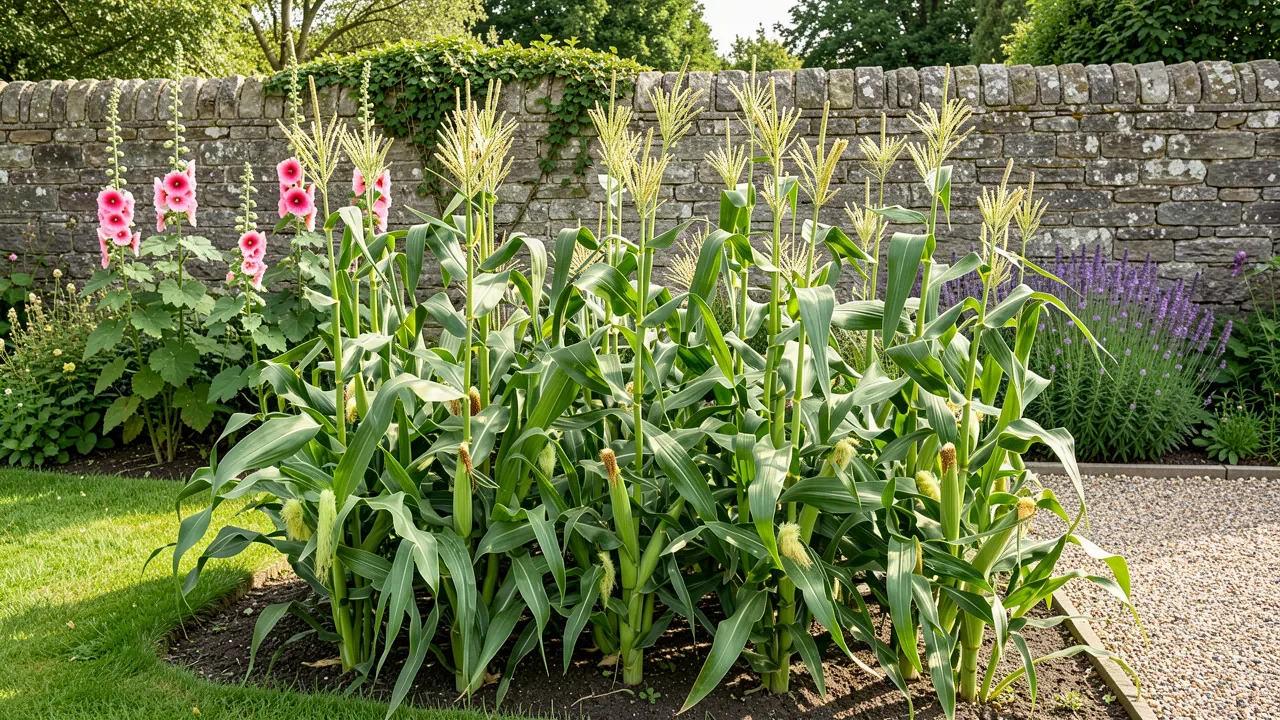
Grow sweetcorn in a sunny, sheltered position in fertile soil improved with well-rotted organic matter. Plant in a block rather than a single long row to improve wind pollination. Keep the soil evenly moist, especially during flowering and cob development, and provide mulch where suitable.
Harvest and potential problems
Cobs are generally picked from midsummer into autumn depending on variety and sowing time. Check kernels for ripeness rather than picking solely by calendar date. Birds and other animals may damage developing cobs; monitor for smut swellings and use appropriate crop hygiene. Do not assume supersweet and other types can always be grown together without affecting flavour.
Source: RHS gardening guidance. Advice is adapted to UK growing conditions.
Cultivars and Varieties
| Cultivar | Height | Flower | Notes | AGM |
|---|---|---|---|---|
| 'Conqueror' | — | — | RHS AGM (H2) | ✔ |
| 'Earlibird' | — | — | RHS AGM (H2) | ✔ |
| 'Goldcrest' | — | — | RHS AGM (H2) | ✔ |
| 'Lark' | — | — | RHS AGM (H2) | ✔ |
| 'Mirai Gold' | — | — | RHS AGM (H2) | ✔ |
| 'Mirai 003Y' | — | — | RHS AGM (H2) | ✔ |
| 'Ovation' | — | — | RHS AGM (H2) | ✔ |
| 'Swift' | — | — | RHS AGM (H2) | ✔ |
Pests and Diseases
| Problem | Symptoms | Management |
|---|---|---|
| Slugs and snails | Irregular holes chewed in young leaves or seedlings eaten entirely at soil level. | Use beer traps, copper tape barriers, or iron phosphate pellets around vulnerable seedlings. |
| Maize smut | Swollen, white to greyish-black galls forming on stems, leaves, or developing cobs. | Remove and destroy infected plant parts immediately; rotate crops to reduce soil-borne spores. |
| Birds | Pecked kernels at the tips of ripening cobs or damaged tassels preventing pollination. | Cover developing cobs with netting, paper bags, or fleece once silks turn brown. |
| Mice | Seeds missing from the soil shortly after sowing or seedlings pulled out of the ground. | Protect sown areas with wire mesh guards or use humane traps before and during sowing. |
| Poor pollination | Cobs with missing kernels, particularly at the tip, due to wind or isolation issues. | Plant in blocks rather than single rows and hand-pollinate by shaking tassels over silks. |
Or browse the full plant problem solver to diagnose an issue by symptom.