
How to Grow Raspberries: Planting, Pruning and Picking
Raspberries grow reliably across the UK: plant bare-root canes from November to March, then prune according to whether they fruit in summer or autumn. Give them fertile, moisture-retentive soil and…
At a Glance
| Sun | Full sun to partial shade |
|---|---|
| Soil | Fertile, moisture-retentive, slightly acidic |
| Plant | November or February (bare-root canes) |
| Spacing | 40 cm apart in 1.5 m rows |
| Hardiness | H5 — most UK gardens |
| Difficulty | Easy |
| Time to harvest | Crops June (summer) or August (autumn) onwards |
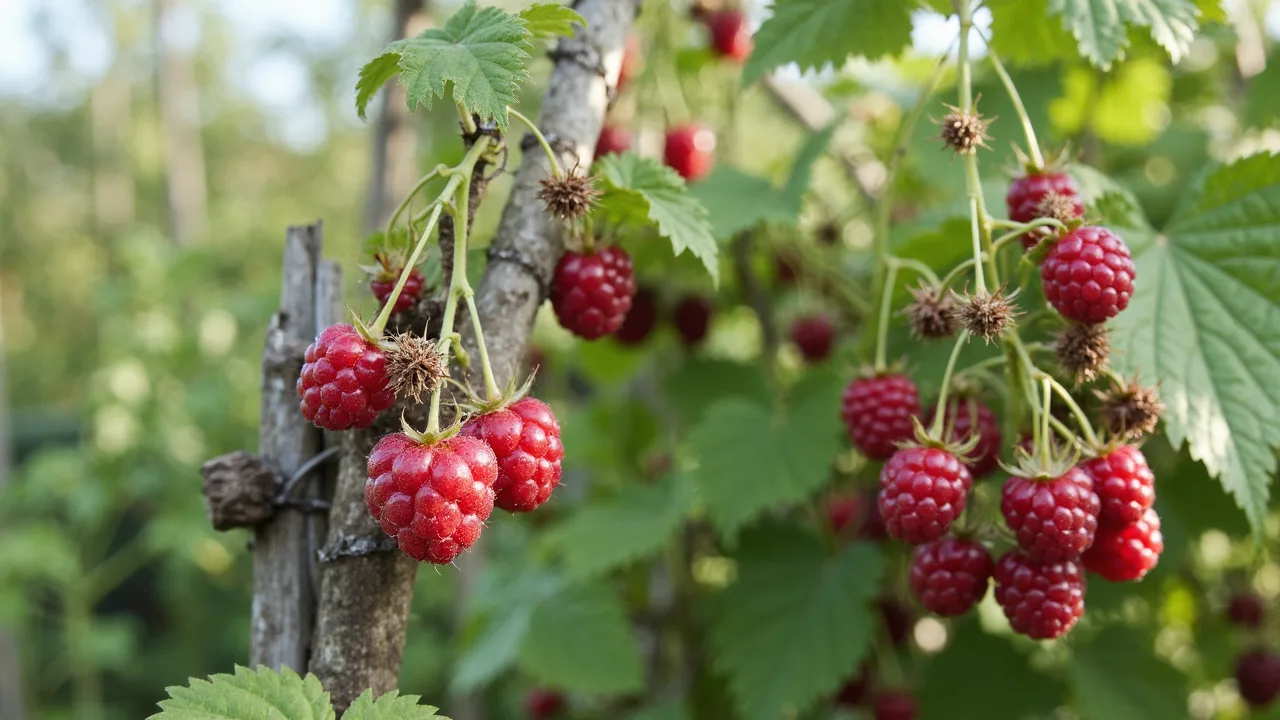
Raspberries grow reliably across the UK: plant bare-root canes from November to March, then prune according to whether they fruit in summer or autumn. Give them fertile, moisture-retentive soil and you can pick berries from June to October.
| At a Glance | Details |
|---|---|
| Difficulty | Easy |
| Time to harvest | Crops June-October depending on type; plants fruit 10+ years |
| Spacing | 60 cm apart in rows 2 m apart |
| Sun | Full sun to light shade |
| Soil | Fertile, moisture-retentive, slightly acidic |
| Hardiness | H5 — most UK gardens |
| Sow | November-March (bare-root canes) |
| Harvest | June-October, depending on type |
Overview
A 3 m row of established raspberry canes can provide bowls of fruit for weeks, and a well-kept planting may remain productive for more than 10 years. This guide explains how to grow raspberries, from planting and supporting new canes to pruning each type correctly and picking ripe fruit in a UK garden.
Summer-fruiting raspberries carry berries on canes made the previous year, usually in June and July. Autumn-fruiting raspberries crop on the current year's growth from August into October, so combining both types gives a much longer harvest season. Start with healthy raspberry plants, and plan the row alongside other fruit-growing guides rather than squeezing it into a shaded corner.
When to Start in the UK
Bare-root canes are planted while dormant, from November to March, whenever the ground is neither frozen nor waterlogged. In southern England, Wales and sheltered coastal gardens, aim for mid-November to late February; in Scotland and northern England, late November to mid-March is often more practical because saturated or frozen soil can delay planting.
Container-grown plants can go in throughout the year, but March-April or October-November reduces watering pressure. There is no useful soil-temperature trigger for dormant canes: soil condition matters more, and the spade should enter crumbly ground rather than smear a cold, wet trench. If delivery arrives during bad weather, heel bare roots temporarily into moist soil or pot them in peat-free compost rather than letting the roots dry.
I prepare the row at least 2 weeks before planting so incorporated organic matter settles. Choose a sheltered position with full sun to light shade, avoiding exposed frost pockets and beds where raspberries, blackberries or other Rubus plants recently grew.
What You'll Need
For a 4 m row, gather the following:
- 7 healthy bare-root raspberry canes, allowing 60 cm between plants
- A garden fork and spade for preparing a strip about 60 cm wide
- One bucket of well-rotted garden compost or manure per square metre
- Two 2.4 m treated posts, plus intermediate supports for a longer row
- Galvanised wire, strainers and vine eyes for support lines at roughly 60 cm, 1.2 m and 1.6 m
- A watering can or hose, giving about 10 litres per cane after planting
- 5-8 cm of composted bark, garden compost or other organic mulch
- Clean, sharp secateurs and stout gloves
- Soft garden twine for tying summer-fruiting canes
- Bird-safe fruit netting on a rigid frame for cropping time
A simple trick is to set up the wire support before planting; it avoids trampling newly settled roots while wrestling with posts later. Check underground services before driving posts, and leave enough room to reach both sides of the row.
Step-by-Step Guide
-
Choose the raspberry type. Decide whether you want summer fruit in June-July, autumn fruit in August-October, or a row of each. Keep the types in separate, clearly labelled groups because their pruning methods differ completely.
-
Select the site. Pick a sheltered row in full sun to light shade with free drainage and access for picking. Avoid a hollow that stays waterlogged after winter rain, as raspberry roots need moisture but not stagnant soil.
-
Clear perennial weeds. Remove couch grass, bindweed and ground elder roots from a strip at least 60 cm wide. I do this thoroughly before planting because digging tangled weeds from among shallow raspberry roots later is frustrating and damaging.
-
Improve the soil. Fork one bucket of well-rotted organic matter into each square metre of fertile, moisture-retentive soil. On heavy clay, plant on a low raised ridge and improve drainage; on light soil, add generous compost to hold summer moisture.
-
Install supports. Set sturdy posts at the row ends and tension three horizontal wires at about 60 cm, 1.2 m and 1.6 m. Summer-fruiting canes need tying in; autumn types are shorter but still benefit from wires or a supporting rectangle where wind is strong.
-
Soak bare roots. Stand the roots in a bucket of water for 30-60 minutes immediately before planting. Do not leave them soaking overnight, and never expose unpacked roots to a drying wind.
-
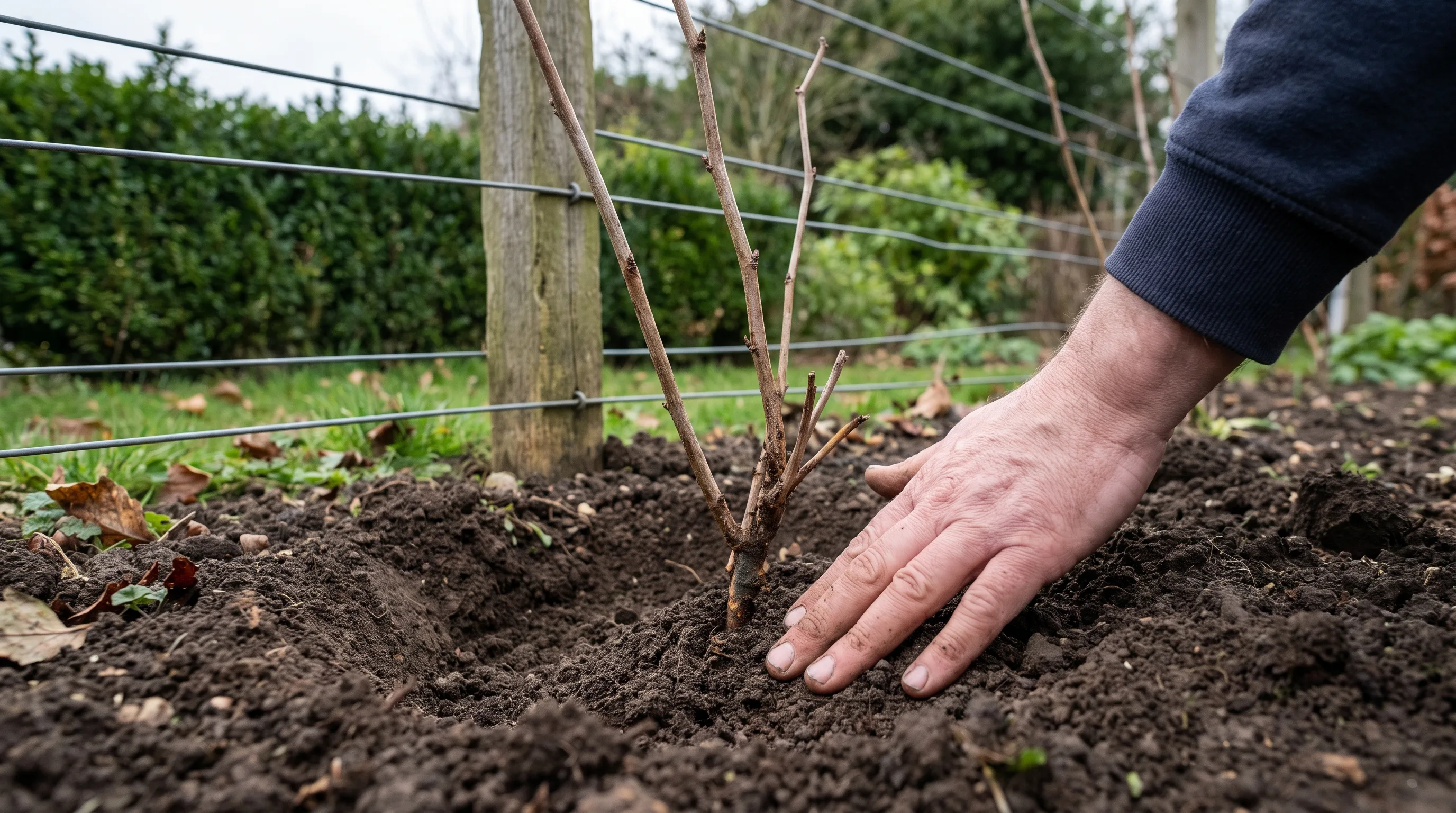
Plant at the original depth. Dig a wide, shallow hole, spread the roots out and position the old soil mark at ground level. Planting too deeply can encourage poor establishment, so firm the soil gently and keep the crown close to its nursery depth.
-
Space the row. Set canes 60 cm apart and keep parallel rows 2 m apart. These measurements allow light and air into the planting while leaving a practical path for pruning, netting and harvesting.
-
Water and mulch. Give each cane about 10 litres of water, then spread a 5-8 cm organic mulch without burying the crown. Water deeply during dry spells throughout the first summer; a weekly soak is better than a daily splash.
-
Cut newly planted canes back. Shorten bare-root canes to about 25 cm after planting unless the nursery explicitly says they are long-cane plants intended to crop immediately. This directs energy into roots and strong shoots rather than a weak first crop.
-
Train summer-fruiting canes. Tie new green canes individually to the wires as they grow, keeping roughly 10-12 strong canes per metre of row. Remove weak, damaged and surplus shoots at ground level to keep the centre airy.
-
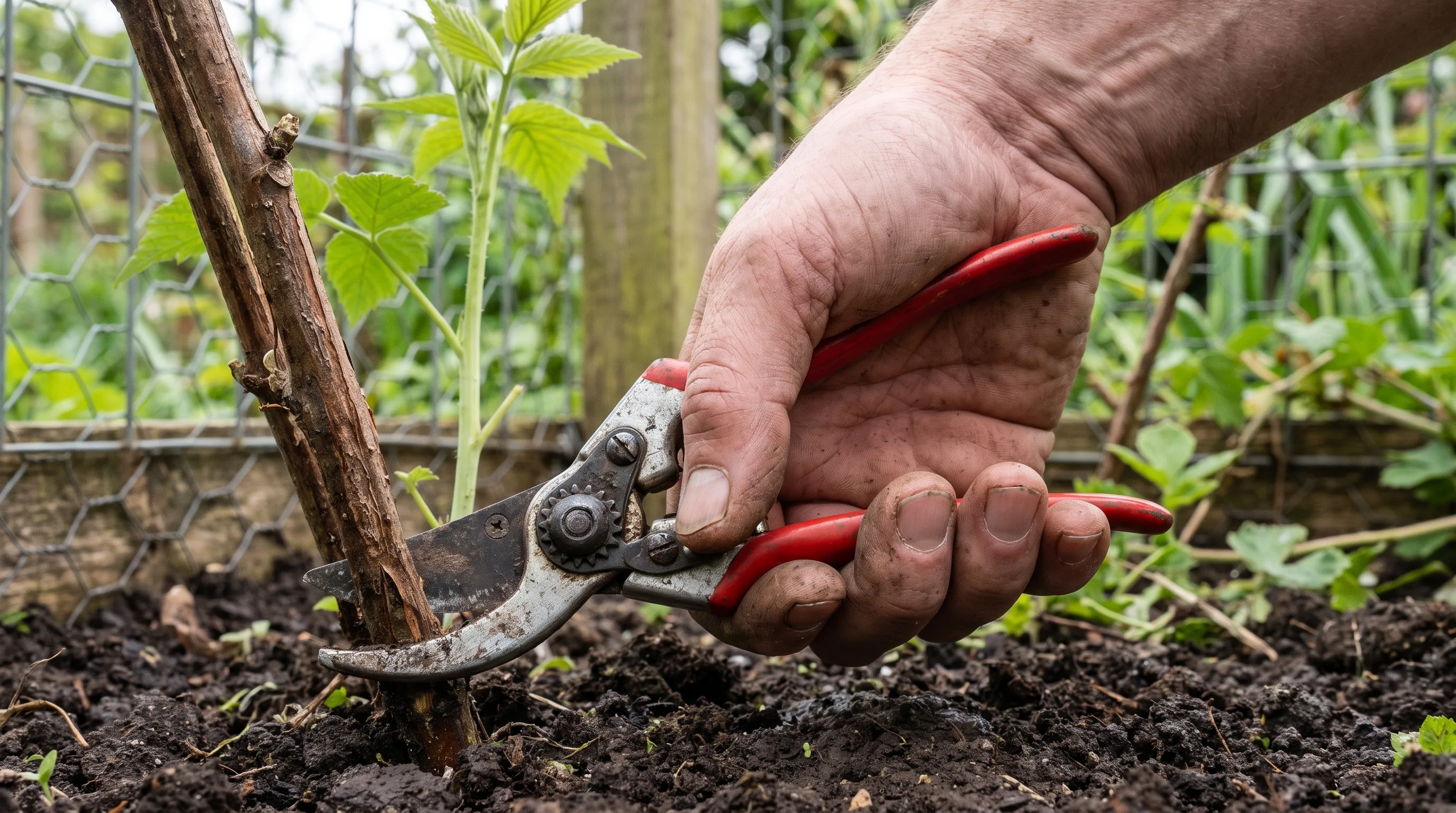
Prune summer-fruiting plants after harvest. Cut every cane that carried fruit - identifiable by its brown wood and old fruiting laterals - right to ground level. Leave and tie in the fresh green canes because they carry next summer's crop; one common mistake is cutting these down as well.
-
Prune autumn-fruiting plants in February. Cut all canes to ground level before new growth begins. Their berries form on shoots produced that same year, making pruning simpler than for summer varieties.
-
Feed and renew the mulch. Apply a general-purpose organic fertiliser in March according to its label, then top up mulch to 5 cm. Keep fertiliser off leaves and avoid excessive nitrogen, which produces soft growth at the expense of fruit.
-
Protect and pick the crop. Fix taut bird-safe netting to a frame before berries colour in June or August, checking that wildlife cannot become trapped. Pick every 2-3 days when each berry has full colour and slips from its core with a gentle pull.
-
Control wandering suckers. Slice through shoots appearing more than about 30 cm from the row with a sharp spade. Pot a healthy sucker for propagation if wanted, but remove the rest before the raspberry bed spreads into paths and neighbouring crops.
Established plants need steady moisture from flowering through harvest. During a dry UK summer, water the root zone thoroughly once or twice a week, keeping foliage as dry as practical; visit the July gardening calendar for timely watering and picking reminders.
Common Problems
Raspberry beetle
- Symptom: Small cream-white maggots appear inside the receptacle or berries become dry and misshapen in June and July.
- Cause: Adult raspberry beetles lay eggs in flowers, and the larvae feed inside developing fruit.
- Fix: Hoe lightly beneath canes in spring, pick fruit promptly and remove affected berries. For severe recurring damage, use only a pesticide currently authorised for edible raspberries in the UK, following its label exactly and avoiding treatment while bees are active; check the GardenWizz problem solver and current RHS guidance before spraying.
One common mistake is assuming every pale larva is harmless. Check early fruit carefully, especially on summer-fruiting cultivars flowering in May and June, and use the May garden calendar to time regular inspections.
Cane blight
- Symptom: Individual canes wilt or die, often with dark, cracked lesions around pruning wounds near the base.
- Cause: A fungal infection enters damaged cane tissue, particularly in wet conditions or crowded rows.
- Fix: Cut diseased canes to ground level during dry weather, disinfect secateurs between cuts and dispose of infected material through local green-waste guidance rather than home composting. Improve airflow and avoid injuring canes when tying them.
A useful trick is to make clean cuts flush with the base instead of leaving 5 cm stubs where disease can persist.
Spur blight
- Symptom: Purple-brown patches form around buds on young canes, leaves yellow and fruiting spurs may fail the following year.
- Cause: Fungal spores spread in damp, congested raspberry beds.
- Fix: Thin summer-fruiting rows to around 10-12 well-spaced canes per metre, remove infected material and keep weeds down so foliage dries faster after rain.
Many gardeners first notice spur blight in late summer, when purple patches contrast with green new canes. Inspect the shoots you intend to retain before tying them in.
Birds
- Symptom: Ripening berries disappear or show peck marks just as they begin to colour.
- Cause: Blackbirds and other garden birds quickly learn where fruit ripens in June and again from August.
- Fix: Stretch properly sized bird-safe netting over a rigid fruit cage, secure every edge and inspect it daily. Remove the net promptly after harvest and never drape loose mesh directly over canes.
I net before the first berry turns pink because waiting 2 days can cost much of an early crop. Where possible, choose a walk-in cage that makes daily wildlife checks and picking straightforward.
Poor growth or crumbly fruit
- Symptom: Canes remain short, leaves pale, or berries are small and break apart when picked.
- Cause: Drought, exhausted soil, competition from suckers, poor pollination during cold wet flowering weather, or virus-infected old stock can all reduce yield.
- Fix: Water deeply, renew a 5 cm mulch, feed in March and thin overcrowded rows. Replace persistently weak or distorted plants with certified stock in fresh ground rather than propagating them.
If you've struggled with crumbly berries for 2 successive seasons despite good care, replacement is usually more effective than endlessly feeding an unhealthy planting.
Expert Tips
- Grow one summer type and one autumn type to extend picking from June into October; label each row at both ends before winter pruning.
- Tie summer-fruiting canes in at about 10-12 per metre and remove extras, giving each fruiting lateral light and moving air.
- Keep a 5-8 cm mulch over the root run, but leave a small clear collar around every crown to reduce rot.
- Pick ripe raspberries every 2-3 days into shallow trays and refrigerate them promptly; wash only just before eating because wet berries spoil faster.
- Replace or relocate an ageing, virus-prone row after roughly 10 productive years, choosing certified canes and fresh ground; compare the process with the blackberry growing guide.
FAQ
Can raspberries grow in pots? Yes. Use a container at least 40-50 cm wide for one compact plant, fill it with good peat-free loam-based compost and provide a cane or wire support. Containers dry quickly, so check moisture daily in warm weather and refresh the top layer each spring.
Why are my raspberry canes not fruiting? Incorrect pruning is a frequent cause: summer varieties fruit on last year's canes, while autumn varieties fruit on this year's growth. Shade, drought during flowering, weak old stock and cutting new summer canes down after harvest can also prevent a crop.
When should I prune raspberries in the UK? Cut fruited summer canes to ground level immediately after their June-July harvest and retain new green canes. Cut every autumn-fruiting cane to ground level in February; see the February garden calendar for other late-winter jobs.
Can I grow summer and autumn raspberries together? You can grow both in one garden, but separate and label the groups. A 2 m gap or a permanent marker helps prevent February's all-over autumn pruning from being applied to summer canes.
What are useful companion plants for raspberries? Low, shallow-rooted annual flowers such as sweet alyssum can attract beneficial insects at the row edge, provided they do not compete for water. Keep the main 60 cm planting strip weed-free and avoid vigorous companions around the canes.
Varieties to Try
A 4 m row can hold about 7 canes, so choose either one cultivar for easy management or two clearly separated groups.
- 'Glen Ample' - A widely sold summer-fruiting cultivar with good yields and an RHS Award of Garden Merit; look for certified canes from UK fruit nurseries and major garden centres.
- 'Tulameen' - A summer cultivar valued for large berries over a long picking period; available from specialist UK soft-fruit suppliers.
- 'Malling Jewel' - An early summer-fruiting heritage choice suited to gardeners wanting berries near the start of the season; sold by several UK heritage-fruit nurseries.
- 'Autumn Bliss' - A dependable autumn-fruiting standard that begins cropping from late summer; commonly stocked by UK nurseries and garden centres.
- 'Polka' - A modern autumn cultivar producing large fruit on current-season canes; buy certified plants from UK soft-fruit specialists.
- 'Joan J' - A spine-free autumn-fruiting cultivar that makes picking and pruning more comfortable; widely available from British mail-order nurseries.
- 'All Gold' - A yellow autumn raspberry with sweet fruit and the same February pruning routine as red autumn types; seek it from specialist UK fruit nurseries.
Sources & Further Reading
- RHS: Grow your own raspberries
- RHS: Raspberry beetle
- RHS: Raspberry cane blight
- BBC Gardeners' World: How to grow raspberries
- Garden Organic: Organic growing advice
Recommended Products
GardenWizz earns a commission from qualifying purchases made through affiliate links on this page (including links within the article) — as an Amazon Associate, and from Thompson & Morgan via the Awin network. This does not affect the price you pay. See our disclaimer for details.
Related Articles
More → Growing Guide
How to grow ornamental grasses in pots
5 August 2026Grow ornamental grasses successfully in containers with advice on pot size, compost, watering, feeding, winter care and long-term maintenance.
 Growing Guide
How to plan a perennial border
5 August 2026Plan a balanced perennial border with practical guidance on position, colour, height, spacing, flowering succession and year-round structure.
 Growing Guide
How to take hardwood cuttings
29 July 2026Take hardwood cuttings from suitable dormant shrubs and climbers with this step-by-step guide to timing, preparation, rooting and aftercare.