
How to Grow Potatoes: From Chitting to Harvest
Potatoes reward a bit of patience with the sort of harvest that fills a kitchen drawer. Chit your seed tubers in late January, plant from mid-March once the soil has warmed to about 7°C, and you can…
At a Glance
| Sun | Full sun |
|---|---|
| Soil | Fertile, moisture-retentive, pH 5.0-6.0 |
| Plant | Mid-March (first earlies), April (second earlies & maincrop) |
| Spacing | 30-40 cm between tubers in 60-75 cm rows |
| Hardiness | H4 — top growth killed by frost, tubers survive in ground |
| Difficulty | Easy |
| Time to harvest | 10-20 weeks from planting |
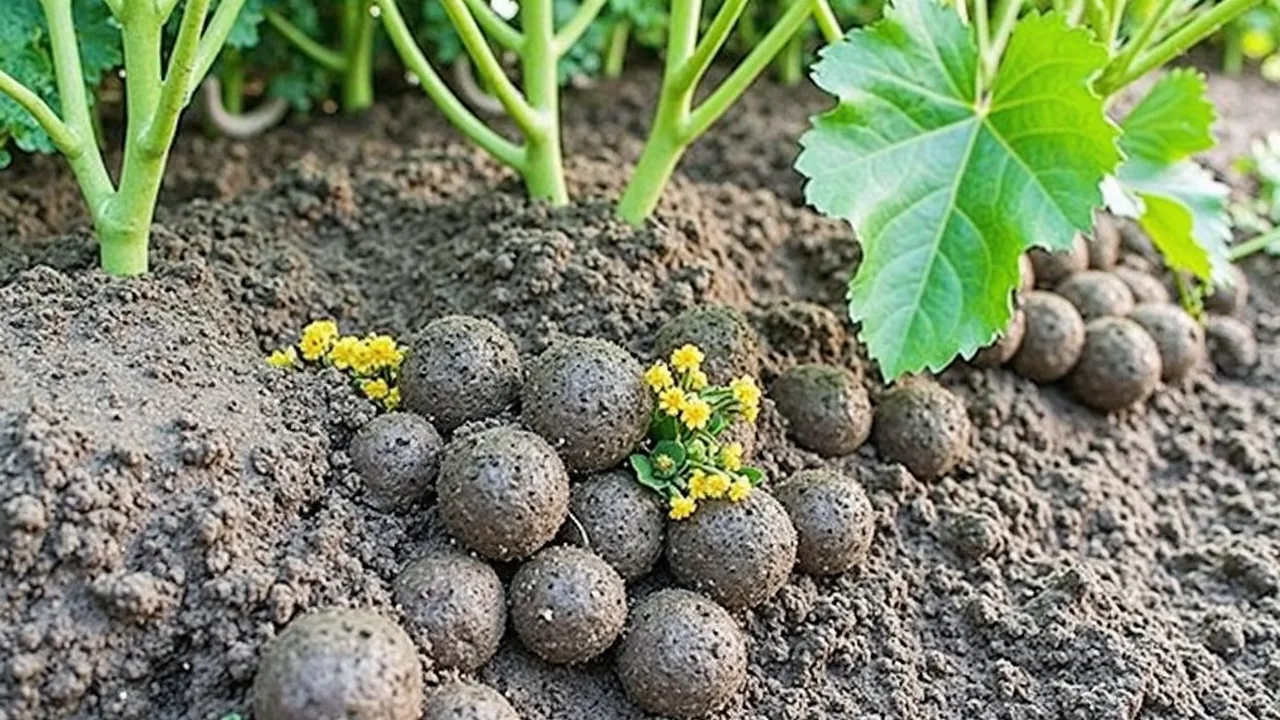
Potatoes reward a bit of patience with the sort of harvest that fills a kitchen drawer. Chit your seed tubers in late January, plant from mid-March once the soil has warmed to about 7°C, and you can be lifting your first earlies before the Wimbledon final.
| At a Glance | |
|---|---|
| Difficulty | Easy |
| Time to harvest | 10–13 weeks (first/second earlies); 15–20 weeks (maincrop) |
| Spacing | 30 cm apart in 60 cm rows |
| Sun | Full sun |
| Soil | Fertile, well-drained, slightly acidic |
| Hardiness | H3 — half-hardy, foliage killed by frost |
| Sow | Plant chitted tubers March–April (early); April (maincrop) |
| Harvest | June–July (first earlies); July (second earlies); August–September (maincrop) |
Overview
This guide covers growing potatoes (Solanum tuberosum) in UK gardens and allotments, from chitting seed tubers on a windowsill through to harvesting a maincrop in early autumn. Most UK gardeners plant a mix — first or second earlies for an early taste of new potatoes, and a maincrop for storing through winter. I've grown all three groups on a north-facing allotment in Manchester for over a decade, and the three behave differently enough that picking the right one matters as much as anything you'll do in the soil. For help choosing a plot that drains well, see our guide to understanding your soil type, or browse our potato plant profile for the botanical side.
When to Start in the UK
In the south of England, mid-March through early April is the main planting window for chitted early varieties. In the north of England, Scotland, and Northern Ireland, wait until late March or early April, when soil temperature consistently reaches about 7°C — colder soil means tubers sit and rot rather than sprout.
First earlies: plant mid-March (south) to early April (north). Harvest June–July. Second earlies: plant late March to mid-April. Harvest July. Maincrop: plant mid- to late April, once the worst frost risk has passed. Harvest August–September. Our April jobs covers the wider bed-preparation context.
Chitting begins 4–6 weeks ahead of planting, so for first earlies that's late January to mid-February. Maincrop tubers don't need chitting — many gardeners find that chitted maincrops produce lots of small potatoes rather than the bakers they're after.
What You'll Need
- Seed potatoes — certified disease-free tubers from a UK supplier (e.g. a 2 kg bag of 'Charlotte' or 'Maris Piper')
- Egg boxes or seed trays — one tuber per dimple, eyes pointing up
- A spade or long-handled dibber — for planting trenches or individual holes
- Well-rotted manure or garden compost — a bucket per square metre forked into the bed in autumn or early spring
- General-purpose fertiliser — such as Growmore or blood, fish and bone, applied at planting
- A draw hoe or spade — for earthing up
- Horticultural fleece or old curtain — to throw over early foliage if a late frost is forecast
- Slug pellets (ferric phosphate) or nematodes — for protecting developing tubers
- A flat-tined garden fork — for lifting the crop without spearing the tubers
Step-by-Step Guide
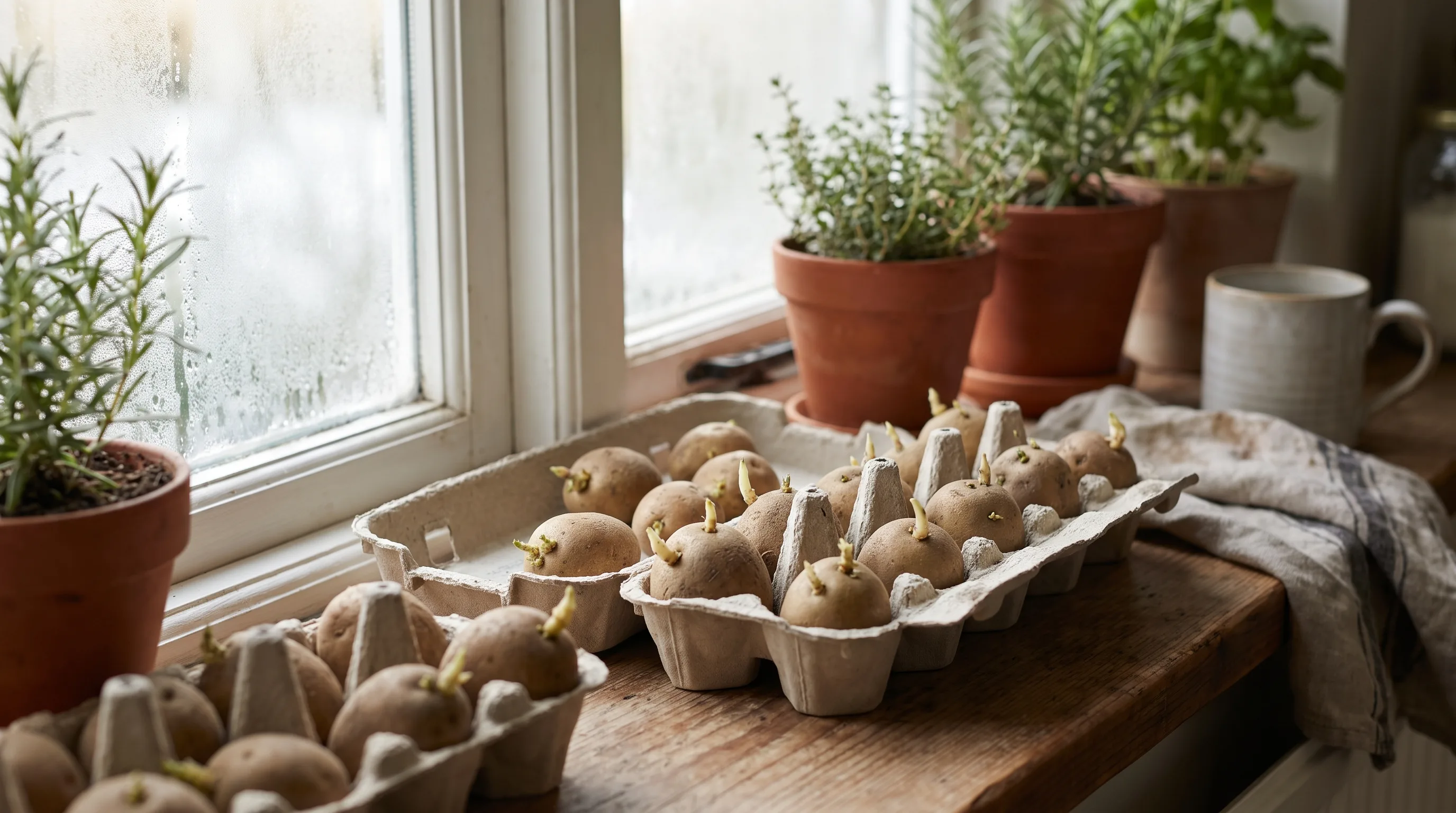
- Chit your seed tubers. Set each tuber in an egg box with the end holding the most eyes facing up. Place somewhere cool (around 7–10°C), bright but out of direct sun — a north-facing windowsill in an unheated room is ideal. Wait 4–6 weeks for short, sturdy, purple-green sprouts about 2 cm long. Long, pale, leggy shoots mean the spot is too warm.
- Prepare the bed. In autumn or early spring, dig over the plot and fork in a bucket of well-rotted manure per square metre. A couple of weeks before planting, rake in a general-purpose fertiliser at the rate on the packet. Potatoes tolerate most UK soils as long as drainage is reasonable; on heavy clay, plant on ridges or in trenches lined with compost. See improving heavy clay soil.
- Plant the chitted tubers. Dig a trench 12 cm deep. Set tubers 30 cm apart in rows 60 cm apart, sprouts uppermost. Earlies go in about 10 cm deep; maincrops benefit from the deeper end of the range. Draw soil back over to leave a slight ridge.
- Protect from frost. When the first green shoots push through (usually 3–4 weeks after planting), watch the forecast. If frost is forecast, draw extra soil over the shoots or cover with fleece overnight. Many northern gardeners lose the first flush every year by forgetting this step.
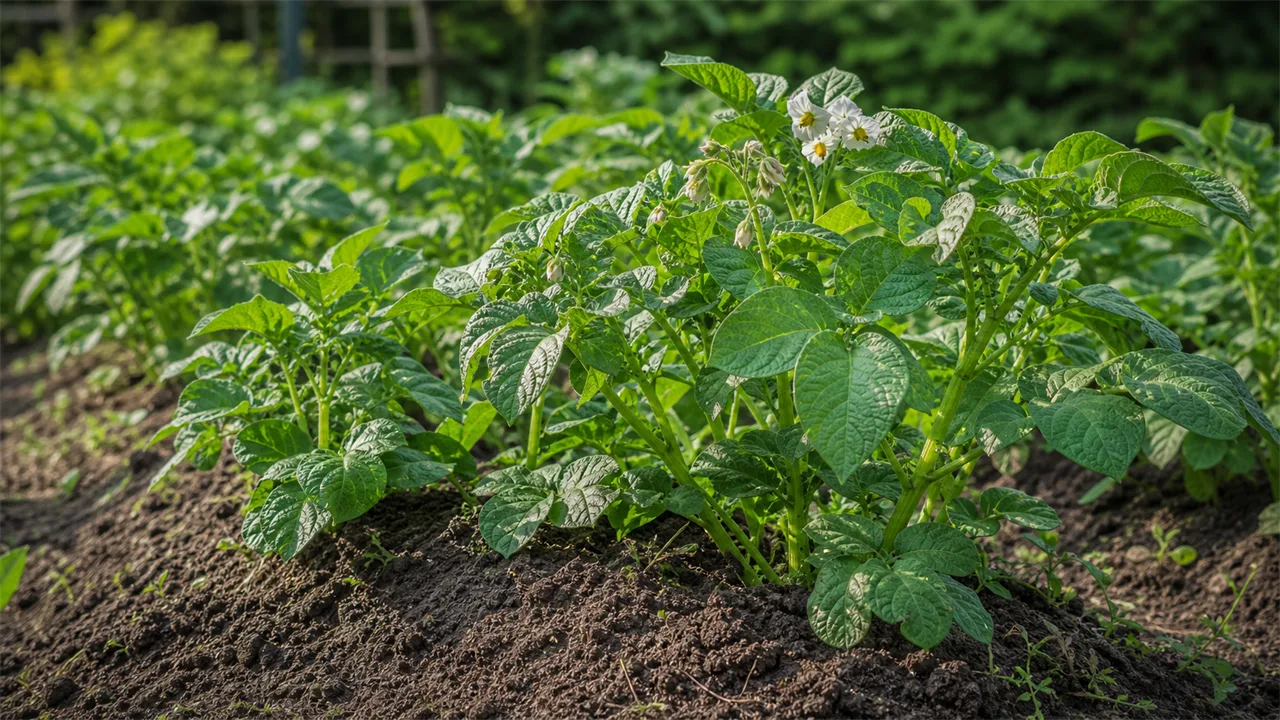
- Earth up the stems. Once foliage is about 20 cm tall, pull soil up around the stems to a height of about 15 cm, leaving the top leaves showing. Repeat every 2–3 weeks until the ridge is roughly 30 cm high. Earthing up prevents light reaching developing tubers (which turn green and toxic) and increases yield.
- Water during tuber initiation. Earlies don't need much extra water, but maincrops benefit from a thorough soak every 10–14 days during dry spells in June and July. Irregular watering leads to hollow heart, scab, and knobby second-growth.
- Watch for blight from late June onwards. In warm, humid weather (two consecutive days above 10°C with humidity above 90% — a "Smith Period") maincrops are at risk. Cut foliage to ground level at the first sign of brown lesions with white undersides, and leave the tubers in the ground for 2–3 weeks to let the skins set. Blightwatch UK publishes regional alerts.
- Harvest earlies as you want to eat them. "New" potatoes have no skin set and don't store. Fork up what you need for a meal and leave the rest growing. Maincrops are ready when the foliage has died back naturally or been cut down.
- Lift and store maincrops on a dry day. Fork carefully from the side of the ridge to avoid spearing. Dry the tubers on the surface for an hour, then store in hessian or paper sacks in a cool, dark, frost-free place. Discard green, damaged, or diseased tubers — they won't keep. See our September jobs, or follow on with parsnips in the rotation.
Common Problems
Potato Blight
- Symptom: Dark brown or black lesions on the leaves, often with a pale yellowish-green halo. White, fluffy sporulation on the underside of leaves in humid weather. Foliage collapses within 48 hours.
- Cause: Phytophthora infestans — the same oomycete that causes tomato blight. Spores travel on the wind for miles; warm, humid July and August weather (Smith Periods) trigger outbreaks.
- Fix: Cut all foliage to ground level and remove it (don't compost). Leave the tubers in the ground for 2–3 weeks so the skins set. Lift on a dry day. Choose resistant varieties next year — 'Sarpo Mira' and 'Setanta' hold up well. Burn or bin blighted foliage.
Potato Scab
- Symptom: Raised, corky, brown patches on the skin of otherwise healthy tubers. The flesh underneath is fine and the potatoes eat perfectly well.
- Cause: Common on alkaline soils (pH above 7) and in dry conditions during tuber initiation. Caused by Streptomyces bacteria living in the soil.
- Fix: Don't lime the potato bed. Keep the soil moist through early tuber development. On alkaline ground, grow resistant varieties like 'Maris Peer' or 'King Edward'. Scab is cosmetic — just peel a bit thicker. Our soil type guide explains how to test your pH at home.
Potato Cyst Nematode
- Symptom: Patches of stunted, yellowing, poorly-yielding plants. Tiny (about 0.5 mm), round, white or yellow cysts visible on the root hairs in summer. Often mistaken for nutrient deficiency.
- Cause: Globodera rostochiensis or G. pallida. Notifiable in the UK — the cysts persist in soil for 20+ years. Spread on contaminated tools, boots, and — historically — on seed potatoes.
- Fix: Prevention is everything: always buy certified seed, never plant shop-bought spuds. Once a plot is infested, avoid potatoes, tomatoes, or aubergines on it for at least 7 years. Report suspected outbreaks to DEFRA.
Slug Damage
- Symptom: Irregular holes chewed into tubers, especially in maincrops lifted late. Tunnelling into the flesh, often starting where the tuber sits against damp soil.
- Cause: Keeled slugs and field slugs are particularly fond of potato tubers. Damp August weather brings them into the ridge.
- Fix: Use ferric phosphate slug pellets (pet-safe, approved for organic growing) applied to the ridge surface. Water in Phasmarhabditis hermaphrodita nematodes on a warm, damp evening. Lift maincrops earlier rather than later. On heavy or wet ground, consider first and second earlies only. Slugs hit a wide range of UK crops — see our problem-solver hub.
Green Tubers
- Symptom: Green patches on the skin, usually at the rose end or on spuds near the surface. Green flesh is bitter and contains solanine, which is toxic.
- Cause: Light reaching developing tubers — most often because the ridge was washed down by heavy rain, the plants weren't earthed up enough, or tubers grew close to the surface.
- Fix: Cut away all green parts before cooking. Don't eat heavily green potatoes. Next year, earth up more diligently and check the ridge after heavy rain. A useful trick is to plant deeper on light soils.
Expert Tips
- Chit in the dark for a day first to encourage stubbier sprouts, then move to a cool, bright spot. Some allotment growers find this produces more uniform shoots.
- Pre-warm the soil by covering the bed with clear polythene for 2–3 weeks before planting. You'll get the tubers in a week earlier — worth doing for first earlies if you're in a cold part of the UK.
- Plant in rows running north–south so each side of the row gets equal sun through the day. Uneven sun means uneven tuber size.
- Don't grow potatoes in the same bed two years running. A 3- to 4-year rotation breaks the blight and nematode cycle and gives the soil time to recover. Follow spuds with brassicas, which appreciate the residual fertility. Our soil-type guide covers rotation basics.
- Grow just a few maincrop varieties — 5–6 plants in a square metre gives roughly 10 kg of bakers, enough for a small household through autumn and into winter.
FAQ
Q? When should I start chitting potatoes in the UK? A. From late January for first earlies, and through February for second earlies and maincrops. Allow 4–6 weeks before planting, in a cool, bright, frost-free spot. Our gardening jobs for January covers the broader winter routine.
Q? Can I grow potatoes in containers or bags? A. Yes. Use a bag or pot at least 30 cm wide and 40 cm deep. Plant one chitted tuber per 8-litre pot, or three per standard grow-bag. Earth up by adding compost as the foliage grows. Earlies do especially well in bags because the soil warms faster.
Q? Do I need to chit maincrop potatoes? A. It's not essential. Many UK gardeners skip chitting for maincrops because it tends to produce lots of small tubers rather than the bakers you're after. Plant them directly once the soil has warmed in mid- to late April.
Q? How do I know when to dig up my potatoes? A. Earlies are ready when the plants flower, or about 10–13 weeks after planting — you can gently fork around the base to check tuber size. Maincrops are ready when the foliage has yellowed and died back, usually 15–20 weeks after planting. See our gardening jobs for July for harvest timing.
Q? Can I eat potatoes that have gone green? A. Cut away all green parts thoroughly before cooking; the green flesh and any sprouted eyes contain solanine, which is toxic. Heavily green or bitter-tasting potatoes should be discarded entirely.
Varieties to Try
- 'Rocket' — first early. Fastest of the earlies, ready in as little as 10 weeks. White-skinned, waxy flesh. Good for cold parts of the UK. Widely available.
- 'Charlotte' — second early, salad type. The UK's favourite salad potato, waxy and buttery. AGM. Heavy yields, reliable on most soils. Available everywhere.
- 'Maris Piper' — maincrop. The chip-shop standard, floury and dry; also excellent for baking, roasting, and mashing. AGM. Stores well. Available from Thompson & Morgan, Marshalls, and most seed sales.
- 'King Edward' — maincrop, heritage variety dating from 1902. Classic UK baker with creamy flesh. Slightly more blight-susceptible than modern maincrops. Widely available.
- 'Sarpo Mira' — maincrop. Standout for blight resistance, bred in Hungary and trialled in Wales. Red-skinned, floury, large tubers. Ideal if blight has beaten you in the past. Available from the Sarvari Trust network and most UK merchants.
- 'Desiree' — maincrop. Red-skinned, waxy-fleshed, reliable on most UK soils including heavy clay. Stores well. Available everywhere.
Sources & Further Reading
I've used the following UK sources while writing and revising this guide; they're the most reliable starting point for further reading:
- RHS — Grow Your Own Potatoes — the Royal Horticultural Society's authoritative UK guide to chitting, planting, and harvesting.
- Garden Organic — Potato Growing — organic-focused advice on rotations, blight, and scab.
- BBC Gardeners' World — How to Grow Potatoes — practical month-by-month UK advice.
- NIAB — Potato Variety Database — variety trials data and disease-resistance ratings.
- Blightwatch UK — real-time Smith Period alerts for potato blight.
- DEFRA — Plant Health Register — guidance on notifiable pests including potato cyst nematode.
Recommended Products
GardenWizz earns a commission from qualifying purchases made through affiliate links on this page (including links within the article) — as an Amazon Associate, and from Thompson & Morgan via the Awin network. This does not affect the price you pay. See our disclaimer for details.
Related Articles
More →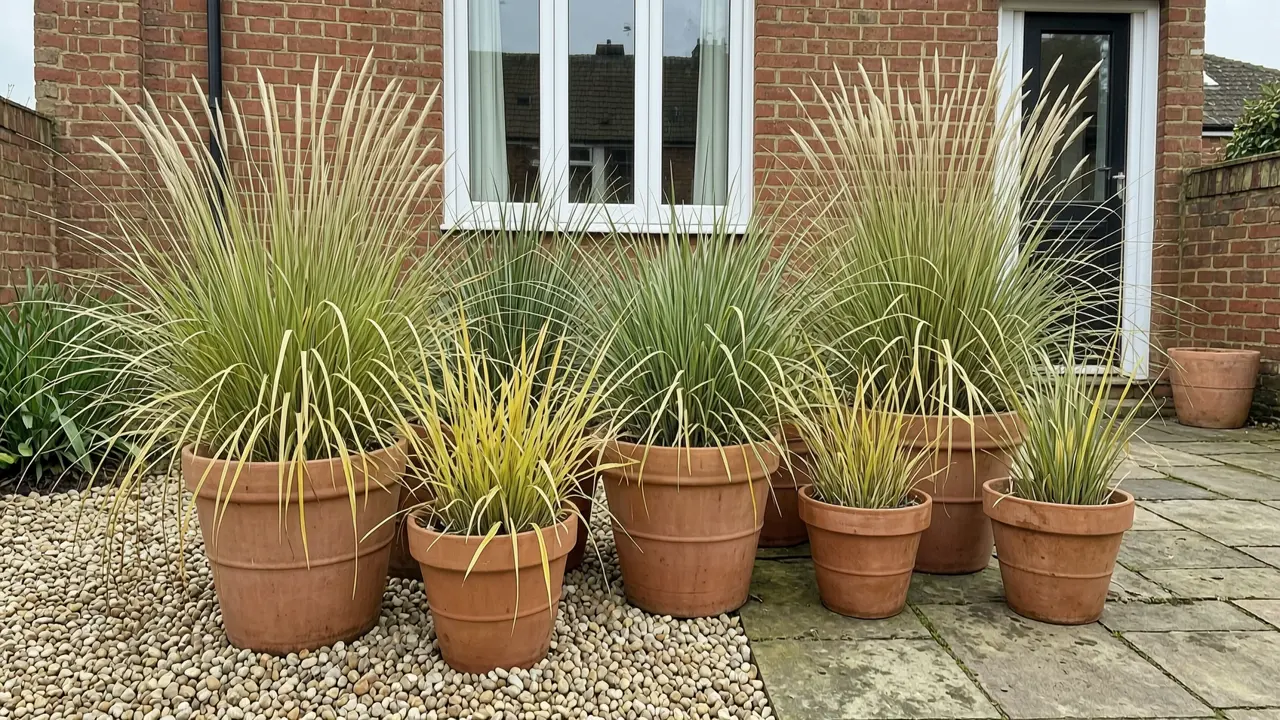 Growing Guide
How to grow ornamental grasses in pots
5 August 2026Grow ornamental grasses successfully in containers with advice on pot size, compost, watering, feeding, winter care and long-term maintenance.
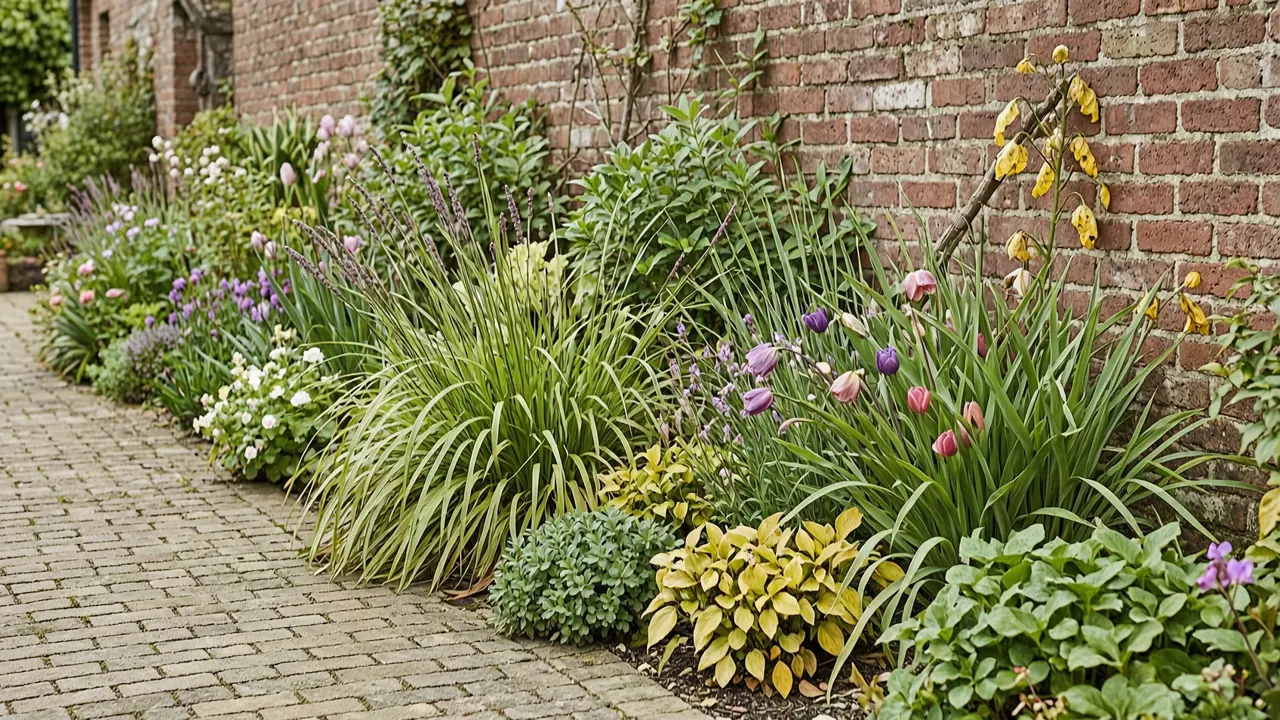 Growing Guide
How to plan a perennial border
5 August 2026Plan a balanced perennial border with practical guidance on position, colour, height, spacing, flowering succession and year-round structure.
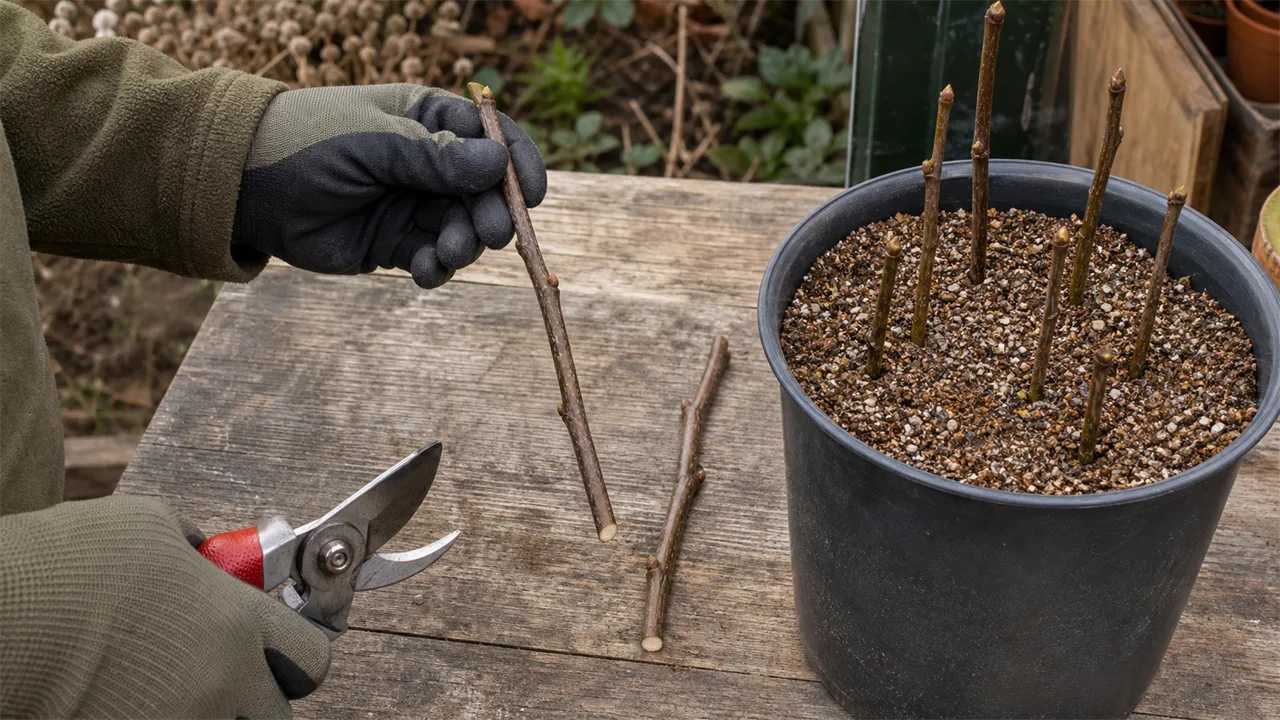 Growing Guide
How to take hardwood cuttings
29 July 2026Take hardwood cuttings from suitable dormant shrubs and climbers with this step-by-step guide to timing, preparation, rooting and aftercare.