
Ian Le Gros, RHS Hyde Hall
Introduction
RHS Hyde Hall in Essex is one of the driest gardens in the Royal Horticultural Society's network, and the plantsman shaping its response to that challenge is curator Ian Le Gros. In a recent profile, Le Gros explained how decades of working with xerophytic, drought-tolerant species have informed the garden's bold pivot away from thirsty traditional borders and towards resilient, low-input planting suited to the local climate.
What This Means for UK Gardeners
Essex sits in one of England's drier corners and UK summers are trending hotter and drier, so Hyde Hall's approach offers a working template for home gardeners facing hosepipe bans, parched beds and rising water bills. Le Gros's strategy shows that dry conditions need not mean a barren plot: with the right plant selection, soil preparation and mulching, a UK garden can stay colourful through prolonged drought. Gardeners on free-draining chalk, sandy or gravel soils will recognise many of the conditions Hyde Hall is built for, and the same principles translate readily to a south-facing border, a sun-baked patio or a front garden that bakes against a wall.
The lessons are also relevant for gardeners elsewhere who simply want a lower-maintenance, more sustainable plot. Choosing plants adapted to your soil and aspect, rather than fighting the conditions with constant watering, is the starting point. A two-inch mulch of bark, gravel or compost in spring helps lock moisture into the root zone and keeps the surface cool. Grouping plants by water need — hydrozoning — means irrigators can be targeted rather than wasted on beds that cope without them.
Key Points
- Hyde Hall sits in one of England's driest counties and uses a dedicated Dry Garden to showcase plants that thrive with minimal supplementary watering.
- Curator Ian Le Gros has long experience with xerophytic plants, and that expertise underpins the garden's planting decisions and curation philosophy.
- The Dry Garden mixes plant types rather than relying on a single group, combining drought-tolerant shrubs with perennials, ornamental grasses and silver-leaved specimens.
- Plant selection at Hyde Hall prioritises species adapted to low rainfall, with traits such as deep root systems, narrow or needle-like leaves, and reflective or waxy foliage that reduce water loss.
- The garden's approach demonstrates that sustainable, low-input gardening is achievable in the UK without sacrificing visual interest, structure or floral display through the season.
Further Reading
GardenWizz has related guides on drought-tolerant planting, gravel gardens, mulching for moisture retention, and choosing Mediterranean-style plants for UK conditions.
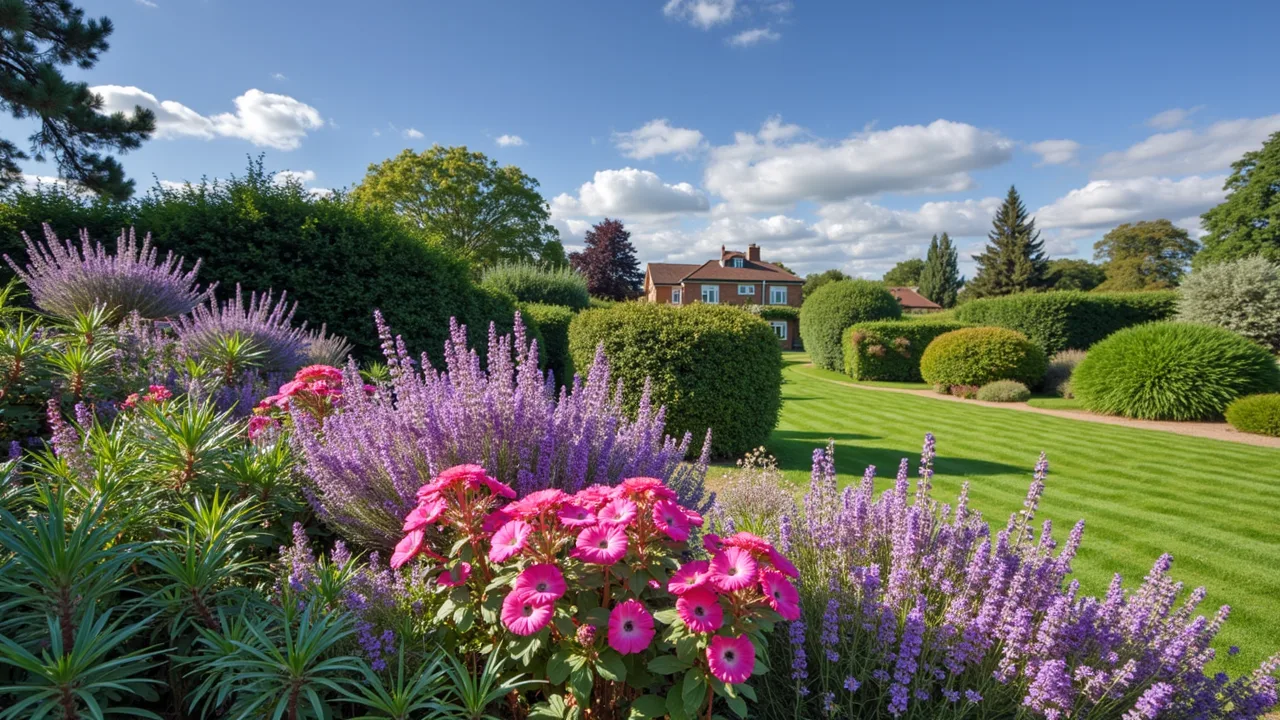
IMAGE_SCENE: a wide sun-baked border at RHS Hyde Hall Dry Garden in Essex with silver-leaved shrubs, ornamental grasses and cracked pale soil between the plants on a hot summer afternoon
Source: https://www.pressreader.com/uk/gardeners-world/20260618/283162910240143