
Lavender
Lavandula angustifolia · English lavender · Common lavender
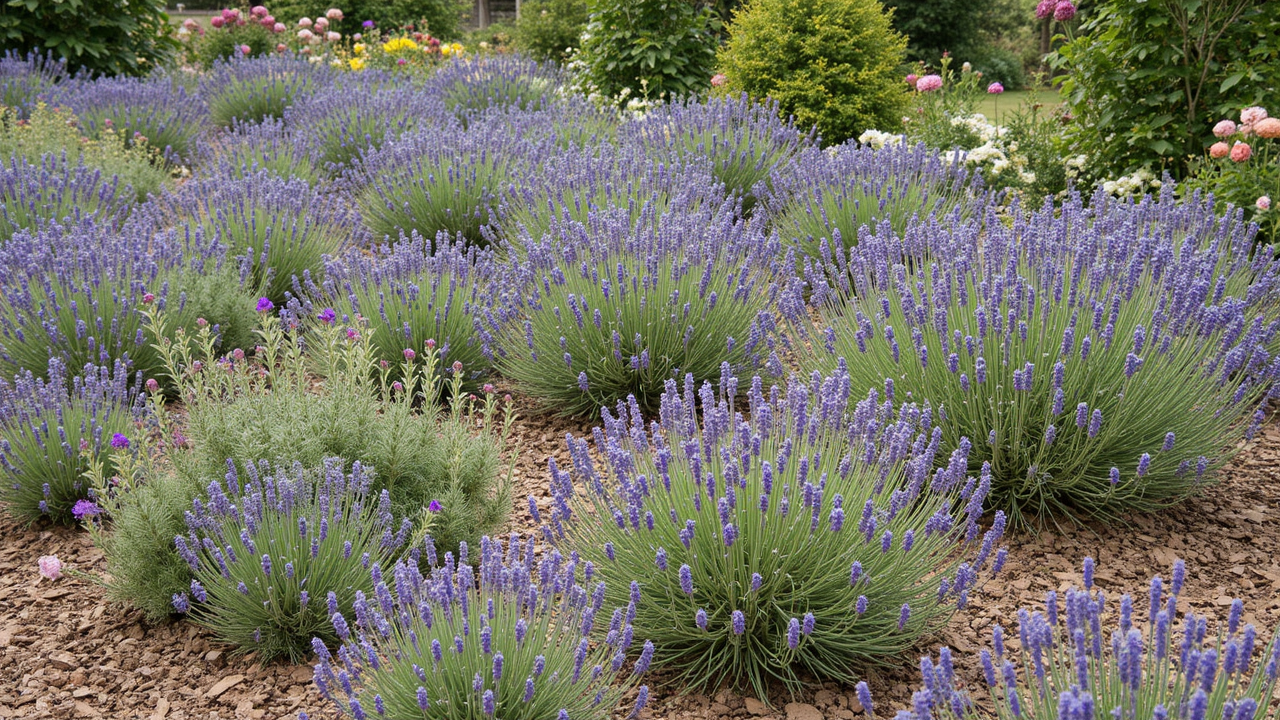
At a Glance
| Botanical name | Lavandula angustifolia |
|---|---|
| Common name(s) | English lavender, Common lavender |
| Family | Lamiaceae |
| Plant type | shrub (evergreen shrub) |
| Height × Spread | 60–90 cm × 60–90 cm |
| Hardiness | H5 (to -10.0 °C) |
| Position | Full sun |
| Soil | Well-drained chalk, loam or sand; neutral to alkaline pH; low to moderate fertility |
| Flowering | July–August |
| Toxicity | Mildly toxic to dogs and cats if ingested |
| Native range | Mediterranean basin (Spain, France, Italy) |
Overview
Lavandula angustifolia is an evergreen Mediterranean shrub grown for its fragrant violet flower spikes and aromatic grey-green foliage. It is the hardiest of the commonly grown lavenders and a mainstay of UK herb gardens, dry borders and low hedging.
Botanical Description
A compact, bushy shrub forming a rounded mound of narrow, opposite leaves covered in fine hairs that give the foliage its silvery cast. Flower spikes are held clear of the foliage on slender stems from mid-summer, each carrying whorls of small two-lipped flowers rich in nectar. Typical garden forms reach 60–90 cm in height and spread.
Origin and Habitat
Native to dry, rocky hillsides of the Mediterranean basin, where it grows in poor, free-draining alkaline soils in full sun. These origins explain its garden requirements: sharp drainage, maximum light, and a dislike of winter wet far stronger than any dislike of cold.
Cultivation
Position & Soil
- Full sun is essential; growth is leggy and flowering sparse in shade.
- Any well-drained soil, including chalk; add coarse grit to heavy soils or plant on a slight mound.
Planting Calendar (UK)
- Plant container-grown plants in April–May or September.
- Sow seed under cover in February–March after two weeks of cold stratification; germination is slow and uneven, so cuttings are the usual method.
Propagation
- Semi-ripe cuttings in late summer root reliably; named cultivars do not come true from seed.
Care and Maintenance
Water new plants in their first summer; established lavender is markedly drought-tolerant and resents irrigation. Do not feed: rich conditions produce soft, floppy growth at the expense of flowers and scent.
Prune every year in late August or September, immediately after flowering. Remove the spent spikes and trim the foliage back by 2–3 cm, keeping a rounded shape, but never cut into bare old wood — lavender does not regenerate from it. Plants pruned annually stay dense for ten years or more; neglected plants split open and are best replaced.
Uses
Ornamental
- Low hedging and edging, gravel gardens, dry sunny borders, containers.
Culinary
- Flowers (used sparingly) flavour shortbread, sugars and ice creams.
Wildlife & Companion planting
- Among the best bee and butterfly plants of mid-summer; traditionally planted with roses to mask bare stems.
Cultivars and Varieties
| Cultivar | Height | Flower | Notes | AGM |
|---|---|---|---|---|
| 'Alba' | 75 cm | White | Taller habit; good contrast planting | |
| 'Hidcote' → | 60 cm | Deep violet, mid-summer | Compact; the classic dark hedge lavender | ✓ |
| 'Munstead' → | 45 cm | Lavender-blue | Early flowering, very compact | ✓ |
| 'Rosea' | 60 cm | Soft pink | Unusual colour; slightly less vigorous |
Pests and Diseases
| Problem | Symptoms | Management |
|---|---|---|
| Rosemary beetle | Metallic green-and-purple striped beetles; notched leaves from late summer | Hand-pick adults and larvae; encourage birds and ground beetles; tolerate light damage |
| Froghopper (cuckoo spit) | Frothy white foam on stems in early summer | Harmless to established plants; dislodge with a jet of water if unsightly |
| Grey mould (Botrytis) | Fuzzy grey growth and dieback in wet, crowded conditions | Improve drainage and air flow; cut out affected growth; avoid overhead watering |
Quick Care Summary
| Sunlight | Full sun |
|---|---|
| Soil | Well-drained chalk, loam or sand; neutral to alkaline pH; low to moderate fertility |
| Hardiness | H5 (-10.0 °C) |
| Sow | February–March |
| Plant | April, May, September |
| Prune | August–September |
Facts sourced from https://en.wikipedia.org/wiki/Lavandula_angustifolia
As an Amazon Associate, GardenWizz earns from qualifying purchases made through the links above. This does not affect the price you pay. See our disclaimer for details.