
Creating a Rain Garden
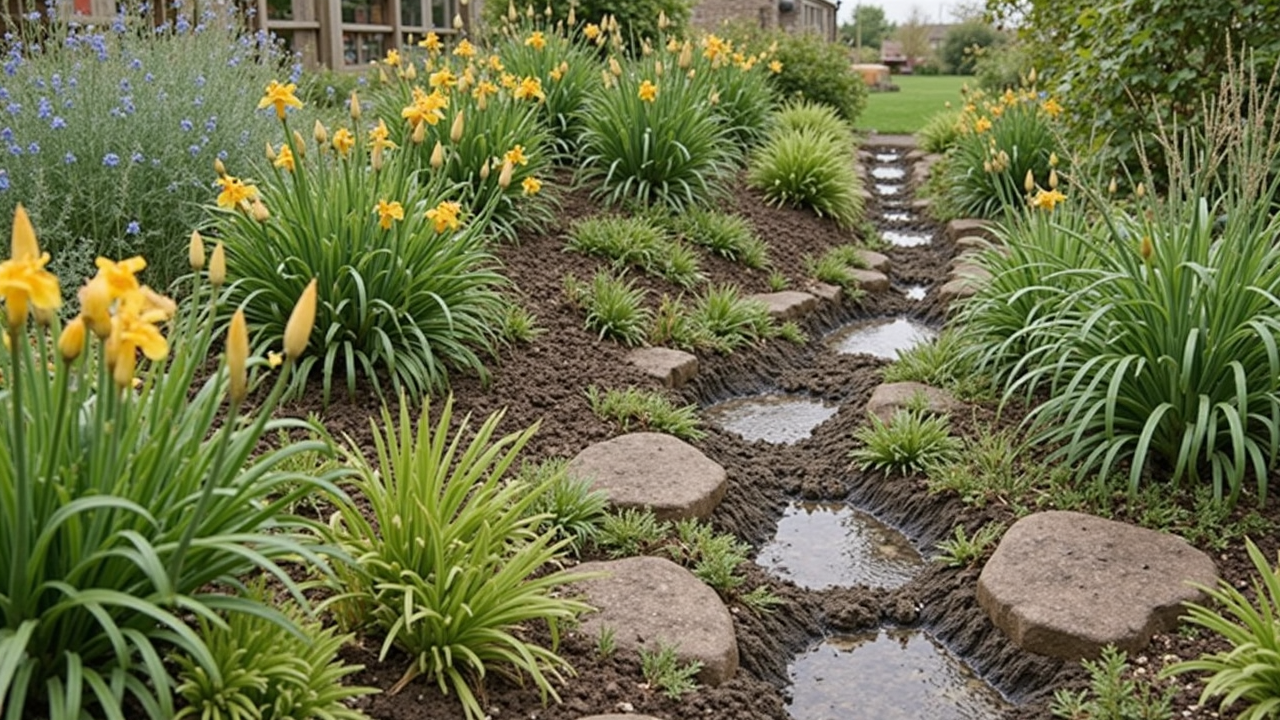
Rain gardens transform your garden into a natural sponge, soaking up rainwater from roofs and paths to reduce flooding, filter pollutants, and create a wildlife haven. In the UK’s often heavy autumn and winter downpours, they’re a practical solution for managing runoff while adding beauty and biodiversity to your plot.
Choosing Your Rain Garden Spot
Pick a low-lying area at least 3m from your home’s foundation to avoid water seepage. Avoid compacted clay soils or areas under large trees with aggressive roots. Ideal locations include:
- The bottom of a sloped garden
- Near downpipes or driveway edges
- A natural depression where water pools after rain
Preparing the Site
UK soil often compacts under heavy rain, so create a shallow basin (10-15cm deep) to hold water temporarily.
- Dig a bowl-shaped depression 1-2m wide, tapering to a point at the deepest end
- Amend the soil with 20% sharp sand and 10% garden compost to improve drainage
- Ensure the garden slopes gently (1-2%) towards the deepest point to direct water flow
Selecting UK-Suitable Plants
Opt for native wetland plants that thrive in seasonal saturation and UK weather. Prioritise species with deep roots for filtration and year-round interest:
- Sedges (e.g., Carex species) – tolerate wet feet, attract insects
- Rushes (e.g., Juncus effusus) – fast-growing, stabilise soil
- Wildflowers (e.g., meadowsweet, purple loosestrife) – support pollinators
- Shrubs (e.g., willow, bog myrtle) – add structure and seasonal colour
Avoid invasive species like Japanese knotweed; stick to UK natives from RHS-approved suppliers.
Maintaining Your Rain Garden
Keep it functional with minimal effort:
- First year: Weed regularly (especially invasive grasses) and mulch to suppress weeds
- After planting: Trim dead stems in late winter (February/March) to encourage new growth
- Seasonally: Check for silt buildup after heavy storms; gently clear debris from the deepest point
- Never use chemical fertilisers – they defeat the garden’s natural filtration purpose
#RainGardens #UKGardening #SustainableGardening #WildlifeGarden #RainwaterHarvesting #GardenDesign #EcoFriendlyGardening #UKGardenTips #WaterWiseGardening #NativePlants