Rosemary
Salvia rosmarinus
At a Glance
| Botanical name | Salvia rosmarinus |
|---|---|
| Common name(s) | rosemary |
| Family | Lamiaceae |
| Plant type | shrub |
| Height × Spread | 120–180 cm × — |
| Hardiness | — (to -4.0 °C) |
| Position | Full sun |
| Soil | — |
| Flowering | March–September |
| Toxicity | — |
| Native range | Mediterranean region |
Overview
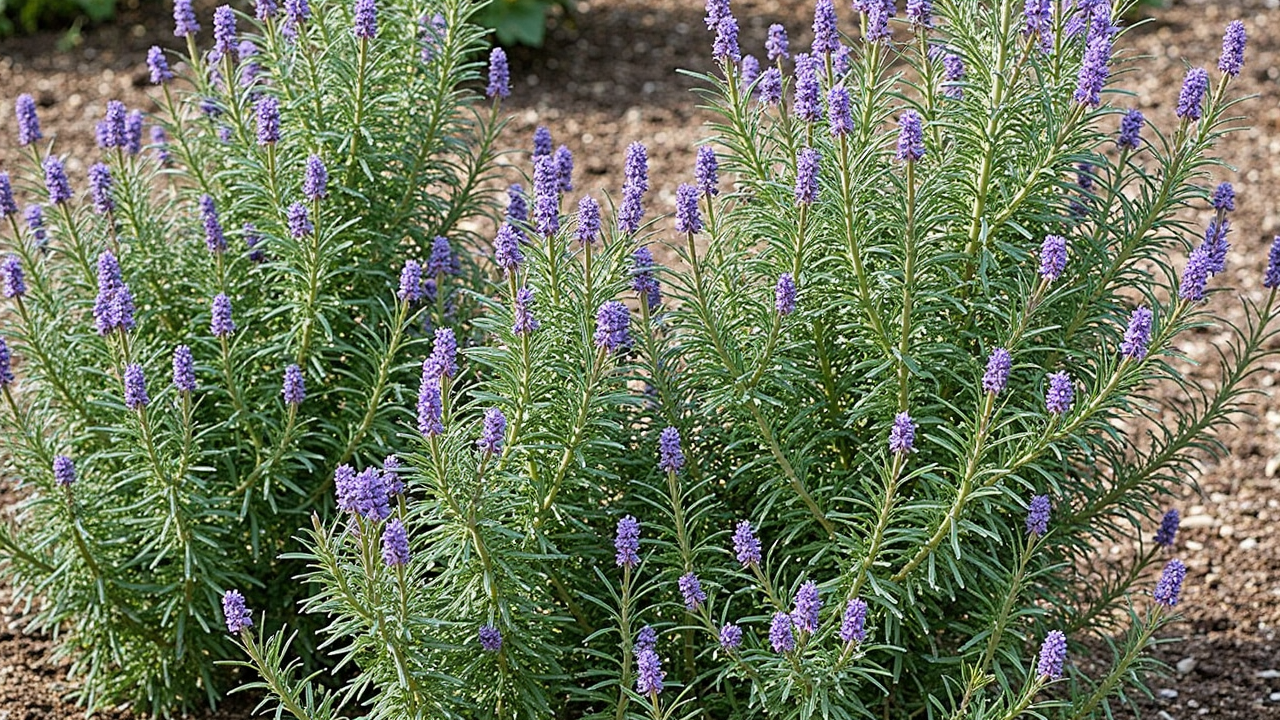
Salvia rosmarinus, synonym Rosmarinus officinalis, is a shrub commonly known as rosemary. It belongs to the mint family, Lamiaceae. The plant features fragrant, evergreen, needle-like leaves and produces purple, white, pink, or blue flowers. It is native to the Mediterranean region and has been widely cultivated for its culinary and ornamental uses.
Botanical Description
Rosemary has a fibrous root system and forms an aromatic evergreen shrub. Its leaves are evergreen, 2–4 cm long and 2–5 mm broad, green above and white below with dense, short, woolly hair. The leaves resemble Tsuga needles. Forms range from upright to trailing; upright varieties reach 1.2–1.8 metres (4–6 ft) tall. The plant flowers in spring and summer in temperate climates but may flower continuously in warm climates. Flowers appear in groups of 2–3 along branches and can occur outside the normal season, including as early as mid-February or as late as early December in the Northern Hemisphere. The plant can live up to 35 years.
Origin and Habitat
Rosemary is native to the Mediterranean region, including Portugal and northwestern Spain. It was naturalised in China by the late Han dynasty (220 CE). It arrived in England likely with the Romans in 43 CE, though no viable records exist before the 8th century. It was first documented in Britain in 1338 when planted in the garden of the old palace of Westminster. Rosemary spread to the Americas with early European settlers in the 17th century. It is reasonably hardy in cool climates, with some cultivars tolerating temperatures down to −20 °C (−4 °F). It withstands drought but has low seed germination rates and is considered potentially invasive.
Cultivation
Rosemary is used as an ornamental plant in gardens and for xeriscape landscaping, particularly in Mediterranean climates. It is drought-tolerant, pest-resistant, and easy to grow. It can be grown in pots, pruned into formal shapes or low hedges, and used for topiary. Groundcover cultivars spread widely with a dense, durable texture. The plant retains attractiveness for many years when mature.
Care and Maintenance
Harvesting requires the plant to be matured for 2–3 years. No more than 20% of growth should be harvested at one time to preserve the plant. Prune after flowering to maintain shape and encourage new growth.
Uses
Rosemary leaves are used as a culinary flavouring in stews, stuffing, roasted meats, and marinades. Fresh or dried leaves are common in Mediterranean cuisine, with a pine-like aroma. Herbal tea can be made from the leaves, and woody stems are sometimes used as skewers. Rosemary extract (containing carnosic acid and carnosol) is approved as a food preservative (E392). The plant is used in fragrances, including Hungary water (a 14th-century perfume), and in perfumes, shampoos, cleaning products, and aromatherapy. Historically, it was used in burial rites (e.g., Shakespeare’s Hamlet), as a symbol of remembrance in war commemorations (e.g., ANZAC Day), and in cultural ceremonies such as Danube Swabian celebrations.
#Rosemary #SalviaRosmarinus #MediterraneanPlant #HerbGardening #CulinaryHerb #EvergreenShrub #UKGardening #BotanicalReference #GardenWizz #Lamiaceae
Cultivars and Varieties
| Cultivar | Height | Flower | Notes | AGM |
|---|---|---|---|---|
| 'Albus' | — | white flowers | — | |
| 'Arp' | — | lemon-scented and cold-hardy to 10° Fahrenheit | — | |
| 'Aureus' | — | — | leaves speckled yellow | |
| 'Benenden Blue' | — | — | narrow, dark green leaves | |
| 'Blue Boy' | — | — | dwarf, prostrate variety with small leaves | |
| 'Blue Rain' | — | pink flowers | — | |
| 'Gold Dust' | — | — | dark green leaves, with golden streaks but stronger than 'Golden Rain' | |
| 'Golden Rain' | — | — | leaves green, with yellow streaks |
Pests and Diseases
| Problem | Symptoms | Management |
|---|---|---|
| invasive species | — | — |
Quick Care Summary
| Sunlight | Full sun |
|---|---|
| Soil | — |
| Hardiness | — (-4.0 °C) |
| Sow | January, February, October, November, December |
| Plant | March–September |
| Prune | — |
Facts sourced from Wikipedia / Salvia rosmarinus (https://en.wikipedia.org/wiki/Salvia_rosmarinus)
As an Amazon Associate, GardenWizz earns from qualifying purchases made through the links above. This does not affect the price you pay. See our disclaimer for details.