
Aspen
Populus tremula
The Gardening Year
Best months in UK gardens · full planting calendar →
🖨 Printable care card (PDF)At a Glance
| Botanical name | Populus tremula |
|---|---|
| Common name(s) | Aspen |
| Family | Salicaceae |
| Plant type | tree (Deciduous; dioecious with male and female catkins on different trees; spreads extensively by suckers (root sprouts).) |
| Height × Spread | 40–45.5 m × 10 m |
| Position | Full sun |
| Soil | Moist but well-drained, humus-rich, fertile soils; tolerates acid, alkaline, or neutral pH. |
| Flowering | March–May |
| Toxicity | — |
| Native range | Europe and Asia, from Iceland and the British Isles east to Kamchatka, north to inside the Arctic Circle in Scandinavia and northern Russia, and south to central Spain, Turkey, the Tian Shan, North Korea, and northern Japan. Also occurs at one site in northwest Africa in Algeria. |
Aspen is a vigorous, fully hardy deciduous tree native to the British Isles and much of northern Europe. Best known for its almost circular leaves that quiver on flattened stalks at the slightest breath of air, it brings movement, light shade and early-season catkins to UK gardens large enough to accommodate its spreading root system. Its suckering habit, fast juvenile growth and tolerance of wet soils make it as useful for ecological planting as for ornamental use.
Overview
Populus tremula is a member of the willow family (Salicaceae) and one of the most widely distributed broadleaved trees in Europe. In the UK it occurs as a native across Scotland, northern England and Wales, with scattered populations further south; it is fully hardy throughout the country. Mature specimens typically reach 10–20 m, occasionally 25 m, with an open, rounded to oval crown on a slender bole. The tree's chief claim to horticultural fame is the continuous shimmering of its foliage in light wind, a behaviour caused by the laterally flattened leaf stalks (petioles). Aspens are dioecious, meaning male and female catkins are borne on separate trees; only female trees produce the copious cottony seed that gives the species its reputation for spring "snow" in gardens near soft fruit or seating.
In cultivation the species is best treated as a specimen tree for spacious lawns, parkland or woodland margins. Its extensive root system throws up suckers freely, sometimes many metres from the parent trunk, so it is less suited to small gardens, paved courtyards, or anywhere near drains, walls or foundations.
Appearance
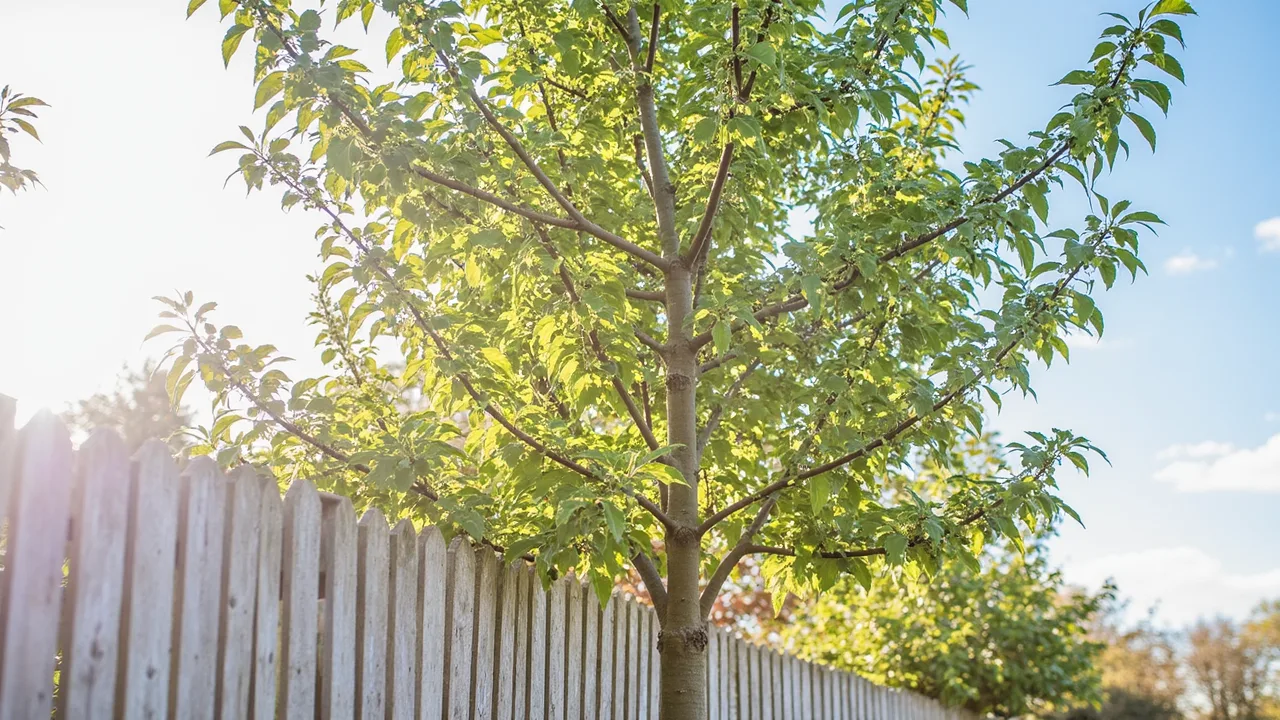
The crown is loose and airy, formed of slender, slightly pendulous branches that lift and sway readily. Young bark is pale grey-green and smooth, gradually maturing to a dull grey marked by shallow, irregular fissures rather than the deep ridges seen on many other poplars.
Leaves are the defining feature. They are nearly round to broadly ovate, 3–8 cm long and almost as wide, with a coarsely toothed margin and a long, laterally flattened petiole of roughly 6–8 cm. That flattened stalk is the mechanical reason for the trembling — the leaf blade pivots on its edge at the slightest air movement. Young leaves unfold sticky and faintly balsam-scented; mature summer leaves are a fresh mid-green above and slightly paler beneath. Autumn colour is brief and modest, generally a soft yellow that rarely lingers before leaf fall in late October or November.
Flowering occurs from March into early April, ahead of the leaves. Male catkins are grey-red and pendulous, 5–10 cm long, shedding pollen in mild spells; female catkins are shorter, greener and, if pollinated, develop into clusters of small capsules releasing cotton-tufted seeds from late May into June.
Growing Conditions
Aspen grows well throughout the UK, including exposed northern and upland sites. It thrives in full sun but tolerates light dappled shade, and it is notably wind-firm once established, although young trees benefit from a short stake on exposed ground.
Soil requirements are flexible. Moist, well-drained loam is ideal, but the tree also performs on clay, damp sandy substrates and acidic to neutral ground. It dislikes very thin, drought-prone chalk soils, where growth is stunted and leaves scorch in summer. Although tolerant of periodic waterlogging in winter, aspen prefers a site that does not bake dry in summer; a deep, moisture-retentive root run produces the most vigorous specimens.
Climate-wise, the species is fully hardy, rated H7 by the Royal Horticultural Society (the lowest winter temperature band, below -20 °C). UK growers can therefore plant without concern in any region. Its growth rate is fast — young trees can put on 1–1.5 m of height per year in good conditions — and although the typical lifespan is 80–100 years in the wild, garden trees are often replaced over time by vigorous suckers that colonise the rooting area.
Planting and Care
Plant between November and early March, when dormant, either as bare-root whips or container-grown stock. Prepare a planting pit at least twice the width of the rootball, loosen the base, and backfill with the original soil improved with well-rotted organic matter. Set the tree at the same depth it was growing in the nursery, drive a short stake at an angle into the prevailing wind if the site is exposed, and water in thoroughly. A 5–8 cm mulch of bark or compost over the rooting area helps retain moisture and suppress weeds in the first two to three years.
Watering is the main aftercare task. Keep the soil moist through each of the first three growing seasons, particularly during dry spells in May to August. Once the tree is established it tolerates short droughts without harm.
Pruning is minimal. In late autumn or winter, remove any dead, damaged or crossing wood and shorten any wayward lower branches. Heavy formative pruning is rarely needed and should be avoided in late winter and early spring, when bleeding sap can be unsightly though not usually harmful. The chief routine task is sucker control: sever unwanted shoots at the root by pulling them off with a small heel of root attached rather than cutting flush, which discourages regrowth.
Feeding is light. A top-dressing of general-purpose fertiliser or a generous mulch in early spring is sufficient on most garden soils. Over-feeding produces soft, suckering growth prone to canker.
Propagation is straightforward by either of two methods. Root suckers can be detached from the parent with a portion of root attached in autumn and potted up. Hardwood cuttings, 20–30 cm long, taken from vigorous young shoots in late winter and inserted into a sandy trench outdoors, will root reliably without bottom heat. Seed is rarely viable for named cultivars and is generally used only in species propagation.
Common Problems
Canker, caused by fungi such as Cytospora chrysosperma, is the most serious disease. Sunken, discoloured lesions on bark can lead to dieback of individual branches. Cut affected stems out promptly, well below the visible canker, and sterilise tools between cuts.
Leaf spot, typically Marssonina brunnea, produces dark brown blotches on leaves and can cause premature defoliation in wet summers. The damage is largely cosmetic; rake up and destroy fallen leaves to reduce carry-over of inoculum.
Aphids are common in late spring and early summer, sometimes attended by sooty mould on honeydew. Heavy infestations can be reduced with horticultural soap, although populations usually subside naturally as natural predators build up.
Scale insects, including horse chestnut scale, occasionally colonise aspen bark, again producing honeydew and sooty mould. Where populations persist over several seasons, winter tree wash or targeted sprays during the crawler stage in early summer offer control.
Suckering is the most frequent "problem" reported by gardeners. Aspen's natural vigour sends up new shoots from the spreading root system, and where these appear in lawns, borders, or near structures they must be removed regularly, ideally by wrenching off with attached root.
Windthrow is uncommon on established trees but can affect young plants set into loose or waterlogged ground. Short stakes and a wide planting pit with firmed backfill reduce the risk.
Popular Varieties
Three forms are widely available from UK nurseries and offer alternatives to the species where space, aesthetics or soil constraints apply.
'Erecta' (also sold as the Swedish columnar aspen) is narrowly upright, forming a tall, slim spire with the same trembling foliage. It is particularly useful for narrow avenues, screening lines and small gardens where the species would be too spreading.
'Pendula' is a weeping form with strongly arching branches that sweep to the ground in established specimens. It makes a striking specimen tree for larger lawns, where its pendulous silhouette is best appreciated in isolation.
A selection sometimes traded under the name 'Swedish Columnar' (closely related to 'Erecta') provides a compact, tightly columnar habit suited to tighter sites, shelter belts and roadside planting where a vertical accent is required.
All three cultivars are grafted or propagated from suckers, so rootstocks are identical to the species and will themselves produce ordinary aspen suckers. This is rarely a problem with the columnar and weeping forms, but growers should site them with the same spacing considerations as the species.
Pests and Diseases
| Problem | Symptoms | Management |
|---|---|---|
| Poplar bacterial canker | Sunken, discoloured lesions on branches and trunk with oozing gum or dieback of twigs. | Prune out infected wood in dry weather and disinfect tools between cuts to prevent spread. |
| Honey fungus | General decline, wilting foliage, and white fungal growth under the bark at the base of the tree. | Improve drainage and avoid planting in infected soil; severe cases may require removal of the tree. |
| Tree rusts | Orange or yellow pustules on leaves causing premature yellowing and defoliation. | Remove fallen leaves to reduce inoculum and ensure good air circulation around the canopy. |
| Leaf beetles and sawflies | Skeletonised or chewed leaves with visible larvae or adult insects on foliage. | Encourage natural predators like birds and wasps; hand-pick severe infestations if necessary. |
| Vigorous suckering | Numerous shoots emerging from the base of the tree or roots, creating a dense thicket. | Cut back suckers at ground level in autumn or winter to maintain tree shape and control spread. |
Or browse the full plant problem solver to diagnose an issue by symptom.
As an Amazon Associate, GardenWizz earns from qualifying purchases made through links on this page (including links within the article). This does not affect the price you pay. See our disclaimer for details.