Crab Apple
Malus sylvestris
The Gardening Year
Best months in UK gardens · full planting calendar →
🖨 Printable care card (PDF)At a Glance
| Botanical name | Malus sylvestris |
|---|---|
| Common name(s) | Crab Apple |
| Family | Rosaceae |
| Plant type | tree (Deciduous; can live 80–100 years.) |
| Height × Spread | 14 m × 4–8 m |
| Position | Full sun, Partial shade |
| Soil | Moist but well-drained; moderately fertile; enriched with organic matter; tolerant of acid, alkaline, and neutral pH. |
| Flowering | May–June |
| Toxicity | The pips/seeds contain cyanide-forming compounds — do not eat the seeds; the fruit flesh is edible cooked (e.g. crab-apple jelly). (RHS.) |
| Native range | Western Eurasia (Europe, Turkey, Anatolia, South Caucasus) |
Overview
The crab apple, Malus sylvestris, is a small deciduous tree native to the United Kingdom and much of temperate Europe. It belongs to the Rosaceae family and is widely regarded as the principal wild ancestor of the cultivated apple. In British gardens it occupies a dual role: a handsome ornamental for spring blossom and autumn fruit, and a hardworking wildlife plant that supports pollinators, birds and a range of beneficial insects. It is fully hardy throughout the UK, tolerant of a wide range of soils, and undemanding once established, which has secured its place in parks, streets and garden plantings for well over a century.
Although the species itself is grown less often than its ornamental cultivars, Malus sylvestris remains the genetic backbone of British orchards because it is one of the standard rootstocks on which dessert and cider apples are grafted. Gardeners who plant a grafted crab apple therefore benefit twice: a compact flowering tree above ground and a robust, regionally adapted root system below.
Appearance
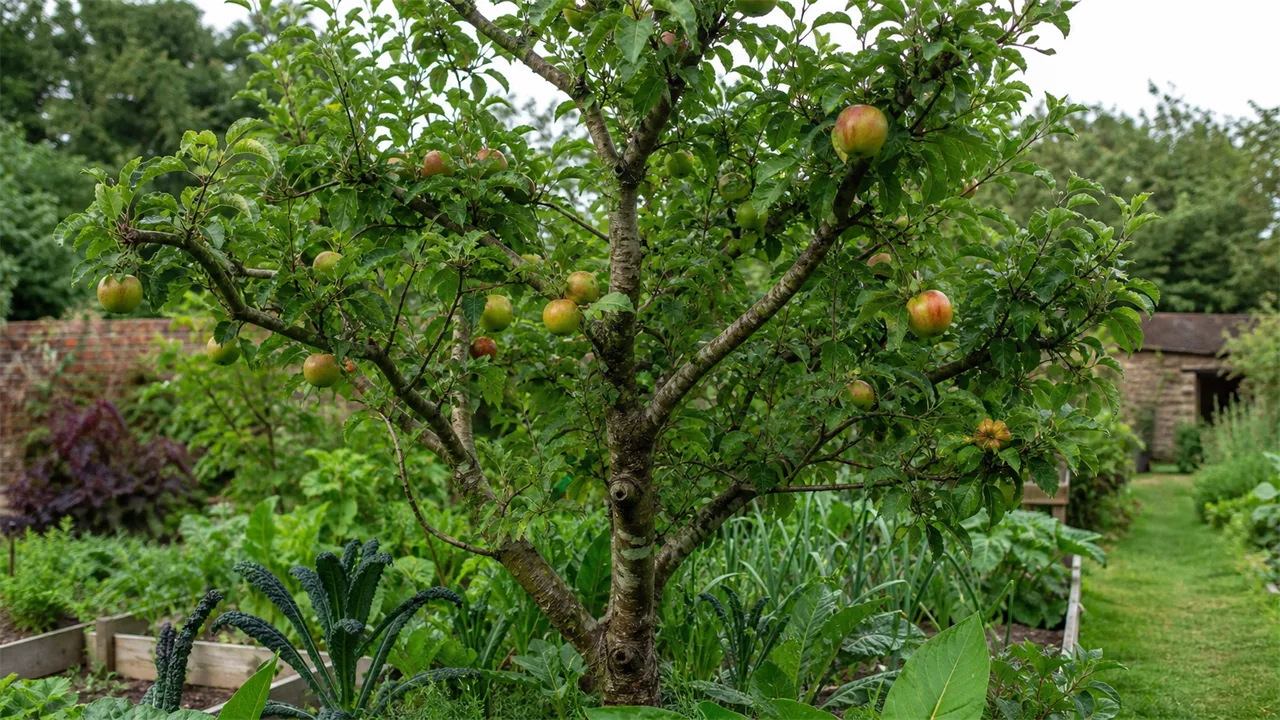
Malus sylvestris makes a compact, rounded crown, typically reaching 4–8 m in cultivation and up to 10 m in favourable woodland-edge situations. The trunk is short and often twisted, with smooth grey-brown bark that flakes attractively in older specimens. Young twigs are reddish-brown and frequently carry short spines, a useful identifying feature in the field that distinguishes true wild crab apples from seedling or sucker growth of cultivated apples.
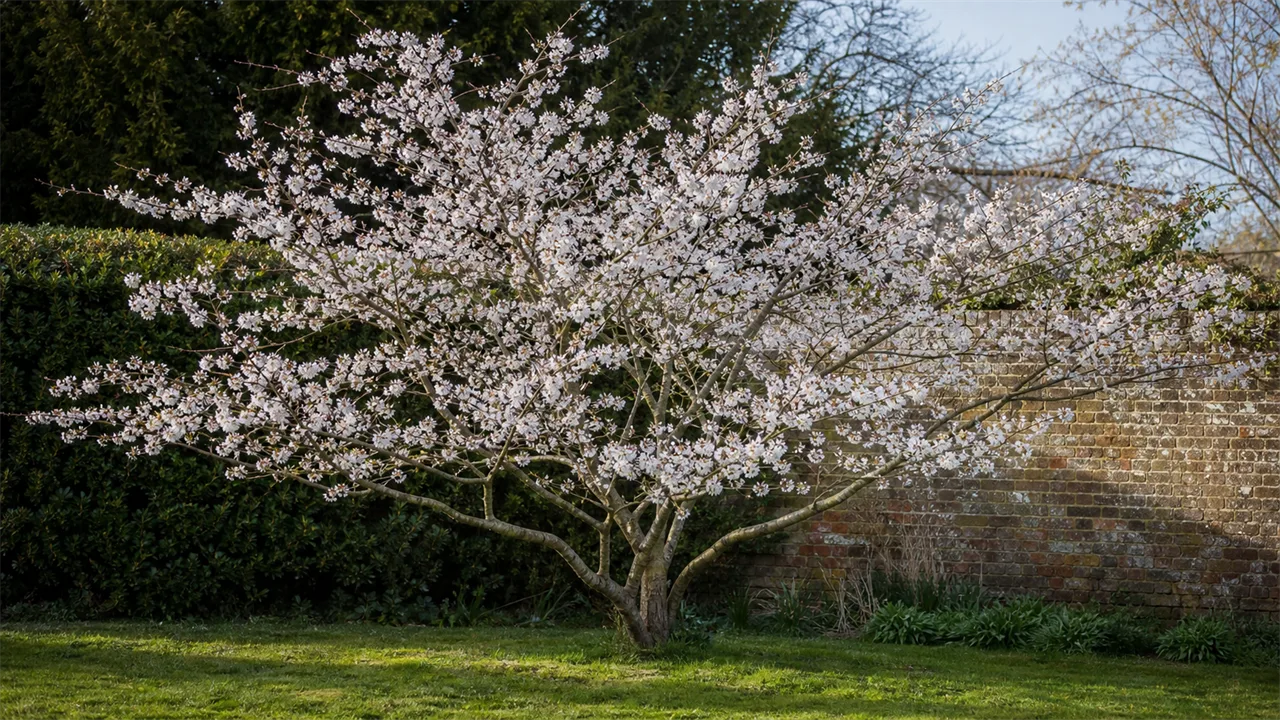
Leaves are ovate to elliptical, 3–11 cm long, with finely serrated margins and a short petiole. The upper surface is a fresh, dark green and slightly glossy; the underside is paler and softly downy when young, becoming smoother with age. Buds are small and ovoid, opening to clusters of pale pink to white five-petalled flowers, each around 3–4 cm across. The flowers appear in April or May, depending on region and season, and are usually borne in clusters of two to five on short spurs.
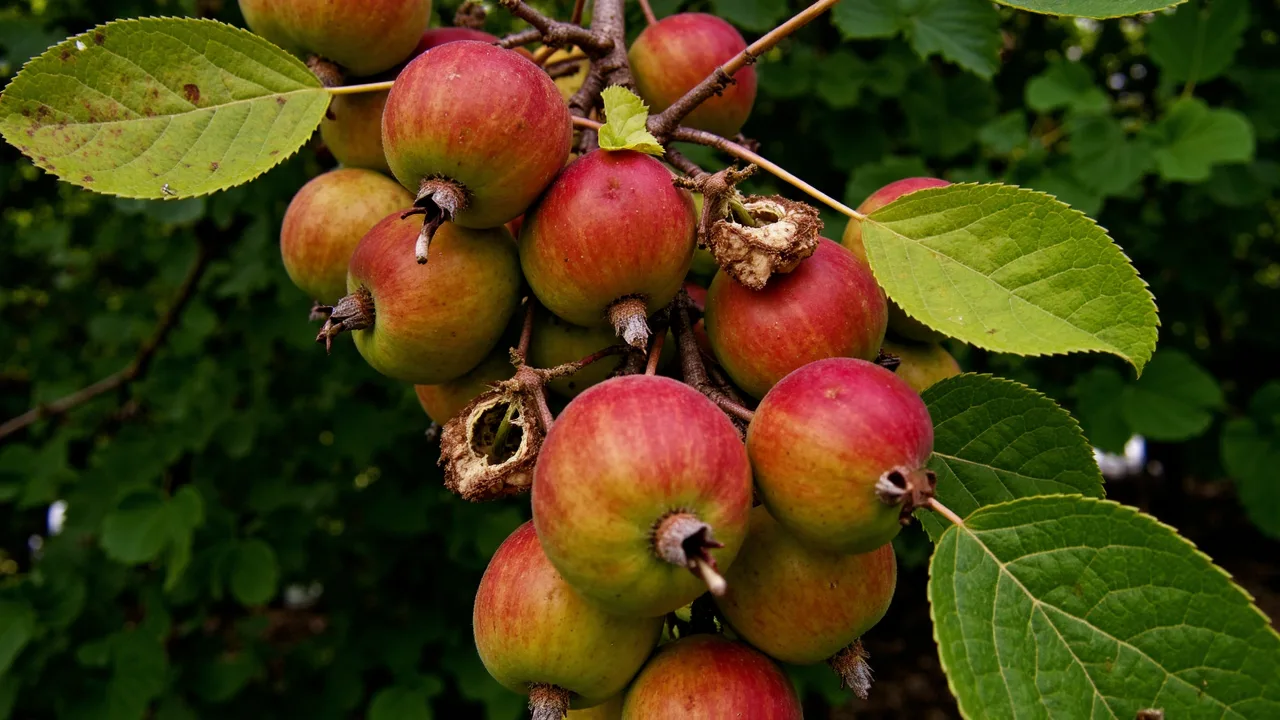
The fruit is a small pome, generally 2–4 cm in diameter, ripening from green to yellow and often carrying a red or orange flush on the side exposed to the sun. Wild fruits are notably tart and astringent, far sharper than any dessert apple, and they persist on the tree well into late autumn after the leaves have fallen. Ornamental cultivars selected from related Malus species produce larger or more brightly coloured fruit, but the characteristic shape and clustered display remain the same.
Growing Conditions
Crab apples are among the most adaptable of British garden trees and tolerate most soils other than waterlogged ground. They perform best on a moist but free-draining loam with a pH between 6.0 and 7.5, but established trees will grow acceptably on clay, sandy or chalky substrates provided drainage is reasonable. A position in full sun encourages the heaviest flowering and fruiting, although light partial shade is tolerated at the cost of slightly sparser crops.
The species is rated H5 by the Royal Horticultural Society, indicating hardiness down to roughly –20 °C and suitability for all but the most exposed or northerly UK sites. Cold is rarely a problem; late spring frosts can damage open blossom and reduce the year’s fruit set, so avoid planting in obvious frost pockets such as the bottom of a north-facing slope.
In the wild, Malus sylvestris is found in hedgerows, along woodland margins and in scrubby grassland across England, Wales and parts of Scotland, although genuine wild populations are now scattered and it hybridises readily with nearby cultivated apples and ornamental Malus. In gardens it grows happily in mixed borders, as a specimen lawn tree, in wildlife hedging and as a street tree in larger gardens and amenity plantings.
Planting and Care
Plant container-grown or bare-root specimens between November and March, when the tree is dormant and the soil is workable. Soak bare-root trees for an hour before planting, and prepare a hole wider than the rootball but no deeper, teasing out the roots of containerised stock. Set the tree at the same depth it sat in the nursery — the dark soil mark on the stem is a reliable guide — and firm the backfill. Stake low and loosely for the first year, removing the stake once the root system has anchored.
Space standard trees 4–6 m apart if planting more than one, and 3–4 m apart if grown as a multi-stemmed shrub or informal hedge. Water weekly during dry spells for the first two summers to help the root system establish, and apply a 5–8 cm mulch of well-rotted compost or bark chips in early spring, keeping the mulch clear of the trunk itself.
Feeding is rarely necessary on reasonable garden soil. If growth is weak or the leaves are pale, apply a light dressing of a general-purpose fertiliser such as blood, fish and bone in late winter. Pruning should be kept to a minimum: remove dead, damaged or crossing branches in late autumn or winter when the tree is fully dormant, and shorten any overly vigorous shoots to maintain a balanced shape. Avoid heavy pruning in spring, as crab apples can bleed sap from cuts made during the active growing season.
Propagation is straightforward. Seed collected from a reliable species tree requires cold stratification for two to three months before sowing in spring. Hardwood cuttings taken in midwinter root slowly but reliably. Named cultivars do not come true from seed and are propagated by chip-budding or whip-and-tongue grafting onto rootstocks such as MM106 for smaller garden trees or M25 for standard orchard specimens.
Common Problems
Apple scab, caused by the fungus Venturia inaequalis, is the most frequent disease of crab apples in the UK. It produces dark, scabby blotches on the leaves and rough, cracked lesions on the fruit, and can lead to premature leaf drop in damp summers. Rake up and dispose of fallen leaves in autumn to reduce the overwintering inoculum, and choose scab-resistant cultivars such as Malus 'John Downie' or Malus 'Golden Hornet' if the disease has been troublesome nearby.
Fireblight, caused by the bacterium Erwinia amylovora, is a serious but less common disease. Symptoms include blackened, wilting shoot tips and a characteristic "shepherd's crook" bending of young growth. If fireblight is suspected, gardeners should notify the Animal and Plant Health Agency (APHA), prune out infected wood at least 30 cm below the visible symptoms in dry weather, and sterilise secateurs between cuts with methylated spirit.
Canker, caused by Neonectria galligena, produces sunken, oozing lesions on branches and the trunk, particularly on stressed or older trees. Cut out affected areas back to clean wood and seal larger wounds with a wound-paint. Improve the tree's general vigour by mulching and watering during dry spells to reduce future infection.
Among pests, aphids colonise young shoots in late spring and can distort the foliage; a strong jet of water or an application of insecticidal soap is usually sufficient. Apple sawfly larvae skeletonise leaves in late spring, while codling moth larvae tunnel into developing fruit from early summer; pheromone traps hung in May give a useful indication of population pressure and help time any necessary control measures.
Popular Varieties
Malus 'John Downie' is perhaps the best-known ornamental crab apple in British gardens. Raised in the early 1870s, it produces a profusion of white blossom followed by large, conical orange-red fruit, around 4 cm long, which are widely considered the finest of any crab apple for culinary use. The fruit makes a particularly good jelly and is a useful source of pectin for softer fruit preserves.
Malus 'Golden Hornet' carries masses of bright yellow fruit that persist well into winter, providing a strong contrast with the white spring blossom. It is reliable on most soils and offers good resistance to apple scab. The fruit is too sharp for eating raw but is excellent for amber-coloured jellies and as a garnish.
Malus 'Profusion' is a small, upright tree with deep purple-bronze foliage and crimson-pink spring flowers. Its dark red fruit is borne in heavy clusters and is popular with birds. It tolerates urban pollution well and is a useful choice for courtyard or smaller gardens where space is limited.
Malus 'Red Sentinel' is widely planted for its persistent display of glossy, deep red fruit that often lasts into early winter. The flowers are white, opening from pink buds, and the tree has a tidy, rounded habit. It holds the RHS Award of Garden Merit, confirming its reliability under typical British growing conditions.
Malus sylvestris itself, the wild crab apple, deserves a mention in any planting scheme where a true native species is wanted. Smaller and more delicate than most cultivars, it blends well into wildlife hedging and mixed native plantings, and it remains the most ecologically valuable option for gardeners prioritising local biodiversity.
Pests and Diseases
| Problem | Symptoms | Management |
|---|---|---|
| Apple scab | Leaves develop greenish-black spots and blotches, often leading to early leaf drop. | Rake up fallen leaves in autumn and apply a fungicide spray at bud burst if severe. |
| Powdery mildew | A white powdery growth appears on young leaves and shoots, potentially reducing tree vigour. | Prune to improve air circulation and apply a suitable fungicide at bud burst. |
| Aphids | Young shoots become curled and sticky with honeydew, which may lead to sooty mould growth. | Encourage natural predators like ladybirds or use a horticultural oil spray in early spring. |
| Woolly aphid | Lumpy outgrowths on the bark are covered with a white, fluffy waxy substance. | Scrape off infested areas and apply horticultural oil or systemic insecticide if severe. |
| Winter moth caterpillars | Caterpillars eat leaves, blossoms, and young fruitlets between bud burst and late May. | Fit tree bands in autumn to trap egg-laying moths or apply a dormant oil spray. |
| Apple canker | Sunken, discoloured lesions appear on branches and trunk, sometimes oozing sap. | Cut out infected wood well into healthy tissue and disinfect tools between cuts. |
For step-by-step help, read Controlling Aphids Naturally, Treating Powdery Mildew and Tackling Black Spot on Roses. Or browse the full plant problem solver to diagnose an issue by symptom.
Recommended Products
GardenWizz earns a commission from qualifying purchases made through affiliate links on this page (including links within the article) — as an Amazon Associate, and from Thompson & Morgan via the Awin network. This does not affect the price you pay. See our disclaimer for details.