RHS reports record No Mow May 2026 participation
Introduction
The Royal Horticultural Society (RHS) has reported record participation in this year's No Mow May, with more UK households than ever leaving their lawns unmown throughout the month to support pollinators. Gardeners from Cornwall to the Scottish Highlands logged patches through Plantlife's annual survey, and the RHS has highlighted measurable gains in flower-rich lawns, bee visits and butterfly sightings.
What This Means for UK Gardeners
For British gardeners, the headline message is that doing less on the lawn genuinely helps wildlife. A short grass sward dotted with dandelions, clovers and daisies offers nectar and pollen at a time of year when little else is in flower, and the RHS is now recommending that gardeners extend the unmown period beyond May where possible — letting areas grow through into June so that late-emerging pollinators can feed.
There is no need to abandon the lawn entirely. Leaving even a small patch, or mowing less frequently and cutting on a high setting, delivers most of the benefit. Gardeners on heavy clay or in shaded town gardens, where wildflower mixes struggle, often see the biggest boost simply by holding off the mower.
It is also a useful prompt to rethink the rest of the May gardening calendar. While the lawn is taking a rest, attention can shift to deadheading early-flowering shrubs, staking perennials and sowing half-hardy annuals once frost risk has passed.
Key Points
- The RHS has confirmed a record number of UK households took part in No Mow May 2026.
- Participating gardens recorded more bees, butterflies and other pollinators than mown control plots.
- The RHS is encouraging gardeners to leave some lawn unmown into June, not just for the month of May.
- Even a single unmown patch, or mowing on a high cut, delivers meaningful benefits for pollinators.
- The campaign reinforces the value of low-input lawn care as a practical biodiversity measure in British gardens.
Further Reading
See our guides on lawn alternatives for wildlife gardens, growing wildflowers from seed, and creating a pollinator-friendly border for more on low-effort, high-impact ways to support garden wildlife.
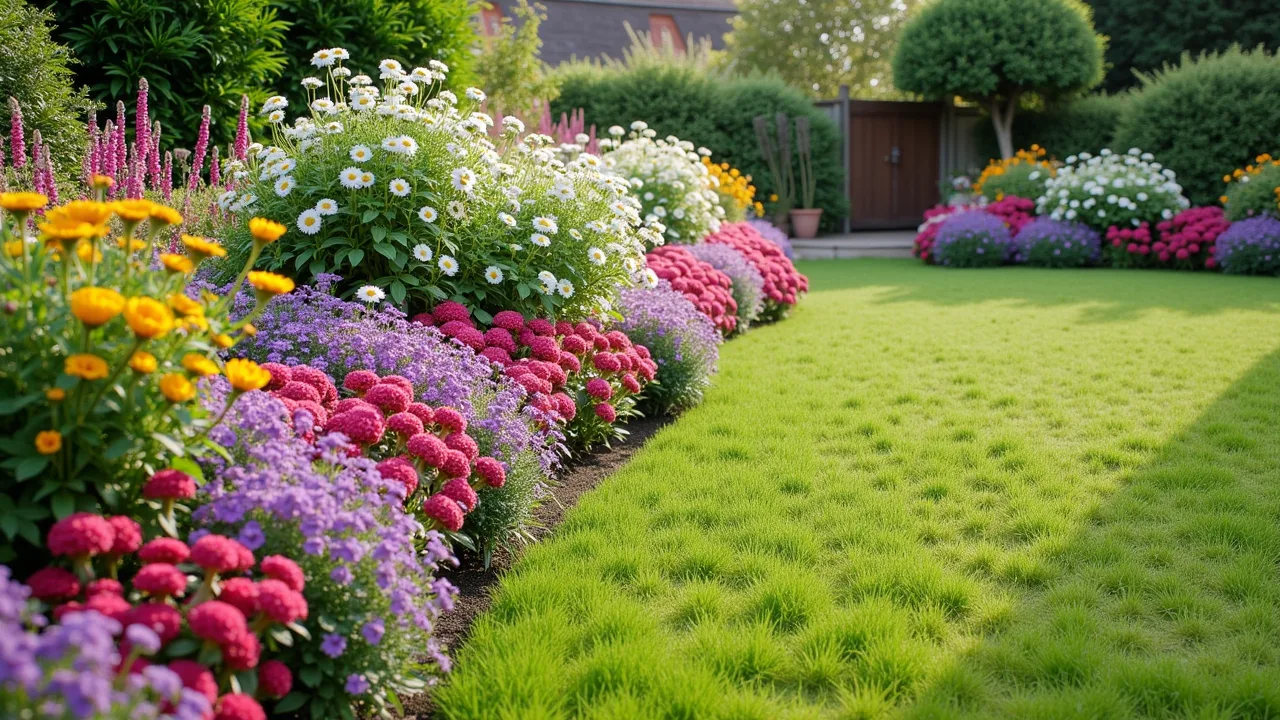
IMAGE_SCENE: a UK back garden in late spring with a deliberately unmown lawn full of dandelions and clover, bordered by flowering comfrey and a wooden fence
Source: https://www.rhs.org.uk/news/example-no-mow-may-2026
As an Amazon Associate, GardenWizz earns from qualifying purchases made through the links above. This does not affect the price you pay. See our disclaimer for details.