
Goat Willow
Salix caprea · Pussy Willow
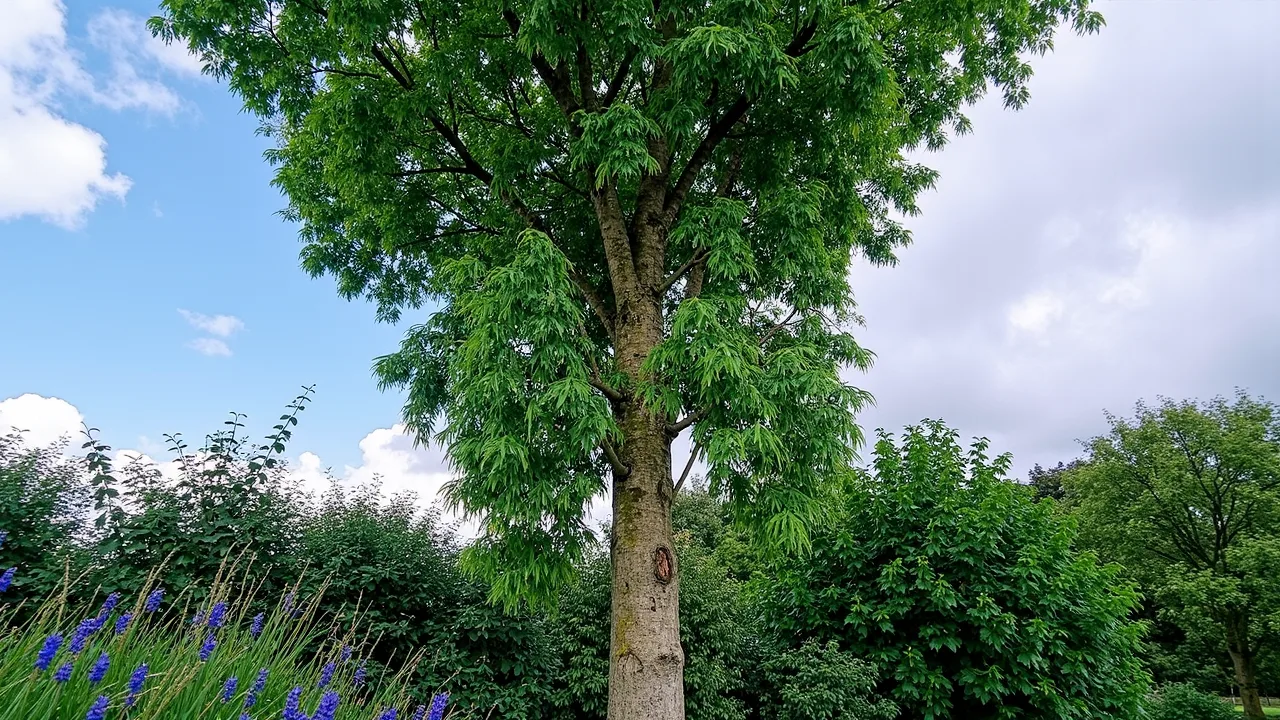
At a Glance
| Botanical name | Salix caprea |
|---|---|
| Common name(s) | Goat Willow, Pussy Willow |
| Family | Salicaceae |
| Plant type | tree (Deciduous; dioecious (male and female catkins on different plants)) |
| Height × Spread | 8–10 m × — |
| Hardiness | H6 (to -20.0 °C) |
| Position | Full sun |
| Soil | Deep moist well-drained soil; moderately fertile; dislikes shallow chalk soils |
| Flowering | March–May |
| Toxicity | — |
| Native range | Europe and western and central Asia |
Overview
Common Willow (Salix caprea) is a vigorous, deciduous shrub or small tree native to the British Isles and much of temperate Europe and northern Asia. Often referred to as Goat Willow or, in early spring, Pussy Willow, it is one of the first woody plants to come alive in the UK calendar: its fat, silvery catkins push out on bare branches from late February into April, providing a critical early nectar source for bees, bumblebees and other pollinators when little else is in flower.
The species is fully hardy across the whole of the UK and tolerates a wide range of soils, making it one of the more forgiving native trees for informal hedging, mixed wildlife planting, and as a specimen in larger gardens. Its tolerance of damp ground also makes it useful on heavy clay and in seasonal wet areas where many other trees struggle. While it can grow to 8–10 m as a small tree, it is most often seen in cultivation as a large, multi-stemmed shrub kept within bounds by light pruning.
Quick-Care Table
Appearance
Common Willow is a broad, rounded shrub or short-trunked tree, typically reaching 5–10 m in height with a similar spread. In the open it forms a dense, dome-shaped crown; in woodland it tends to grow more upright and slender. Young shoots are thick, greyish-green and noticeably hairy, becoming smoother and grey-brown as they mature. The bark on older stems and trunks is grey-brown, developing shallow, scaly fissures with age.
The leaves are one of the easiest identification features. They are broadly oval to elliptical, sometimes almost round, 7–12 cm long and 3–7 cm wide, with a slightly crinkled or wavy margin. The upper surface is a dark, slightly glossy green, while the underside is covered in a dense, whitish-grey felt of fine hairs — a "felted" or "felty" texture that distinguishes S. caprea from most other common Salix species, which typically have narrower, smoother leaves. The leaf stalk is short and the tip often twists slightly, giving the canopy a soft, ruffled look in summer.
The flowers are catkins and the species is dioecious, meaning male and female flowers are borne on separate plants. Male catkins are the showy ones: 2–4 cm long, plump and silvery-grey through late winter, then opening into dense, oval, bright-yellow blooms in March and April, releasing pollen on warm days. Female catkins are longer, slimmer and greenish, and in mild springs can develop into small, downy seed-heads that release fluffy white seeds in May and June. A warm, dry day in March with a Common Willow in full pollen is one of the classic sounds of early spring — a steady, low hum of insects working the catkins.
Growing Conditions
Common Willow is one of the most adaptable native trees and grows well across the UK.
- Hardiness: Fully hardy throughout the British Isles. RHS hardiness rating is H7 ("very hardy", tolerating lows of -20 °C and below); older references cite H6. Equivalent to USDA zones 4–8.
- Light: Full sun produces the densest habit and the heaviest catkin display, but it tolerates light, dappled shade well. Heavier shade leads to a thinner, more open shape and reduced flowering.
- Soil: Prefers moist, moderately fertile ground but accepts a wide pH range from mildly acidic (around pH 5.0) through neutral to slightly alkaline (pH 7.5). It grows on clay, loam and sandy soils; it dislikes compacted, airless ground and will struggle in very free-draining, dry sites unless irrigated in the first few years.
- Moisture: Naturally a plant of damp woodlands, hedgerows, fens, riverbanks and hillside flushes. It is the go-to willow for planting in a seasonally boggy corner, alongside a pond margin, or in a rain garden. Established plants cope with short dry spells but perform best where the subsoil stays damp through summer.
- Exposure: Reasonably wind-firm once established, though very exposed coastal sites can scorch the felted leaf undersides and check growth. Inland it is tolerant of cold, exposed gardens.
- UK climate: Suited to all four UK nations. Catkins can occasionally be spoiled by hard late frosts in March or April in cold inland districts, particularly in northern England and Scotland.
Planting and Care
When to plant. Bare-root plants establish best and are cheapest; plant from November to March while dormant and the soil is workable. Container-grown stock can go in at any time of year provided the ground is not frozen or waterlogged, with attention to watering through the first two summers.
Spacing. Allow 3–5 m between plants for an informal screen or small group. For a denser hedge, plant at 60–90 cm intervals in a single staggered row; Common Willow is not commonly used as a tight formal hedge but works as a tall, flowering boundary.
Planting method. Dig a hole at least twice the width of the rootball and the same depth. Loosen the base and sides with a fork, position the plant so the soil mark on the stem sits level with the surrounding ground, backfill with the original soil, firm in well, and water thoroughly. Mulch with 5–8 cm of bark or compost in a 1 m circle, keeping it clear of the stem.
Watering. Critical in the first two growing seasons. Water deeply once a week during dry spells rather than little and often; this encourages roots to chase moisture downwards. Once established, supplementary watering is rarely needed except in long droughts or on very free-draining soil.
Feeding. A modest annual mulch of well-rotted garden compost or manure in late winter is usually enough on reasonable soils. On thin, poor soils, an organic fertiliser such as fish, blood and bone in early spring will boost catkin production. Avoid high-nitrogen lawn feed near the rootzone — it encourages soft, sappy growth that is more attractive to aphids and sawflies.
Pruning. Minimal. Remove dead, damaged or crossing stems in late winter (February is ideal) before the catkins open. For a denser, lower shrub, cut a proportion of the oldest stems back to within 5–10 cm of the ground on a three- to five-year rotation; this mimics the coppicing that the species naturally responds to. Willows tolerate hard renovation: even neglected specimens can be cut to a low stool in late winter and will regrow vigorously. Always dispose of prunings promptly — willow stems root easily in damp ground and discarded cuttings can become invasive in ditches, watercourses and damp garden corners.
Propagation. Very easy from cuttings. Take 20–30 cm hardwood cuttings from vigorous, healthy stems in November to February, push them two-thirds of their length into moist soil or a deep pot of compost, and leave them in a sheltered spot. Roots usually form within weeks and most will be ready to plant out the following autumn. Softwood cuttings taken in early summer root equally well in a propagator with bottom heat.
Seasonal care. Apart from late-winter pruning, the calendar is light. Watch for sawfly larvae between late May and July; a quick check under the leaves every few days catches infestations early. In late summer, remove any suckers that appear in lawns or borders — Common Willow can throw up shoots from surface roots on damp sites, particularly weeping forms grafted onto upright rootstocks.
Common Problems
Willow anthracnose. Caused by the fungus Apiognomonia errabunda (sometimes still listed under the older name Drepanopeziza sphaerioides). It produces small brown-black spots on the leaves and sunken lesions on young shoots, leading to premature leaf drop in wet summers. Rake up and destroy affected leaves; avoid overhead watering; improve air movement by thinning the centre of the shrub.
Willow rusts. Several Melampsora species affect Salix caprea, producing orange-yellow pustules on the undersides of leaves from mid-summer. Usually cosmetic and does not threaten the plant's long-term health, but heavy infections weaken young or stressed specimens. Improve air circulation and clear fallen leaves in autumn.
Powdery mildew. A white, dusty coating on leaves in late summer and early autumn, again more common on dry-stressed plants. Mulch well, water in dry spells, and thin congested growth.
Sawfly larvae. Various sawfly species, generally placed in the genus Nematus and related genera, lay eggs on willow foliage in late spring. The pale green, caterpillar-like larvae can defoliate a shrub within a week during a bad year. Check the undersides of leaves from late May onwards and pick off or spray with a suitable biological control (e.g. Bacillus thuringiensis var. kurstaki on young larvae) at the first sign.
Aphids. Large willow aphids (Tuberolachnus salignus, the giant bark aphid, is conspicuous) cluster on stems in late summer. They produce honeydew and sooty mould but rarely do lasting damage. Encourage natural predators such as hoverflies, ladybirds and birds; a strong jet of water dislodges small colonies.
Phytophthora root rot. In persistently waterlogged soils, roots can develop Phytophthora infections, leading to dieback and sparse foliage. Improve drainage where practical; in boggy ground, accept some risk or pick a more tolerant species.
Catkin damage. Hard late frosts in March or April can blacken open catkins, and bullfinches sometimes strip developing catkins in late winter for food. Neither is usually serious.
Popular Varieties
A small number of well-established cultivars of Salix caprea are widely available in the UK, mainly selected for habit or catkin quality. The standard species itself, often sold simply as Salix caprea or "Pussy Willow", remains the most common form and is the right choice for wildlife and naturalistic planting.
- Salix caprea — the wild type. A large shrub or small tree to 8–10 m, with the typical silvery male catkins. The most wildlife-friendly choice.
- Salix caprea 'Pendula' — the common weeping form, usually sold as a standard with a clear stem of 1.2–2.0 m grafted onto an upright rootstock. The cascading branches form a broad, low mound about 1.5–2.5 m across, ideal as a specimen in a small lawn or at the edge of a border. It is most often male, with the showy catkins.
- Salix caprea 'Kilmarnock' — very similar to 'Pendula' in habit, with a tight, weeping head on a straight stem. Generally considered slightly more compact and even more floriferous. Widely sold in garden centres; treated as identical to 'Pendula' for practical purposes in many references.
- Salix caprea var. pendula f. mas — a botanical form, sometimes listed, referring specifically to male weeping plants with prominent catkins. Not a separate cultivar in the trade sense.
- Salix caprea 'Silver' — selected for particularly silvery, plump male catkins; otherwise similar in habit to the species. Less widely available but worth seeking from specialist nurseries.
- Salix caprea 'Weeping Sally' — an older trade name that some nurseries still use for weeping specimens. Plants sold under this name are usually equivalent to 'Pendula' or 'Kilmarnock'.
It is worth noting that the weeping cultivars are typically grafted, and any strong, upright shoots appearing from below the graft union should be removed promptly, as they will be the vigorous rootstock rather than the desired weeping scion.
Pests and Diseases
| Problem | Symptoms | Management |
|---|---|---|
| Willow Anthracnose | Small dark spots on leaves that may coalesce, causing yellowing and premature leaf drop, particularly in wet weather. | Rake up and destroy fallen leaves to reduce spore load and prune out severely infected shoots promptly. |
| Willow Rust | Small orange pustules appear on the undersides of leaves, potentially causing minor leaf distortion or drop. | Control is rarely necessary as damage is minimal; remove alternate hosts like Euonymus if feasible to break the cycle. |
| Willow Canker | Sunken, discoloured lesions appear on stems and branches, which may eventually girdle the branch causing dieback. | Prune out affected branches well below the visible damage during dry weather to prevent spread. |
| Aphids | Clusters of small soft-bodied insects on new growth and undersides of leaves, often accompanied by sticky honeydew. | Encourage natural predators like ladybirds and lacewings, or wash off infestations with a strong jet of water. |
| Willow Scale | Small, immobile white or brown bumps attached to stems and leaves, weakening the plant through sap feeding. | Prune out heavily infested branches and encourage parasitic wasps which naturally control scale populations. |
| Honey Fungus | General decline, yellowing foliage, and white fungal growth or black root-like strands at the base of the trunk. | Improve drainage and avoid wounding roots; severe cases may require removal of the plant to prevent spread. |
Quick Care Summary
| Sunlight | Full sun |
|---|---|
| Soil | Deep moist well-drained soil; moderately fertile; dislikes shallow chalk soils |
| Hardiness | H6 (-20.0 °C) |
| Sow | — |
| Plant | — |
| Prune | — |
As an Amazon Associate, GardenWizz earns from qualifying purchases made through the links above. This does not affect the price you pay. See our disclaimer for details.