
Common Lilac
Syringa vulgaris
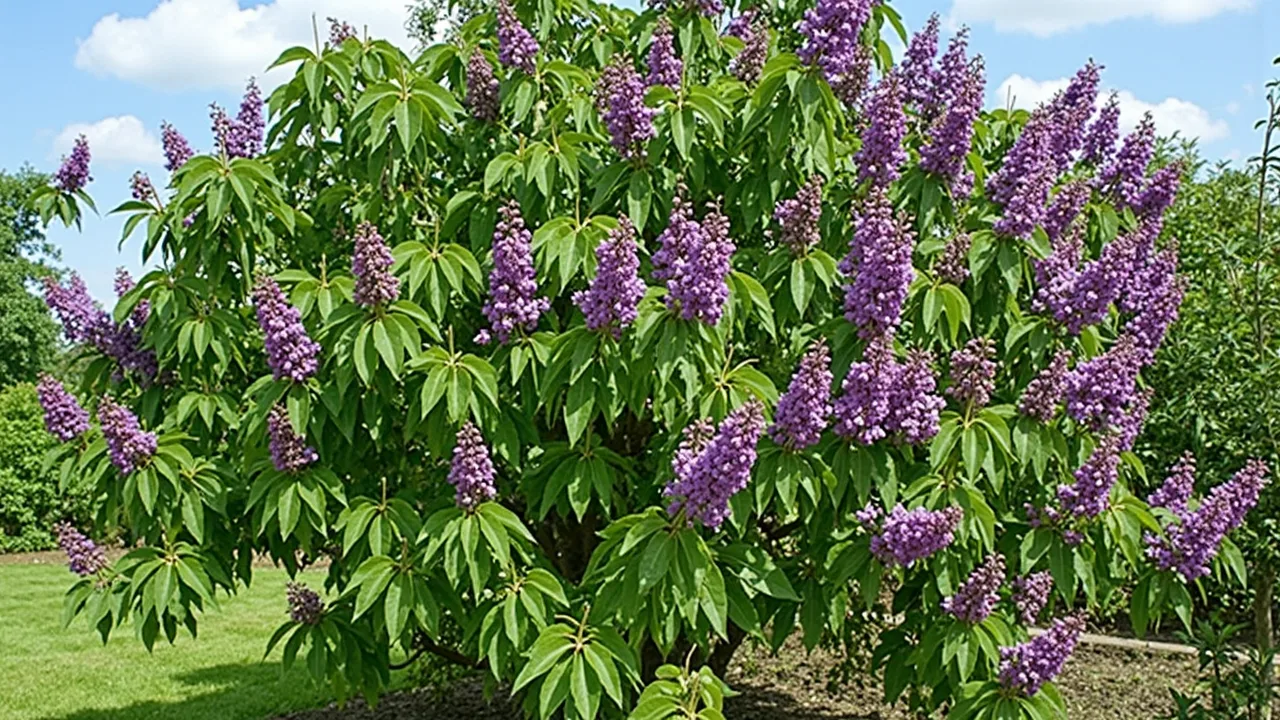
At a Glance
| Botanical name | Syringa vulgaris |
|---|---|
| Common name(s) | Common Lilac |
| Family | Oleaceae |
| Plant type | shrub (deciduous) |
| Height × Spread | 6–7 m × 7 m |
| Hardiness | H6 (to -20.0 °C) |
| Position | Full sun |
| Soil | Moist but well-drained, fertile, humus-rich, alkaline to neutral, chalky |
| Flowering | May–June |
| Toxicity | — |
| Native range | Balkan Peninsula |
The common lilac is one of the most beloved flowering shrubs of the late-spring garden, prized above all for its dense, fragrant panicles of mauve, purple, pink, or white blossom. Native to the rocky slopes of the Balkans, Syringa vulgaris has been cultivated in British gardens since the late sixteenth century and remains a mainstay of cottage borders, mixed shrub plantings, and informal flowering hedges. It is fully hardy across the UK, long-lived, and once established needs only modest care, making it an excellent choice for gardeners who want a reliable spring show without heavy maintenance.
Overview
Syringa vulgaris belongs to the Oleaceae, the olive family, which also includes ash, privet, and Forsythia. It is a vigorous, suckering shrub that, left unpruned, eventually forms a dense thicket of upright stems. In the UK it typically reaches 3–4 m in a domestic garden, although very old specimens can attain 6–7 m. The shrub is exceptionally long-lived, often outlasting the gardeners who plant it, and some British estate specimens are known to be well over a century old. It is grown almost exclusively for its late-April and May display, when the air around a flowering bush carries one of the most distinctive perfumes in the garden.
Appearance
Lilac grows on a framework of stout, grey-brown stems. The bark is smooth on young wood and becomes finely fissured with age. The leaves are opposite, simple, and heart-shaped to broadly ovate, measuring 5–12 cm long. They emerge in early spring, a fresh, slightly bronzed green, and mature to a darker, dull green above with a paler, slightly grey-green underside. There is little autumn colour; the foliage usually drops green or yellow-green after the first hard frost.
The flowers are the chief ornament. They are carried in dense, pyramidal panicles 10–20 cm long, each made up of many small, tubular florets with four flared lobes. The colour in the species is the familiar pale-lilac to deep-purple, but cultivated varieties extend the palette through mauve-pink, true pink, deep reddish-purple (the so-called "wine" shades), and pure white. The fragrance is rich, sweet, and slightly spicy, strongest in still, warm weather. After pollination the flowers develop into small, oblong, brown seed capsules, which are ornamental rather than useful; in UK conditions lilac sets viable seed only sparingly, and most garden plants are propagated vegetatively.
Growing Conditions
Lilac is fully hardy throughout the UK and is rated H7 by the Royal Horticultural Society, the highest hardiness category, indicating tolerance of temperatures below −20 °C. The single most important requirement is sunlight: it flowers poorly in shade, and a north-facing wall or a position overhung by larger trees will produce leafy growth but few buds. Full sun — at least six hours of direct light in midsummer — is essential for a heavy display.
Soil should be neutral to mildly alkaline, moisture-retentive but free-draining. A fertile loam is ideal; chalk and clay-loam are both tolerated, provided they do not waterlog in winter. Very acidic ground should be limed before planting, and thin, hungry sand should be improved with generous amounts of well-rotted organic matter. Shelter from cold, drying spring winds helps to protect opening flower buds, and an open, sunny aspect suits the plant better than a hot, baked south-facing wall, which can encourage powdery mildew in dry summers.
Regionally, lilac performs most reliably in the south and east of England, where spring weather is warmer and drier. In the cooler, wetter north and west, flowering can be diminished in a cold spring, but established plants still flower in most years.
Planting and Care
Planting. Bare-root plants are best put in between November and March, when dormant. Container-grown stock can be planted at any time of year, although autumn to early spring is still preferable. Dig a hole at least twice the width of the rootball and to the same depth, work a little bone meal or well-rotted compost into the base, and water in thoroughly. Space single specimens 2–3 m apart, more if a group or informal hedge is intended.
Watering. Water young plants regularly through their first two or three summers to establish a deep root system. Once mature, lilac is notably drought-tolerant and will survive long dry spells without irrigation, though a soak during a prolonged drought helps the following year's bud set.
Feeding and mulching. Apply a general-purpose fertiliser such as blood, fish and bone in early spring, and top up with a 5–7 cm mulch of well-rotted garden compost or bark. High-nitrogen feeds should be avoided, as they encourage soft leafy growth at the expense of flowers.
Pruning. The most important job is deadheading: as soon as the flowers fade in late May or early June, cut back the spent panicles to a strong pair of leaves or buds. This keeps the shrub tidy and directs energy into growth rather than seed. Renovation of an overgrown plant is possible by hard pruning in winter, but this sacrifices one season's flowers, as lilac blooms on the previous year's wood. Never prune in late summer or autumn, by which time the next year's buds have already formed.
Propagation. Cultivars are usually increased by softwood cuttings taken in early summer, by simple layering of a low branch, or commercially by grafting onto privet (Ligustrum) rootstock. Species plants can be raised from seed, but seedlings take many years to reach flowering size.
Common Problems
Powdery mildew (Erysiphe syringae) is the most frequent complaint, showing as a white, dusty coating on the leaves in warm, dry summers. It is unsightly rather than fatal; improve air circulation by thinning congested growth, water at the base rather than overhead, and clear fallen leaves in autumn.
Lilac leaf miner (Caloptilia syringella) causes brown blotches within the leaf as caterpillars tunnel through the tissue. Pick off and destroy affected leaves; severe infestations can be treated with a systemic insecticide in early summer.
Verticillium wilt (Verticillium dahliae) causes sudden wilting and browning of shoots, often on one side of the plant. There is no cure, and affected specimens should be removed and destroyed. Do not replant lilac in the same spot, as the soil-borne fungus persists for years.
Poor flowering is more often a cultural problem than a disease. The usual causes are insufficient sun, pruning at the wrong time, or simply youth: grafted plants flower within two or three years, but own-root lilacs commonly take five years or more to settle in and bloom well.
Frost damage to buds can occur in cold springs, particularly in exposed gardens. There is no remedy once it happens, but a more sheltered site will reduce the risk in future years.
Popular Varieties
A great many named cultivars of Syringa vulgaris exist, and the following are widely available in the UK and reliably perform in British gardens.
- 'Charles Joly' — a classic double with deep wine-purple, highly fragrant panicles, regarded as one of the finest dark doubles.
- 'Madame Lemoine' — fully double, pure-white flowers, a long-established favourite since the late nineteenth century and an excellent foil for darker cultivars.
- 'Katherine Havemeyer' — large, double, lavender-purple flowers with a strong scent; vigorous and free-flowering.
- 'Beauty of Moscow' ('Krasavitsa Moskvy') — pale-pink buds opening to near-white, double, with a delicate perfume; popular for cutting.
- 'Sensation' — distinctively bicoloured, with each purple floret edged in white; a striking single-flowered variety that draws the eye in a mixed border.
Lilac is also traditionally available in a "French" named form on its own roots; these are sold by colour — mauve, white, or pink — and tend to be cheaper than grafted cultivars, though they take longer to reach flowering size.
Pests and Diseases
| Problem | Symptoms | Management |
|---|---|---|
| Lilac blight (bacterial) | Angular brown spots on leaves coalesce into blackened areas, causing buds to scorch and shoots to die back. | Prune out infected growth in dry weather and avoid overhead watering to reduce spread. |
| Powdery mildew | A white, dusty fungal growth appears on leaves and young shoots, potentially causing distortion. | Ensure good air circulation by thinning the canopy and apply a suitable fungicide if severe. |
| Lilac leaf-mining moth | Irregular white or brown blotches appear within the leaves as larvae tunnel through the tissue. | Remove heavily infested leaves and encourage natural predators like parasitic wasps. |
| Honey fungus | General decline, yellowing foliage, and white fungal mats or black root-like strands at the base. | Improve drainage and remove infected plants completely to prevent spread to neighbours. |
| Willow scale insects | Small, immobile, waxy scales cluster on stems and undersides of leaves, weakening the plant. | Scrape off heavy infestations by hand or use a horticultural oil spray in winter. |
Quick Care Summary
| Sunlight | Full sun |
|---|---|
| Soil | Moist but well-drained, fertile, humus-rich, alkaline to neutral, chalky |
| Hardiness | H6 (-20.0 °C) |
| Sow | — |
| Plant | March, April, May, September, October, November |
| Prune | January, February, December |
As an Amazon Associate, GardenWizz earns from qualifying purchases made through the links above. This does not affect the price you pay. See our disclaimer for details.