How to Make Compost at Home
Composting at home is one of the simplest, most rewarding ways to boost your UK garden’s health while cutting household waste. It turns kitchen scraps and garden trimmings into 'black gold' for your soil, saving you money on fertiliser and reducing landfill burden – a win for your garden and the planet.
What to Compost in Your UK Garden
Focus on balancing nitrogen-rich 'greens' (wet, fresh) and carbon-rich 'browns' (dry, woody) for healthy decomposition. Avoid meat, dairy, or oily foods, as they attract pests and cause anaerobic smells.
- Greens (nitrogen):
- Fresh grass clippings (after mowing, not damp)
- Vegetable peelings, coffee grounds, tea bags
- Crushed eggshells (deter pests)
- Spring/summer plant trimmings
- Browns (carbon):
- Dry autumn leaves (shred to speed up)
- Straw, shredded cardboard, or newspaper (ink-free)
- Wood chips (from untreated timber)
- Pruned woody stems (chopped small)
Building Your Compost Pile Right
Aim for a rough 2:1 ratio of browns to greens by volume – think two buckets of dried leaves for every one of kitchen scraps. Layer materials to prevent compaction and encourage airflow.
- Start with a base: 10cm of coarse browns (like twigs) for drainage.
- Layer alternately: Add 5–7cm of greens, then 10–15cm of browns.
- Moisten as you go: Sprinkle water until it feels like a damp sponge (not soggy).
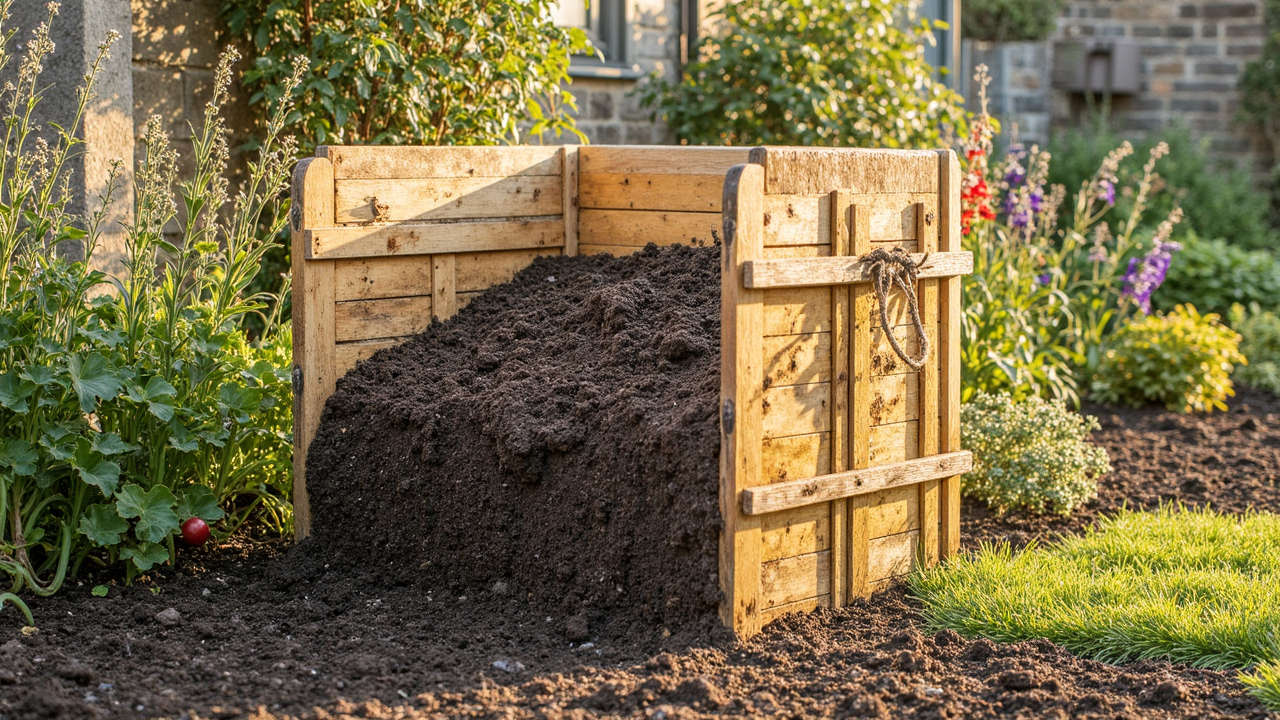
- Keep it compact: A pile 1m x 1m x 1m (3ft x 3ft x 3ft) retains heat best in UK weather.
Maintaining Your Compost Heap
UK weather can make composting tricky – turn it regularly to avoid becoming waterlogged in winter or drying out in summer.
- Turn every 2–3 weeks: Use a garden fork to mix the pile, bringing outer material inside. This aerates it and speeds up decomposition.
- Check moisture: If it’s soggy, add more browns; if dry, sprinkle water.
- Avoid common pitfalls:
- Never add pet waste or diseased plants (risk of pathogens).
- Keep meat/dairy out – they cause foul odours and attract flies.
- In winter, cover the pile with a tarp to retain heat.
When Your Compost is Ready
It’s ready when it looks like dark, crumbly soil with an earthy smell – no visible scraps. This takes 3–12 months, depending on your method.
- Hot composting (using the Berkeley method):
- Requires a large pile (1m³+) and turning every 2 days.
- Produces compost in 18 days (ideal for serious gardeners).
- Cold composting (simplest method):
- Add scraps as they happen, turn once a year.
- Takes 6–12 months – perfect for beginners or small gardens.
- Test readiness: Sift out large chunks; if the rest is dark and smells sweet, it’s ready to use.
#UKGardening #CompostAtHome #SoilHealth #EcoFriendlyGardening #GrowYourOwn #SustainableLiving
As an Amazon Associate, GardenWizz earns from qualifying purchases made through the links above. This does not affect the price you pay. See our disclaimer for details.