Onion
Allium cepa · bulb onion · common onion
At a Glance
| Botanical name | Allium cepa |
|---|---|
| Common name(s) | bulb onion, common onion |
| Family | — |
| Plant type | biennial (usually treated as an annual and harvested in its first growing season) |
| Height × Spread | 15–45 cm × — |
| Hardiness | — |
| Position | Full sun, Partial shade |
| Soil | — |
| Flowering | September |
| Toxicity | — |
| Native range | — |
Overview
The onion (Allium cepa L.), also known as the bulb onion or common onion, is the most widely cultivated species of the genus Allium. It is exclusively known from cultivation, though related wild species occur in Central Asia and Iran. The onion is most frequently a biennial plant but is usually treated as an annual and harvested in its first growing season. Its close relatives include garlic, scallion, leek, and chives.
Botanical Description
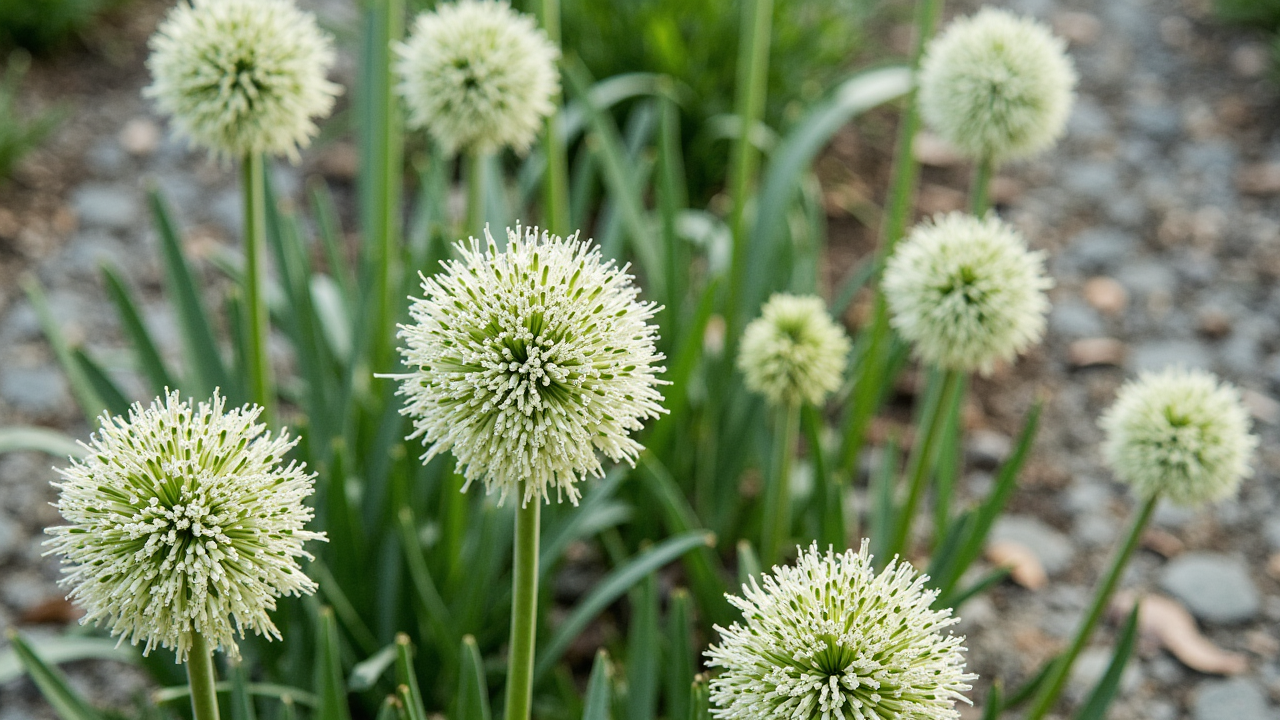
The onion is a biennial plant typically growing to a height of 15 to 45 cm (6 to 18 in). It features a fan of hollow, bluish-green leaves with a flattened, usually white sheath at the base. The bulb forms at the base of the plant, composed of shortened, compressed underground stems surrounded by fleshy modified scale leaves enveloping a central bud. In autumn, the foliage dies down and the outer layers of the bulb become dry and brittle. The inflorescence is a rounded umbel of white flowers with parts in sixes, producing glossy black, triangular seeds. The average pH of an onion is around 5.5.
Origin and Habitat
The onion (Allium cepa) is known exclusively from cultivation; its ancestral wild form is not known. Related wild species occur in Central Asia and Iran, with the most closely related including Allium vavilovii from Turkmenistan and Allium asarense from Iran. Escapes from cultivation have become established in some regions. The genus Allium contains other cultivated species such as the Japanese bunching onion (Allium fistulosum), tree onion (Allium × proliferum), and Canada onion (Allium canadense).
Cultivation
Onions are cultivated in full sun or partial shade. They are typically grown as an annual crop, harvested in the first growing season. The crop is harvested after the foliage dies back in autumn (or spring for overwintering varieties), when the outer layers of the bulb become dry and brittle. Modern varieties are often harvested before the bulb fully matures.
Care and Maintenance
Onions are prone to attack by pests and diseases, particularly the onion fly, onion eelworm, and various fungi causing rotting. The crop requires harvesting when the outer bulb layers are dry and brittle. If left in the soil over winter, the growing point develops in spring, leading to new leaf growth and flowering.
Uses
Onions are cultivated and used globally as a food. They are consumed raw, cooked, pickled, or used in chutneys. Culinary varieties include yellow/brown onions (sweet, used in dishes like French onion soup), red/purple onions (sharp, used raw or cooked), and white onions (mild, sweet when sautéed). Young plants may be harvested as spring onions or scallions. Smaller varieties like pearl, boiler, or pickler onions are used as vegetables or preserved in vinegar. Onions are also used in science education for microscopic observation of cells and can be boiled to make a dye from their skins.
#Onion #AlliumCepa #Vegetable #GardenWizz #UKGardening #BulbVegetable #CulinaryHerb #GardenCare #Allium #OnionVarieties
Cultivars and Varieties
| Cultivar | Height | Flower | Notes | AGM |
|---|---|---|---|---|
| 'Bermuda' | — | — | sweet yellow onion | |
| 'Cévennes' | — | — | sweet yellow onion | |
| 'red or purple onions' | — | — | sharp pungent flavour | |
| 'Vidalia' | — | — | sweet yellow onion | |
| 'Walla Walla' | — | — | sweet yellow onion | |
| 'white onions' | — | — | mild in flavour |
Pests and Diseases
| Problem | Symptoms | Management |
|---|---|---|
| onion fly | — | — |
| onion eelworm | — | — |
| various fungi | rotting | — |
Quick Care Summary
| Sunlight | Full sun, Partial shade |
|---|---|
| Soil | — |
| Hardiness | — |
| Sow | March–December |
| Plant | March–December |
| Prune | — |
Facts sourced from Wikipedia / Allium cepa (https://en.wikipedia.org/wiki/Allium_cepa)
As an Amazon Associate, GardenWizz earns from qualifying purchases made through the links above. This does not affect the price you pay. See our disclaimer for details.