
Blueberry 'Duke'
Vaccinium corymbosum 'Duke'
The Gardening Year
Best months in UK gardens · full planting calendar →
🖨 Printable care card (PDF)At a Glance
| Botanical name | Vaccinium corymbosum 'Duke' |
|---|---|
| Common name(s) | Blueberry 'Duke' |
| Family | Ericaceae |
| Plant type | shrub |
| Height × Spread | 100–150 cm × 100–150 cm |
| Position | Full sun, Partial shade |
| Soil | well-drained, moisture-retentive, acidic soil (pH 4.5-5.5) |
| Flowering | — |
| Toxicity | No specific toxicity is listed by the RHS. This is not a guarantee of safety — check with a vet or the ASPCA before pets or children eat any plant. |
| Native range | — |
Overview
Blueberry 'Duke' is a highbush blueberry cultivar (Vaccinium corymbosum) prized in the UK for its dependable early-to-mid season cropping and vigorous, upright habit. Released in the United States in 1987 by the USDA breeding programme, it has become a go-to variety for British gardeners wanting reliable harvests of mild, sweet berries in early summer. It is self-fertile, though yields improve markedly with a pollination partner such as 'Bluecrop' or 'Spartan'.
Distinctive Features
'Duke' differs from the typical species form in several practical ways. The bush is notably upright and open in habit, reaching roughly 1.5–1.8 m tall with a narrower spread than cultivars such as 'Bluecrop'. This makes it well suited to tighter planting distances and to growing in large patio containers where a more compact silhouette is wanted.
The white, urn-shaped flowers appear late for a blueberry, which is one of its key advantages: the blossom typically escapes late spring frosts that can damage earlier-flowering cultivars. The foliage is bright green in summer, turning a clear yellow-orange in autumn before leaf fall.
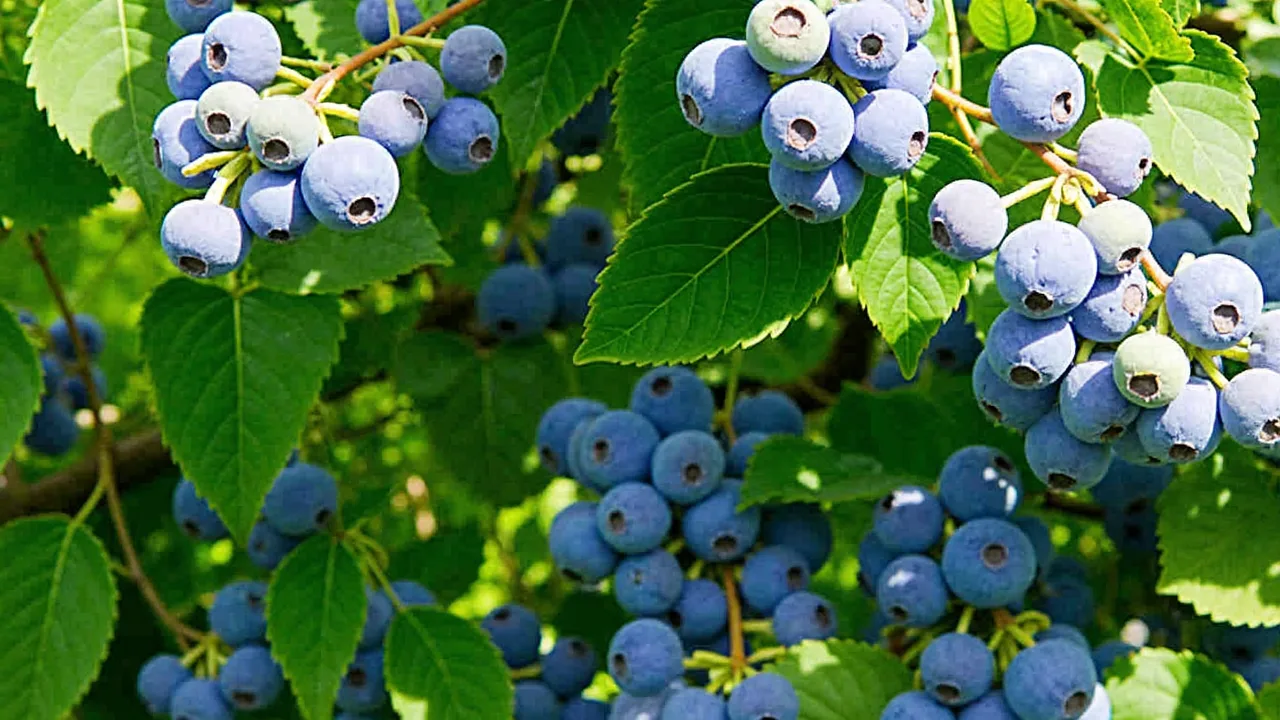
The berries are medium to large, firm, and pale blue with a classic waxy bloom. Flavour is mild, sweet, and low in the sharper acidity found in cultivars such as 'Spartan'. Fruit ripens in a tight, concentrated window, which suits gardeners wanting a heavy single pick for freezing, jam-making, or baking, rather than a long drawn-out harvest.
Growing Notes
Plant in acidic soil (pH 4.5–5.5) or in a large container filled with ericaceous compost, as blueberries are ericaceous and will fail in alkaline ground. A sunny, sheltered site gives the best fruit set; light shade is tolerated but reduces yield. 'Duke' is hardy across most of the UK, tolerating winters down to around -20 °C once established, though pot-grown plants benefit from fleece during the harshest spells.
One point worth flagging for new growers: 'Duke' is a strong flowerer in its first year after planting, and the bushes are often sold already in fruit. It is advisable to strip the first-season flowers after planting so the plant puts its energy into establishing roots, leading to substantially heavier crops from the second year onwards. Pruning is light — remove weak, damaged, or crossing wood in late winter, and from year four cut back roughly a third of the oldest stems to ground level to keep the bush productive.
Best Used For
'Duke' fits well in several UK garden settings. Its upright habit makes it a tidy choice for a productive fruit cage, a sunny back-border, or a large container on a patio or balcony. The concentrated ripening is a real asset in a small kitchen garden where a single heavy pick is more useful than scattered fruitings. While the spring flowers are valuable for bumblebees and the autumn colour is genuinely attractive, it is primarily a cropping variety rather than an ornamental specimen.
Pests and Diseases
| Problem | Symptoms | Management |
|---|---|---|
| Vine weevil | Notched leaf margins on young plants and root damage in containers. | Apply biological nematodes to the compost or use a systemic insecticide. |
| Powdery mildew | White, dusty fungal growth on leaves and shoots. | Improve air circulation and spray with a suitable fungicide if severe. |
| Birds | Missing or damaged fruit, buds, and leaves due to feeding. | Cover the bush with bird netting when fruit is ripening. |
| Chlorosis | Yellowing of leaf blades with green veins due to nutrient deficiency. | Check soil pH and apply ericaceous fertiliser containing iron and manganese. |
| Blueberry rust | Spotting on upper leaves with yellow-orange pustules underneath. | Remove affected leaves and avoid planting near hemlock trees. |
For step-by-step help, read Treating Powdery Mildew. Or browse the full plant problem solver to diagnose an issue by symptom.
As an Amazon Associate, GardenWizz earns from qualifying purchases made through links on this page (including links within the article). This does not affect the price you pay. See our disclaimer for details.