
Coriander
Coriandrum sativum · cilantro
At a Glance
| Botanical name | Coriandrum sativum |
|---|---|
| Common name(s) | coriander, cilantro |
| Family | Apiaceae |
| Plant type | annual |
| Height × Spread | 50 cm × — |
| Hardiness | — |
| Position | Full sun |
| Soil | — |
| Flowering | June–August |
| Toxicity | — |
| Native range | Mediterranean Basin |
Overview
Coriander (Coriandrum sativum) is an annual herb belonging to the Apiaceae family. It is known as cilantro in the United States for its fresh leaves, though this term is not used in the UK. The plant is valued for its edible leaves and dried seeds, which are widely used in global cuisines.
Botanical Description
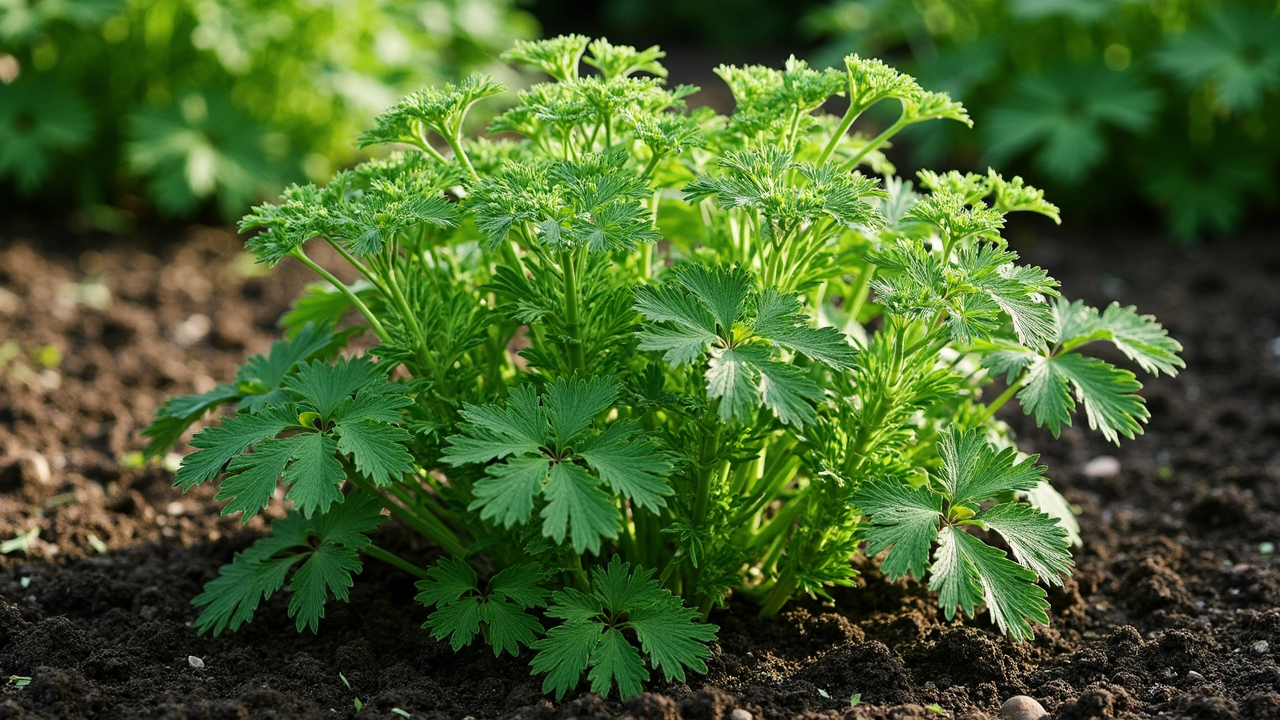
Coriander grows to a height of 50 cm (20 in). Its leaves are variable in shape, broadly lobed at the base and slender and feathery on flowering stems. The flowers form small white or pale pink umbels, with asymmetrical petals: those pointing away from the umbel centre measure 5–6 mm long, while those pointing inward are 1–3 mm long. The fruit is a globular, dry schizocarp 3–5 mm in diameter.
Origin and Habitat
Native to the Mediterranean Basin, coriander grows wild across Western Asia and Southern Europe. Archaeological evidence indicates its cultivation since at least 6,000 years ago, with finds in Israeli caves and Egyptian tombs (e.g., Tutankhamen’s tomb). It was used in ancient Egyptian medicine (Ebers Papyrus, c. 1550 BCE) and Greek cuisine by the second millennium BCE.
Cultivation
Coriander is an annual requiring full sun. It flowers in June, July, and August. The plant thrives in well-drained soil and is typically grown for its leaves or seeds.
Care and Maintenance
Coriander leaves spoil quickly after harvest and lose aroma when dried or frozen. Seeds should be ground fresh to retain flavour. The plant is sensitive to prolonged heat, causing rapid bolting.
Uses
All parts are edible, with fresh leaves and dried seeds most commonly used. Leaves (referred to as coriander leaves in the UK) are used raw in salads, salsas, and as garnishes. Seeds provide a lemony citrus flavour when crushed, used whole, ground, or roasted in spice blends (e.g., garam masala), pickling, and brewing. Roots feature in Thai curries. Nutritionally, leaves are rich in vitamins A, C, and K; seeds provide dietary fibre, calcium, and minerals.
#Coriander #Apiaceae #HerbGardening #UKGardening #CulinaryHerbs #MediterraneanPlants #AnnualHerb #GardenWizz
Pests and Diseases
| Problem | Symptoms | Management |
|---|---|---|
| allergies | similar to other food allergies | — |
Quick Care Summary
| Sunlight | Full sun |
|---|---|
| Soil | — |
| Hardiness | — |
| Sow | September–November |
| Plant | April–June |
| Prune | — |
Facts sourced from Wikipedia / Coriandrum sativum (https://en.wikipedia.org/wiki/Coriandrum_sativum)
As an Amazon Associate, GardenWizz earns from qualifying purchases made through the links above. This does not affect the price you pay. See our disclaimer for details.