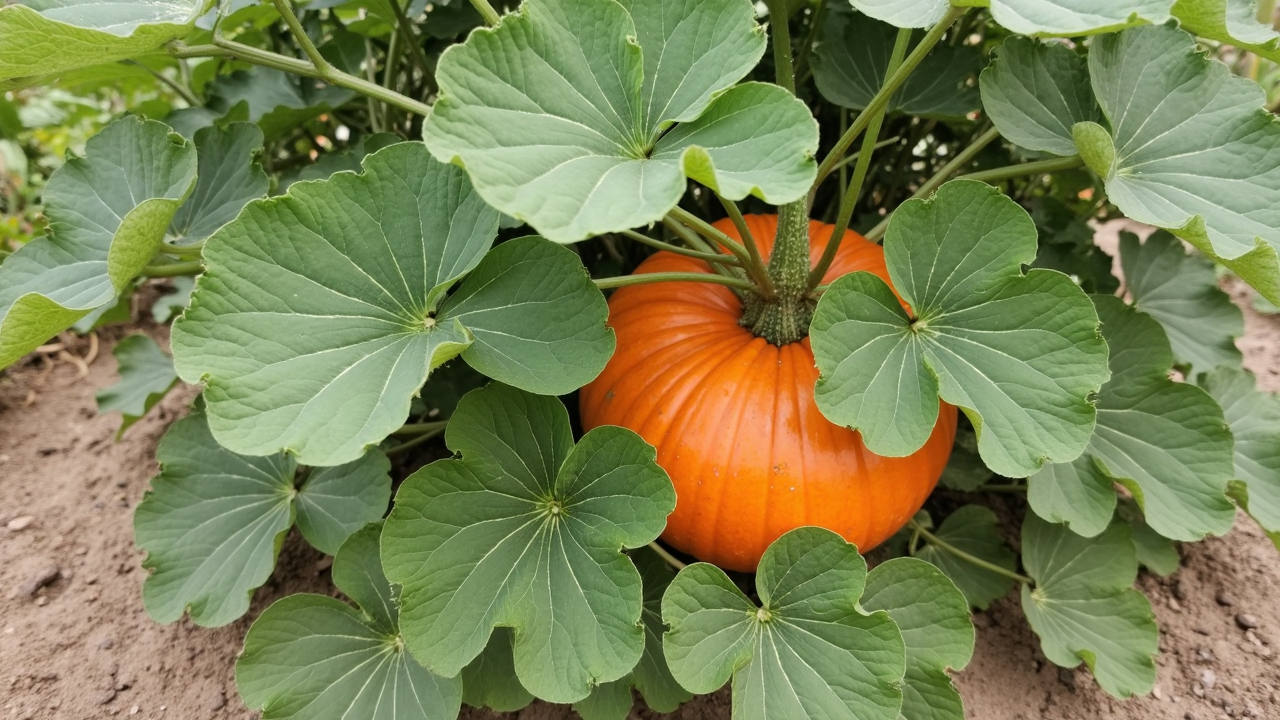
Pumpkin
Cucurbita maxima
At a Glance
| Botanical name | Cucurbita maxima |
|---|---|
| Common name(s) | Pumpkin |
| Family | — |
| Plant type | shrub |
| Height × Spread | — × — |
| Hardiness | — |
| Position | Full sun |
| Soil | 6.0 to 6.8 pH |
| Flowering | — |
| Toxicity | — |
| Native range | South America (Argentina and Uruguay), India, Bangladesh, Myanmar, southern Appalachians |
Overview
Cucurbita maxima is one of at least five species of cultivated squash and one of the most diverse domesticated plant species. It originated in South America from the wild subspecies Cucurbita maxima subsp. andreana over 4,000 years ago. Secondary centres of diversity include India, Bangladesh, Myanmar, and the southern Appalachians. Different types of this species were introduced to North America by the 16th century, with cultivation by Native American tribes throughout the present-day United States by the American Revolution. Commercial introduction of at least three varieties occurred in North America by the early 19th century.
Botanical Description
The species encompasses a wide range of fruit forms. Cultivars include the teardrop or round Arikara squash with mottled orange and green colouring, the elongated Banana squash with light blue, pink, or orange skin, the bulbous Boston marrow, the turban-shaped Buttercup squash with dark green skin and dense yellow-orange flesh, and the variable Candy Roaster squash featuring fine-textured orange flesh in diverse sizes, shapes, and colours. The wild subspecies Cucurbita maxima subsp. andreana produces smaller, non-palatable fruit with yellow flowers and bright green striped fruit. Extrafloral nectaries are present in C. maxima but not necessarily in C. andreana.
Origin and Habitat
The species originated in northern Argentina near the Andes or in certain Andean valleys from the wild subspecies Cucurbita maxima subsp. andreana, native to Argentina and Uruguay. Secondary centres of diversity are documented in India, Bangladesh, Myanmar, and the southern Appalachians. The wild ancestor C. andreana is not palatable and hybridises readily with domesticated C. maxima subspecies.
Cultivation
Cucurbita maxima requires hot weather for optimal growth and was not well established in northern Europe, the British Isles, or similar regions with short or cool summers as of 1949. A strain known as a pumpkin is now cultivated in the British Isles. The ideal soil pH range for cultivation is 6.0 to 6.8. Recommended spacing is 3–5 feet apart in rows 6–10 feet apart, with planting depth of approximately 1–2 inches. Fertilisation should be based on soil test results and specific crop requirements. All cultivars are long-vining, though young plants may exhibit a bush habit before reverting to vining.
Care and Maintenance
Prune after flowering to encourage fruit development. Maintain soil pH within the 6.0–6.8 range. Space plants 3–5 feet apart in rows 6–10 feet apart. Fertilise according to soil test results. Monitor for pests and diseases common to cucurbits, though specific issues are not detailed in the source.
Uses
Buttercup squash is commonly roasted, baked, or mashed into soups, particularly popular in Brazil, Colombia, and Africa. All giant pumpkins (over 300 pounds) belong to this species, including the largest documented at 2,749.0 pounds (1,246.9 kg) as of 2023. The seed is used in treating parasites in animals. The JAP (or Kent) Pumpkin is a common winter squash in Australia, valued for its bright orange flesh and versatility in cooking.
#CucurbitaMaxima #WinterSquash #GiantPumpkins #CulinarySquash #NativeAmericanCrops #BotanicalReference #GardenWizz #UKGardening
Cultivars and Varieties
| Cultivar | Height | Flower | Notes | AGM |
|---|---|---|---|---|
| 'Arikara squash' | — | — | Teardrop or round shape with a mottled orange and green color pattern. Used for eating qualities and decoration. | |
| 'Banana squash' | — | — | Elongated shape, light blue, pink, or orange skin with bright orange flesh. | |
| 'Boston marrow' | — | — | Sweet, narrow at one end, bulbous at the other. | |
| 'Buttercup squash' | — | — | Turban shape with dark green skin and dense, yellow-orange flesh. Not to be confused with butternut squash. | |
| 'Candy roaster squash' | — | — | Variable in size and shape with fine-textured orange flesh, ranging from 10 lbs to more than 250 lbs; shape (round, cylindrical, teardrop, blocky); color (pink, tan, green, blue, gray, orange). | |
| 'Hubbard squash' | — | — | Tear-drop shape often used as a replacement for pumpkins in cooking. | |
| 'JAP (or Kent) Pumpkin' | — | — | Mottled/stripy dark green and cream skin with bright orange flesh. Vines can grow up to 15 fruit on them of at least 2 kg each. | |
| 'Jarrahdale pumpkin' | — | — | Gray skin nearly identical to Queensland Blue, with more water content when roasted. Bright orange flesh; vines can grow up to 15 fruit on them of at least 2 kg each. |
Quick Care Summary
| Sunlight | Full sun |
|---|---|
| Soil | 6.0 to 6.8 pH |
| Hardiness | — |
| Sow | — |
| Plant | — |
| Prune | — |
Facts sourced from Wikipedia / Cucurbita maxima (https://en.wikipedia.org/wiki/Cucurbita_maxima)
As an Amazon Associate, GardenWizz earns from qualifying purchases made through the links above. This does not affect the price you pay. See our disclaimer for details.