Dahlia
Dahlia pinnata · garden dahlia
At a Glance
| Botanical name | Dahlia pinnata |
|---|---|
| Common name(s) | garden dahlia |
| Family | Asteraceae |
| Plant type | perennial |
| Height × Spread | 70–160 cm × — |
| Hardiness | — |
| Position | Full sun |
| Soil | rich soil (pH level estimated at around 6.5–7.5) with enough organic matter |
| Flowering | July–October |
| Toxicity | — |
| Native range | Central America |
Overview
Dahlia pinnata (D. × pinnata), commonly known as garden dahlia, is the type species of the genus Dahlia within the Asteraceae family. It is a perennial herbaceous plant widely cultivated for ornamental purposes. The original wild D. pinnata is presumed extinct, with the cultivated form being a hybrid variant of D. sorensenii.
Botanical Description
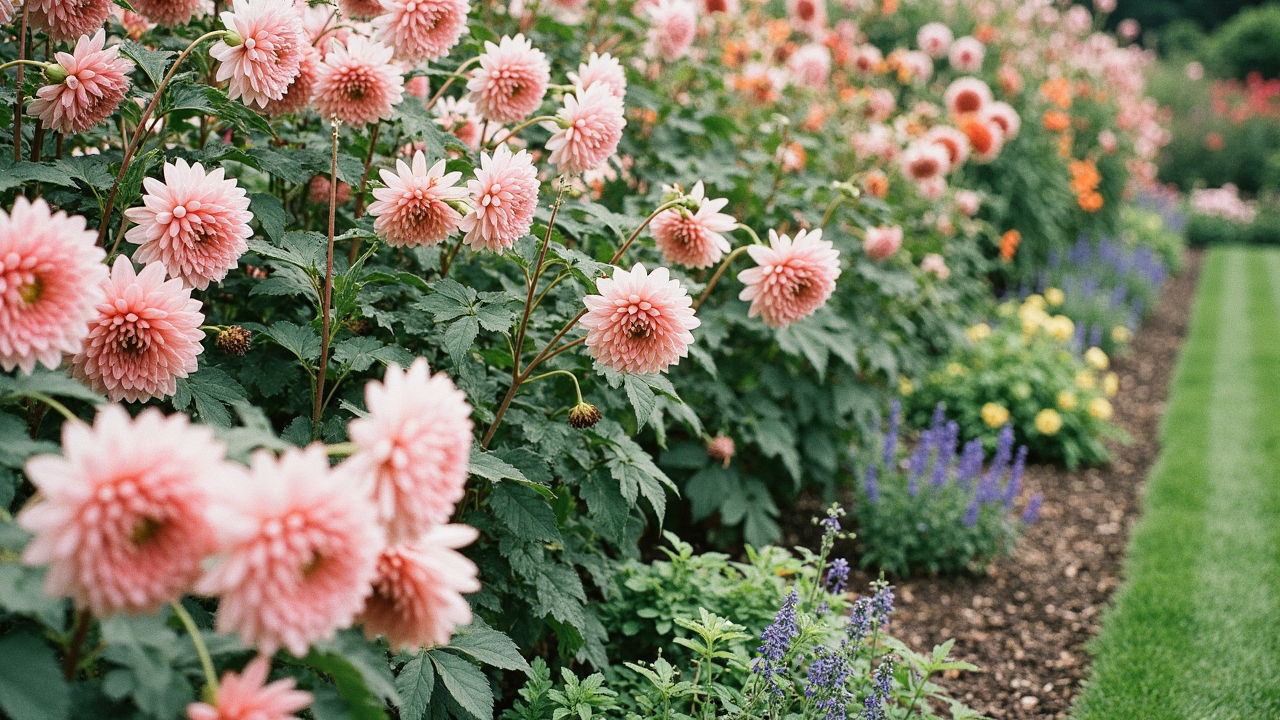
Dahlia pinnata is a perennial herbaceous plant with a rhizome and tuberous roots, typically reaching 70–120 cm in height, rarely 160 cm. The stem is erect and branches only in the inflorescence. Leaves are usually simple with ovate leaflets measuring 5–10 cm long. The plant has a slightly shaggy appearance. Flower heads, 6–10 cm in diameter, appear between July and October on stems 5–15 cm long, with two to eight heads per stem. Each head contains eight ovate florets, 3–5 cm long, coloured pink to deep purple.
Origin and Habitat
Native to Central America, specifically Mexico in the mountains around Mexico City, D. pinnata occurs at borders in its natural habitat. It is geographically located in Central America.
Cultivation
Cultivated by the Aztecs before European contact, D. pinnata was introduced to Spain in 1798. Modern cultivars often result from hybridisation between D. pinnata and D. coccinea. Dahlias prefer rich soil with a pH of approximately 6.5–7.5 and sufficient organic matter. They require consistently moist shallow roots and bloom from July to October. The plant tolerates light frost but must be dug up and stored before harsh winter weather.
Care and Maintenance
Dahlias should be kept in moist conditions due to shallow root systems. They are typically propagated by division of tuberous roots or stem cuttings, though some types grow from seed. Regular application of mulch or nutrient-rich growing media supports health and survival. Winter storage of tuberous roots is essential for overwintering in colder climates.
Uses
Dahlia pinnata possesses phytostabilisation properties for arsenic, accumulating high levels from soil through roots. This characteristic may reduce human exposure to arsenic as a carcinogen. Historically, the plant was used as a root crop and medicinal plant by pre-Columbian Indians in central Mexico, Yucatan, and Guatemala, with roots containing inulin and tubers possessing antibiotic compounds in their skin.
#DahliaPinnata #GardenDahlias #UKGardening #PerennialPlants #Asteraceae #DahliaCultivation #BotanicalReference #CentralAmericanPlants #OrnamentalPlants #SoilHealth
Pests and Diseases
| Problem | Symptoms | Management |
|---|---|---|
| Slugs, earwigs, red spider mites, snails, caterpillars, aphids, and thrips | eat the petals, leave slime trails, leave tattered petals, etc. | — |
| Sclerotinia disease, fungal diseases, mildew, Botrytis, Crown Gall | wilt, have spots on the leaves, the leaves can get irregular coloring/ patterning, etc. | — |
Quick Care Summary
| Sunlight | Full sun |
|---|---|
| Soil | rich soil (pH level estimated at around 6.5–7.5) with enough organic matter |
| Hardiness | — |
| Sow | — |
| Plant | — |
| Prune | — |
Facts sourced from Wikipedia / Dahlia pinnata (https://en.wikipedia.org/wiki/Dahlia_pinnata)
As an Amazon Associate, GardenWizz earns from qualifying purchases made through the links above. This does not affect the price you pay. See our disclaimer for details.