
Strawberry
Fragaria × ananassa
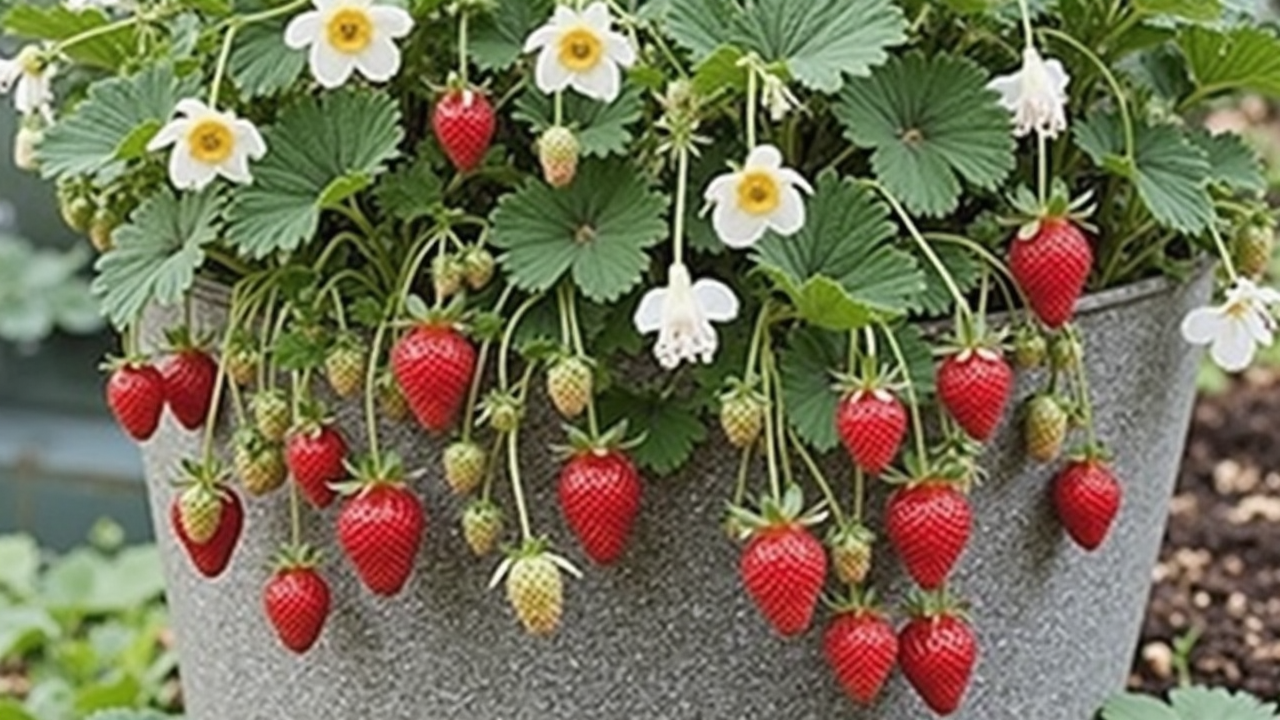
At a Glance
| Botanical name | Fragaria × ananassa |
|---|---|
| Common name(s) | strawberry |
| Family | Rosaceae |
| Plant type | perennial |
| Height × Spread | — × — |
| Hardiness | — |
| Position | Full sun, Partial shade |
| Soil | — |
| Flowering | May–September |
| Toxicity | — |
| Native range | — |
Overview
The garden strawberry, Fragaria × ananassa, is a widely cultivated perennial hybrid plant grown globally for its fruit. It belongs to the genus Fragaria within the rose family, Rosaceae. The fruit is valued for its aroma, bright red colour, juicy texture, and sweetness, consumed fresh or processed into jams, ice cream, and chocolates. Botanically, it is classified as an aggregate accessory fruit, not a berry, with each external 'seed' being an achene.
Botanical Description
The fruit is an aggregate accessory fruit, meaning the fleshy part develops from the receptacle rather than the ovary. Each visible seed on the fruit surface is an achene, a dry fruit containing a single seed. The plant produces runners for vegetative propagation.
Origin and Habitat
The garden strawberry was first bred in Brittany, France, during the 1750s through a cross between Fragaria virginiana (from eastern North America) and Fragaria chiloensis (introduced from Chile by Amédée-François Frézier in 1714). It replaced the woodland strawberry (F. vesca) in commercial production. The species is cultivated worldwide, with China leading global production (38% of the 2024 total exceeding ten million tonnes).
Cultivation
Strawberries are grown commercially using methods including annual plasticulture (raised beds covered with plastic mulch), perennial matted rows, or greenhouse systems. Propagation is typically achieved through bare root plants, plugs, or runners. In home gardens, they thrive in full sun or partial shade. The Royal Horticultural Society has awarded Garden Merit to cultivars including 'Cambridge Favourite', 'Hapil', 'Honeoye', 'Pegasus', 'Rhapsody', and 'Symphony'.
Care and Maintenance
Prune after flowering to maintain plant health. Propagate using runners or established plants. Ensure well-drained soil and consistent moisture during fruiting. In colder regions, perennial matted row systems are traditional. For home cultivation, select RHS Award of Garden Merit cultivars for reliability.
Uses
Strawberries are consumed fresh, frozen, or processed into jams, preserves, and desserts. Their flavour and fragrance, derived from volatile compounds like esters and terpenes, are widely used in commercial food, beverages, perfumes, and cosmetics. Historically, they symbolised the ephemerality of earthly joys or religious blessing, later shifting to represent female sexuality. They have appeared in European art and literature since Roman times.
#Strawberry #FragariaAnanassa #RHS #UKGardening #Perennial #FruitGardening #GardenWizz #PlantDatabase
Cultivars and Varieties
| Cultivar | Height | Flower | Notes | AGM |
|---|---|---|---|---|
| 'Cambridge Favourite' → | — | — | — | ✓ |
| 'Hapil' → | — | — | — | ✓ |
| 'Honeoye' → | — | — | — | ✓ |
| 'Pegasus' → | — | — | — | ✓ |
| 'Rhapsody' → | — | — | — | ✓ |
| 'Symphony' → | — | — | — | ✓ |
Pests and Diseases
| Problem | Symptoms | Management |
|---|---|---|
| pests and diseases | various, including moths, fruit flies, chafers, strawberry root weevils, strawberry thrips, strawberry sap beetles, strawberry crown moth, mites, aphids, slugs, powdery mildew, leaf spot, leaf blight, slime molds, red stele, verticillium wilt, black root rot, nematodes | — |
Quick Care Summary
| Sunlight | Full sun, Partial shade |
|---|---|
| Soil | — |
| Hardiness | — |
| Sow | January, October, November, December |
| Plant | March–May |
| Prune | — |
Facts sourced from Wikipedia / Fragaria ananassa (https://en.wikipedia.org/wiki/Fragaria_ananassa)
As an Amazon Associate, GardenWizz earns from qualifying purchases made through the links above. This does not affect the price you pay. See our disclaimer for details.