Sunflower
Helianthus annuus
At a Glance
| Botanical name | Helianthus annuus |
|---|---|
| Common name(s) | Sunflower |
| Family | Asteraceae |
| Plant type | annual |
| Height × Spread | 300–1090 cm × — |
| Hardiness | — |
| Position | Full sun |
| Soil | fertile, moist, well-drained soil with heavy mulch |
| Flowering | July–September |
| Toxicity | — |
| Native range | central and western USA, southern Canada, and northern Mexico |
Overview
The common sunflower (Helianthus annuus) is a large annual forb in the daisy family Asteraceae. Domesticated forms are cultivated for edible seeds, categorised as oilseed or confectionary types. Oilseed sunflowers are the fourth most used vegetable oil globally and are utilised for bird food, livestock feed, and industrial oil production. Confectionary seeds are consumed as snacks or in baking. Horticultural varieties are grown ornamentally in gardens. Wild plants typically bear multiple flower heads, while cultivated sunflowers usually produce a single large flower head on an unbranched stem.
Botanical Description
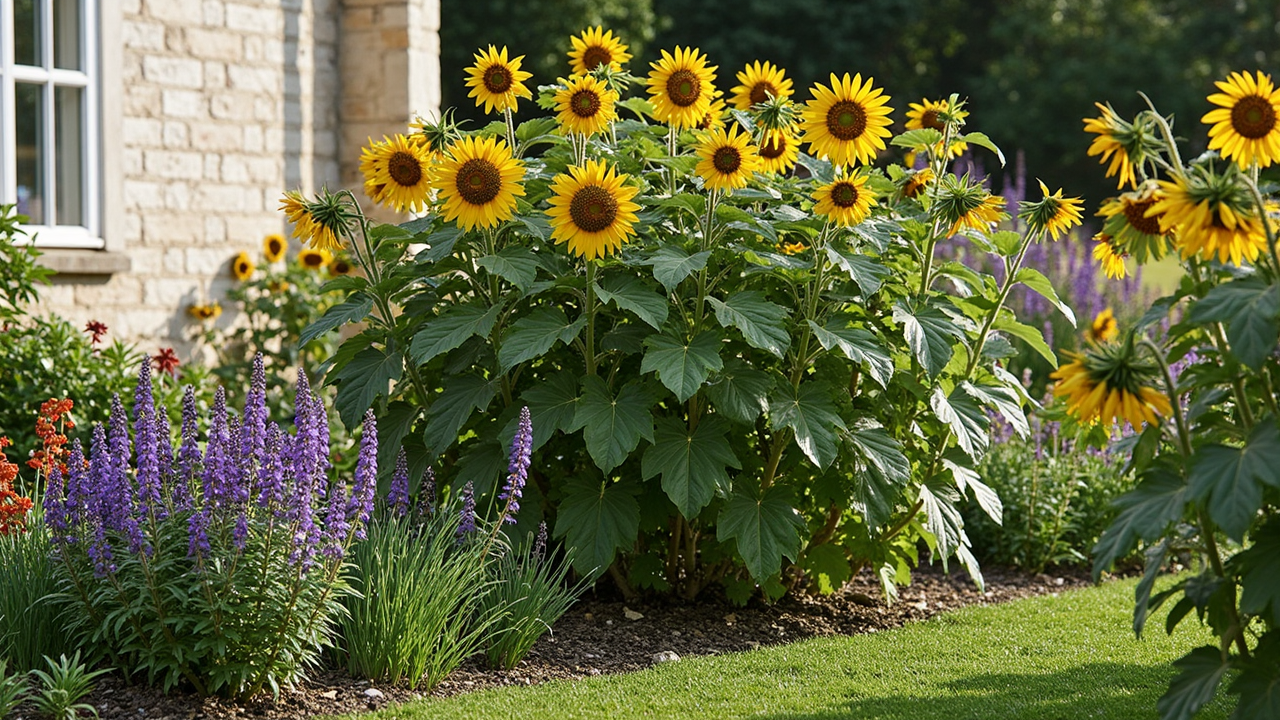
Helianthus annuus features an erect, rough-hairy stem reaching typical heights of 3 metres, with the tallest recorded specimen at 10.9 metres. Leaves are broad, coarsely toothed, rough, and mostly alternate, with the largest at the base and heart-shaped. The flower is a pseudanthium (composite head) measuring 7.5–12.5 centimetres in width, comprising numerous small florets. Outer ray florets are sterile, typically yellow, red, or orange, and resemble petals, while central disk florets mature into seeds.
Origin and Habitat
Native to central and western USA, southern Canada, and northern Mexico, Helianthus annuus now occurs worldwide in non-tropical, non-desert, and non-tundra regions. Outside cultivation, it thrives on clay-based soils that are wet in spring but dry in summer, commonly found on dry open areas and foothills. Wild populations are typically associated with such habitats, whereas related species like Helianthus debilis and Helianthus petiolaris prefer drier, sandier soils.
Cultivation
Sunflowers require full sun and fertile, moist, well-drained soil with heavy mulch. Commercial planting involves sowing seeds 45 centimetres apart and 2.5 centimetres deep. They are grown as an annual crop, with flowering occurring in July, August, and September.
Care and Maintenance
As an annual, sunflowers complete their life cycle in one season. Remove spent flower heads after flowering to encourage seed production if desired. Provide regular watering during dry periods, particularly in early growth stages. Staking may be necessary for taller varieties to prevent lodging.
Uses
Sunflower seeds are primarily used for oil production (the fourth most used vegetable oil globally), bird feed, and livestock feed. Confectionary seeds are eaten as snacks or in baking. Historically cultivated by Native Americans and symbolised solar deities among the Aztecs, Otomi, and Incas, it remains a major commercial crop, with Russia and Ukraine producing over half of global seed supply as of 2020. Horticultural varieties are grown for ornamental garden displays.
#Sunflower #Helianthus #AnnualPlant #GardenFlower #EdibleFlower #SunflowerOil #GardenCare #UKGardening #GardenWizz #FlowerHeads
Pests and Diseases
| Problem | Symptoms | Management |
|---|---|---|
| Fusarium | causes an increasing amount of damage and loss of sunflower crops | — |
| Downy mildew | susceptible to downy mildew due to shallow planting in moist soil | — |
| Broomrapes | parasitize the roots of various other plants, including sunflowers | — |
Quick Care Summary
| Sunlight | Full sun |
|---|---|
| Soil | fertile, moist, well-drained soil with heavy mulch |
| Hardiness | — |
| Sow | March–May |
| Plant | March–May |
| Prune | — |
Facts sourced from Wikipedia / Helianthus annuus (https://en.wikipedia.org/wiki/Helianthus_annuus)