
Bay
Laurus nobilis · bay tree · bay laurel · sweet bay · true laurel
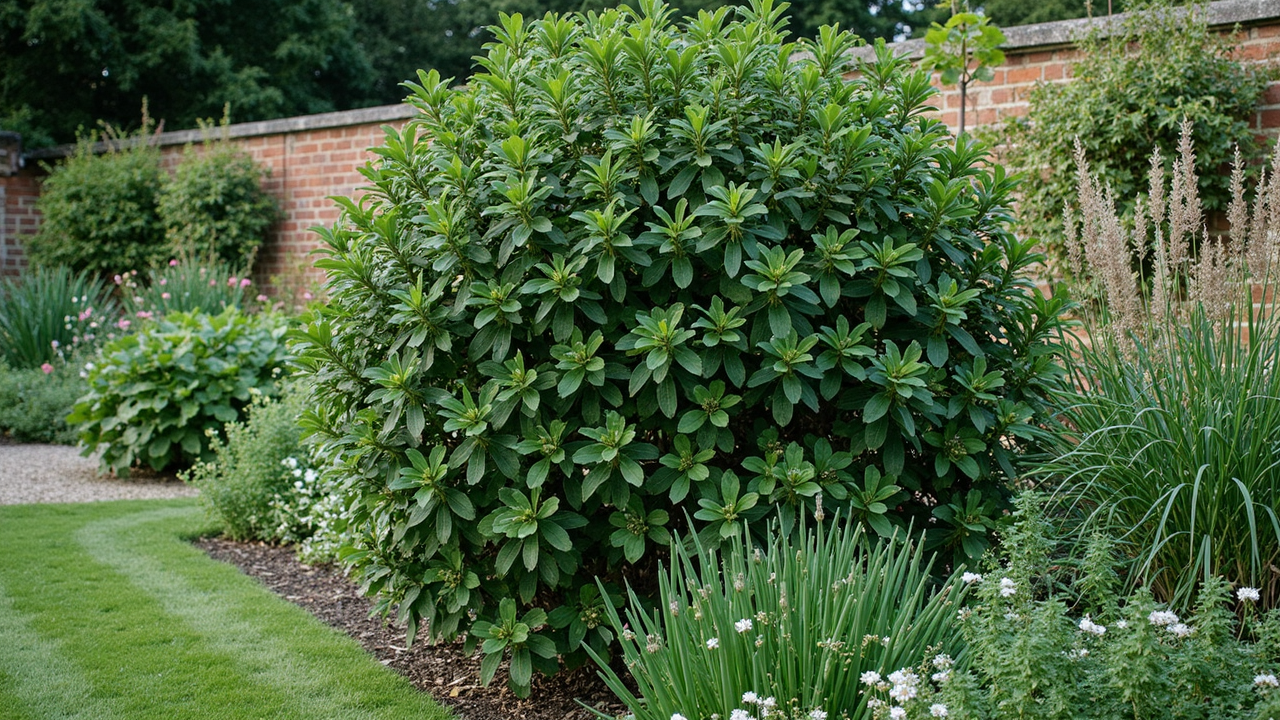
At a Glance
| Botanical name | Laurus nobilis |
|---|---|
| Common name(s) | bay tree, bay laurel, sweet bay, true laurel |
| Family | Lauraceae |
| Plant type | tree |
| Height × Spread | 700–1800 cm × — |
| Hardiness | — |
| Position | Full sun, Partial shade |
| Soil | — |
| Flowering | January, February, December |
| Toxicity | — |
| Native range | Mediterranean region |
Overview
Laurus nobilis is an aromatic evergreen tree or large shrub in the family Lauraceae. It is commonly known as bay tree (particularly in the United Kingdom), bay laurel, sweet bay, true laurel, Grecian laurel, or simply laurel. The plant figures prominently in classical Greco-Roman culture. Worldwide, numerous other plants in diverse families are also called "bay" or "laurel" due to foliage or aroma similarity.
Botanical Description
The bay laurel is dioecious, with male and female flowers on separate plants. Each flower is pale yellow-green, approximately 1 cm in diameter, borne in pairs beside a leaf. The leaves are glabrous, 6–12 cm long and 2–4 cm broad, with an entire margin; some leaves exhibit undulating margins. The fruit is a small, shiny black drupe-like berry, about 1 cm long, containing one seed. The stem can reach 1 metre in diameter, and the tree can attain a height of up to 20 metres.
Origin and Habitat
Laurus nobilis is native to the Mediterranean region. It is a widespread relict of the laurel forests that originally covered much of the Mediterranean Basin during a more humid climate. With the drying of the Mediterranean during the Pliocene era, these forests retreated, largely disappearing approximately ten thousand years ago. Remaining remnants persist in mountainous areas of southern Turkey, northern Syria, southern Spain, north-central Portugal, northern Morocco, the Canary Islands, and Madeira.
Cultivation
Laurus nobilis is widely cultivated as an ornamental plant in regions with Mediterranean or oceanic climates. It is also grown as a house plant or greenhouse plant in colder regions. Certain forms, including L. nobilis 'Aurea' and L. nobilis f. angustifolia, have gained the Royal Horticultural Society's Award of Garden Merit. The plant is slow-growing and may take several years to reach the desired height when used for topiary or hedges.
Care and Maintenance
The plant is susceptible to specific pests including the jumping plant louse Trioza alacris, which causes leaf curling and thickening, and the scale insect Coccus hesperidum. It requires full sun or partial shade for optimal growth.
Uses
The plant is the source of bay leaves, used as a seasoning in cooking. Whole bay leaves have a shelf life of approximately one year under normal conditions and are typically removed from dishes before serving. Dried laurel berries and pressed leaf oil are used as robust spices. The wood is burnt for strong smoke flavouring. Bay leaves are also used in herbal medicine as an astringent and salve, and in aromatherapy. Historically, the leaves were chewed by the Pythia to induce prophetic trances.
#LaurusNobilis #BayLaurel #MediterraneanPlant #HerbGardening #RHSAGM #BayLeaf #OrnamentalTree #GardenWizz #UKGardening #ClassicGardening
Cultivars and Varieties
| Cultivar | Height | Flower | Notes | AGM |
|---|---|---|---|---|
| 'L. nobilis 'Aurea'' | — | — | — | |
| 'L. nobilis f. angustifolia' | — | — | — |
Pests and Diseases
| Problem | Symptoms | Management |
|---|---|---|
| jumping plant louse Trioza alacris | curling and thickening of the edge of the leaves for the development of the insect's nymphs, eventually creating a necrosed gall | — |
| scale insect Coccus hesperidum | — | — |
Quick Care Summary
| Sunlight | Full sun, Partial shade |
|---|---|
| Soil | — |
| Hardiness | — |
| Sow | — |
| Plant | — |
| Prune | — |
Facts sourced from Wikipedia / Laurus nobilis (https://en.wikipedia.org/wiki/Laurus_nobilis)
As an Amazon Associate, GardenWizz earns from qualifying purchases made through the links above. This does not affect the price you pay. See our disclaimer for details.