
Magnolia
Magnolia grandiflora
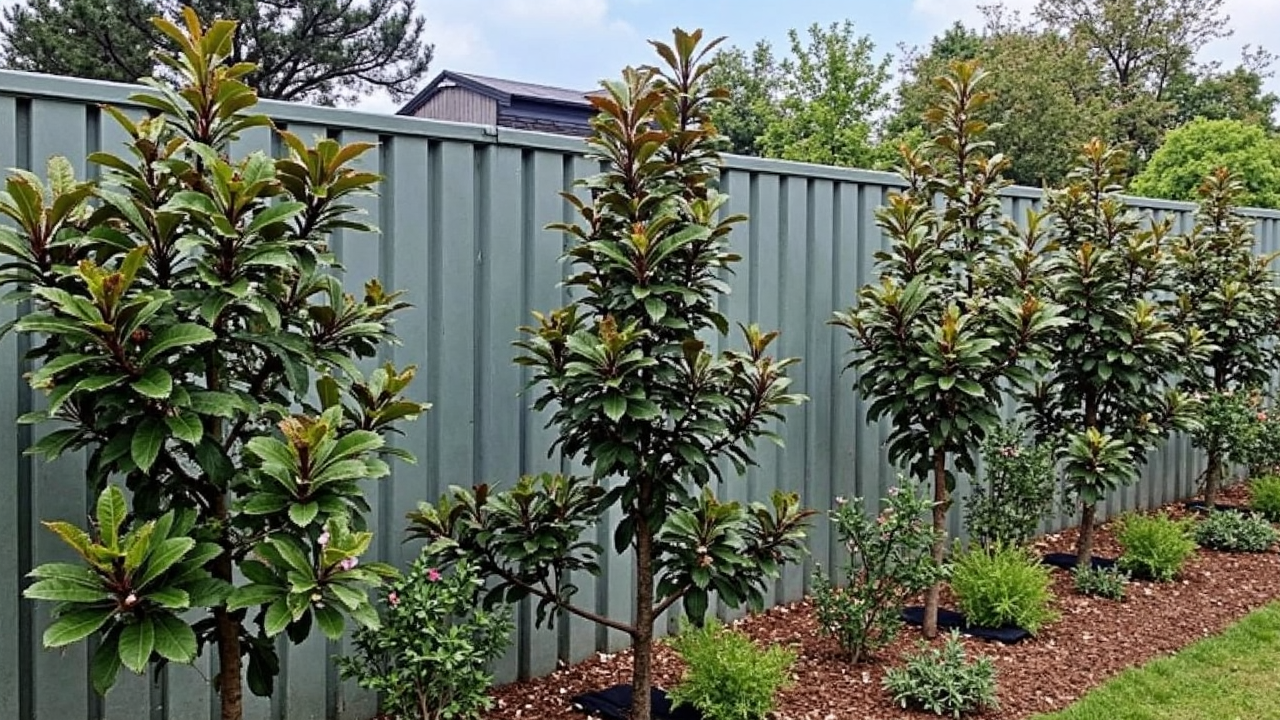
At a Glance
| Botanical name | Magnolia grandiflora |
|---|---|
| Common name(s) | Magnolia |
| Family | Magnoliaceae |
| Plant type | tree (Evergreen tree; produces seed by 10 years of age, peak production at 25 years.) |
| Height × Spread | 1200–3700 cm × — |
| Hardiness | — |
| Position | Full sun |
| Soil | Moist, well-drained, slightly acidic or neutral soil. |
| Flowering | June–August |
| Toxicity | — |
| Native range | Southeastern United States, from Virginia to central Florida, and west to East Texas. |
Overview
Magnolia (Magnolia grandiflora), commonly called the Southern Magnolia or Bull Bay, is a large evergreen shrub or small to medium tree in the family Magnoliaceae. It is one of the most ornamental broadleaf evergreens a British gardener can grow, prized for its glossy deep green foliage, its enormous fragrant summer flowers, and its architectural presence in a sheltered border. Long-lived and slow to moderate in growth, it forms a dense, pyramidal to broadly columnar shape over many decades. In UK conditions it typically reaches 5 to 10 m in height, considerably smaller than in its native south-eastern United States, but still large enough to need careful siting. The quick-care table below summarises the essentials for UK growers; the full article covers each point in detail.
Magnolia grandiflora is one of roughly 300 species in the genus Magnolia, an ancient group whose fossil record extends back over 90 million years, predating the evolution of bees. The species has been in British cultivation since the early eighteenth century and remains a specimen of choice for sheltered walled gardens, south-facing borders, and the milder corners of southern and western England and Ireland. In a typical British garden it is grown as a single specimen, against a wall, or as a large patio shrub in a container.
Appearance
Magnolia grandiflora is a large, dense, evergreen plant with a naturally pyramidal to broadly columnar outline. In youth the habit is distinctly conical; with age it broadens and rounds out, particularly in milder districts. The bark is smooth and grey-brown on young wood, becoming finely fissured on older trunks. The branches are stiff and well furnished with foliage from near the base, which is one of the reasons the plant is valued as a screen or wall specimen.
The leaves are leathery, simple and alternate, oblong to broadly elliptic, 10 to 20 cm long and 5 to 10 cm wide, with a glossy deep green upper surface. The undersides carry a distinctive felted, rusty-brown indumentum, one of the species' most recognisable features. On a windy day the upturned leaves flash this warm brown colour, and it is a useful identification character against evergreen look-alikes such as cherry laurel (Prunus laurocerasus) and holly (Ilex).
The flowers are the main ornamental event. Each bloom is cup- or saucer-shaped, 20 to 30 cm across, with six to twelve thick, waxy, creamy white petals (technically tepals) around a prominent boss of golden stamens. The fragrance is strong, sweet and slightly citrusy, with a heavy honey character that carries well on a warm July evening. The main season in the UK is July into September, with the peak in midsummer; in long, warm summers a smaller second flush may appear in late September or October. The flowers open over a long period, so a single tree can carry buds and open blooms for two months or more.
After pollination, the spent flowers develop into cone-like aggregate fruits 5 to 10 cm long, which ripen through late summer into autumn. The bright red follicles split to reveal fleshy orange-red seeds, briefly ornamental and best left for the birds.
Growing Conditions
Magnolia grandiflora performs best in full sun, in deep, rich, moist but well-drained loam with a neutral to slightly acidic pH. It tolerates light dappled shade, particularly in the warmer south, but flowers most freely against a south- or west-facing wall where summer heat accumulates. In cooler UK regions it should be given the protection of a warm wall or sheltered courtyard, both to ripen wood for winter and to encourage reliable summer flowering. The RHS rates the species as H4, tolerating winter temperatures down to about -10 °C, sufficient for most lowland and coastal British sites but not for the coldest inland gardens. Cold, desiccating north and east winds scorch the leaves and blacken flower buds, and shelter from these matters more than the absolute minimum temperature.
The plant dislikes shallow, chalky soils, where its roots quickly hit rock and the high pH locks out iron and manganese, leading to chlorotic, yellowed foliage. It is also unhappy in heavy, waterlogged clay, particularly in winter, when water around the root plate causes bark cracking and die-back. On heavy ground, plant on a low mound of improved loam mixed with leaf mould, or choose a compact cultivar for container culture. Once established, mature specimens tolerate short summer droughts but flag visibly during prolonged dry spells.
Planting and Care
Plant container-grown specimens in autumn or spring, when the soil is workable. Avoid planting in frozen or waterlogged ground, and avoid root disturbance once the plant is in the ground. Prepare a planting hole at least twice the width of the root ball and no deeper, so the surface finishes flush with the surrounding soil. On neutral to alkaline sites, work a generous bucket of ericaceous compost or well-rotted leaf mould into the backfill to acidify the root zone modestly. Water in thoroughly, then apply a 5 to 8 cm deep mulch of bark or leaf mould over a wide area to keep the roots cool and moist. Magnolias are shallow-rooted, and cultivation under the canopy should be kept to a minimum.
Watering is the single most important cultural task. For the first two to three summers after planting, water deeply once a week during dry weather, soaking the root area rather than sprinkling the surface. Established plants survive short droughts but produce better foliage and more flowers where summer moisture is consistent; a long, dry August is the most common cause of premature leaf drop in southern English gardens.
Feeding is light. A single application of a balanced slow-release fertiliser in early spring, or a top-dressing of ericaceous fertiliser on alkaline soils, is sufficient. Avoid heavy nitrogen, which produces soft leafy growth vulnerable to wind scorch and winter damage.
Pruning is minimal. Remove dead, damaged or crossing branches in mid-summer, when cuts heal quickly and the sap is rising, and never hard-prune an established specimen; magnolias do not regenerate reliably from old wood. Wall-trained specimens are best tied in to a framework of wires and lightly shortened in late summer to keep the silhouette tidy.
Propagation is by semi-ripe cuttings taken in late summer and rooted in a heated propagator under mist, or by layering of low shoots in spring. Seed is possible but slow, taking two to three years to germinate, and the offspring are variable, so named cultivars are nearly always propagated vegetatively.
Seasonal care in the UK: in late winter, top up the mulch and remove frost-blackened tips once new growth breaks; in spring, apply feed and watch for late frosts on opening buds; in summer, water during dry spells; in autumn, top up the mulch and drape fleece over wall-trained specimens if a hard frost is forecast.
Common Problems
Frost damage to young shoots and flower buds is the most common complaint, particularly after a mild spring that has encouraged early bud break, followed by a hard late frost. The affected growth blackens and the buds drop, costing a season of flowers. Cover wall-trained or specimen plants with horticultural fleece if a hard frost is forecast once the buds are swelling, and avoid siting the plant in a frost pocket.
Leaf spot, including anthracnose (caused by various Colletotrichum and Phyllosticta species), produces brown or blackish spots on the leaves, often with a yellow halo, and is worst in wet summers and on plants with poor air circulation. Improve airflow by thinning surrounding vegetation, remove and bin fallen leaves in autumn, and water at the base rather than over the foliage. In persistent cases, a copper-based fungicide applied at bud break may help.
Scale insects, particularly magnolia scale (Neolecanium cornuparvum) and various soft scales, colonise the stems and leaf undersides and produce sticky honeydew on which sooty mould grows. Light infestations can be left for natural predators, including ladybirds and parasitic wasps; heavier cases respond to a winter wash of plant oil applied when the plant is fully dormant, or to organic insecticidal soap during the growing season.
Magnolia wilt, caused by the soil-borne fungus Verticillium, is uncommon but serious. Affected branches wilt suddenly in summer, the leaves turn brown, and the wood beneath the bark shows dark streaking when cut. There is no effective chemical control, and affected plants should be removed and the soil not replanted with another magnolia or other susceptible species for several years.
Drought stress shows itself as leaf cupping, browning at the margins, and premature drop of the lower leaves in mid- to late summer. It is reversible with deep watering and a renewed mulch, and much easier to prevent than to correct in a long-established specimen.
Magnolia grandiflora is not considered toxic to humans or domestic animals in any significant way, though the seeds of the aggregate fruit may cause mild stomach upset if eaten in quantity. The plant is generally deer-resistant in the British context and is not a preferred food of rabbits once established.
Popular Varieties
Magnolia grandiflora 'Exmouth' is one of the oldest and most reliable forms in British cultivation, raised at Exmouth in Devon in the early nineteenth century. It is vigorous and broadly columnar, with large, glossy leaves and a heavy main crop of flowers from a young age, often within three to five years of planting. It is widely considered the safest choice for first-time growers in the UK.
Magnolia grandiflora 'Goliath' is a more compact, broad-crowned selection notable for its exceptionally large flowers, up to 30 cm across, and a slightly earlier start to the season. It forms a rounded shrub or small tree to about 6 to 8 m and is well suited to larger sheltered gardens.
Magnolia grandiflora 'Little Gem' is a dwarf, narrowly columnar cultivar, typically reaching 2.5 to 4 m in UK conditions, with smaller leaves and flowers than the type and a long flowering period that often starts as a small plant. It is the standard choice for courtyard gardens, large containers, and smaller sheltered borders where the full-size species would be too large.
Magnolia grandiflora 'Kay Parris' is a relatively recent introduction, often grown for its exceptionally ornamental, wavy-edged leaves with a heavy rusty-brown indumentum, and its compact, upright habit. It is well suited to walls and large patio containers and is increasingly stocked by British nurseries.
Magnolia grandiflora 'Ferruginea' is a tall, vigorous form with a particularly deep rust-brown felt on the leaf undersides and large white flowers. It is best in the milder south and west of the UK and is the form most often seen in old Cornish and Devon gardens.
Several other named forms are available from specialist nurseries, including 'Bracken's Brown Beauty', 'Edith Bogue' and 'Samuel Sommer', all valued in North American horticulture. British gardeners should check local availability and hardiness, as some of these are borderline in inland UK winters and are best treated as wall specimens.
Pests and Diseases
| Problem | Symptoms | Management |
|---|---|---|
| Horse chestnut scale | Small, white, waxy scales cluster on stems and leaf undersides, often accompanied by sticky honeydew. | Scrape off heavy infestations or spray with horticultural oil during the dormant season. |
| Coral spot | Distinctive orange-red fungal spots appear on branches, often causing bark to crack and die. | Prune out affected wood in dry weather and improve air circulation around the plant. |
| Phytophthora root rot | Leaves turn yellow or brown and wilt, with general decline due to waterlogged soil conditions. | Ensure well-drained soil and avoid overwatering; remove severely infected plants. |
| Capsid bug damage | Leaves become distorted, speckled, or browned due to sap-sucking insects. | Monitor for pests in spring and treat with insecticidal soap if populations are high. |
| Grey mould | Flowers and buds develop a fuzzy grey fungal growth, leading to rotting tissue. | Remove infected material immediately and ensure good air circulation to reduce humidity. |
Quick Care Summary
| Sunlight | Full sun |
|---|---|
| Soil | Moist, well-drained, slightly acidic or neutral soil. |
| Hardiness | — |
| Sow | — |
| Plant | — |
| Prune | — |


As an Amazon Associate, GardenWizz earns from qualifying purchases made through the links above. This does not affect the price you pay. See our disclaimer for details.