Poppy
Papaver
At a Glance
| Botanical name | Papaver |
|---|---|
| Common name(s) | Poppy |
| Family | Papaveraceae |
| Plant type | — (frost-tolerant annuals, biennials, and perennials) |
| Height × Spread | — × — |
| Hardiness | — |
| Position | Full sun |
| Soil | — |
| Flowering | April–September |
| Toxicity | — |
| Native range | temperate and cold regions of Eurasia, Africa and North America |
Overview
Papaver is a genus of 70–100 species of frost-tolerant annuals, biennials, and perennials native to temperate and cold regions of Eurasia, Africa and North America. It is the type genus of the poppy family, Papaveraceae. The plants typically flower from April to September.
Botanical Description
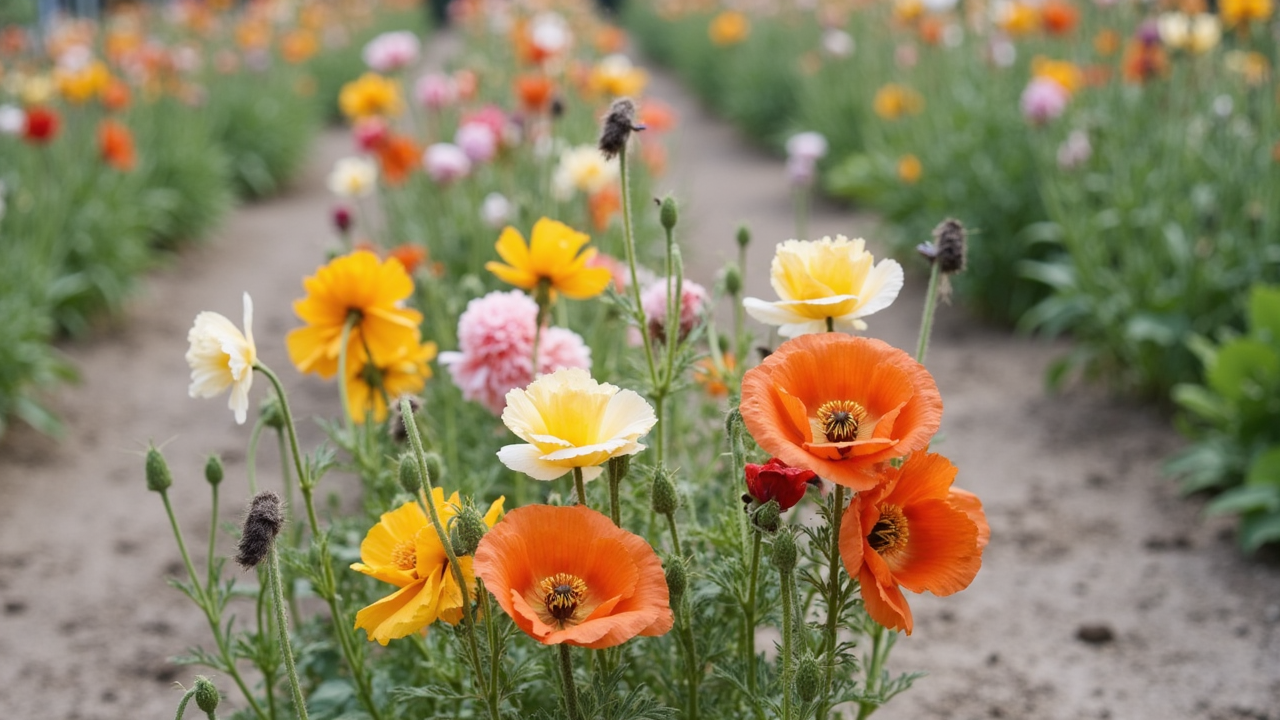
The flowers feature two sepals that fall off as the bud opens, with four to six petals in red, pink, orange, yellow, or lilac. Numerous stamens are arranged in several whorls around a compound pistil formed by fused carpels. Stigmas are visible atop the capsule, corresponding in number to the fused carpels. The ovary develops into a dehiscing capsule capped by dried stigmas, which scatters seeds when shaken by air. The gynoecium is typically superior with a globular ovary; the style is absent in the type species (opium poppy) and several others, though present in some. The fruit is a unilocular capsule with a stigmatic disc on top and dehiscent pores or valves.
Origin and Habitat
Papaver species are native to temperate and cold regions across Eurasia, Africa, and North America. The genus includes species adapted to alpine and circumpolar arctic environments, with some representing some of the most northerly-growing vascular land plants.
Cultivation
Poppies are frost-tolerant and require full sun for optimal growth. They can be cultivated as annuals, biennials, or perennials depending on the species and climate. Well-drained soil is essential to prevent root rot.
Care and Maintenance
Poppies typically flower from April to September. Deadheading spent flowers encourages further blooming. Minimal maintenance is required once established, though they benefit from occasional watering during prolonged dry periods.
Uses
Poppies are widely cultivated for their ornamental flowers in gardens.
Quick Care Summary
| Sunlight | Full sun |
|---|---|
| Soil | — |
| Hardiness | — |
| Sow | January, February, March, October, November, December |
| Plant | January–June |
| Prune | — |
Facts sourced from Wikipedia / Papaver (https://en.wikipedia.org/wiki/Papaver)