
Raspberry
Rubus idaeus · red raspberry · European red raspberry
At a Glance
| Botanical name | Rubus idaeus |
|---|---|
| Common name(s) | raspberry, red raspberry, European red raspberry |
| Family | Rosaceae |
| Plant type | perennial |
| Height × Spread | 150–250 cm × — |
| Hardiness | — |
| Position | Full sun, Partial shade |
| Soil | — |
| Flowering | April–June |
| Toxicity | — |
| Native range | Eurasia |
Overview
Rubus idaeus, commonly known as raspberry, red raspberry, or European red raspberry, is a red-fruited species of Rubus native to Eurasia. It is a perennial plant widely cultivated in temperate regions for its fruit.
Botanical Description
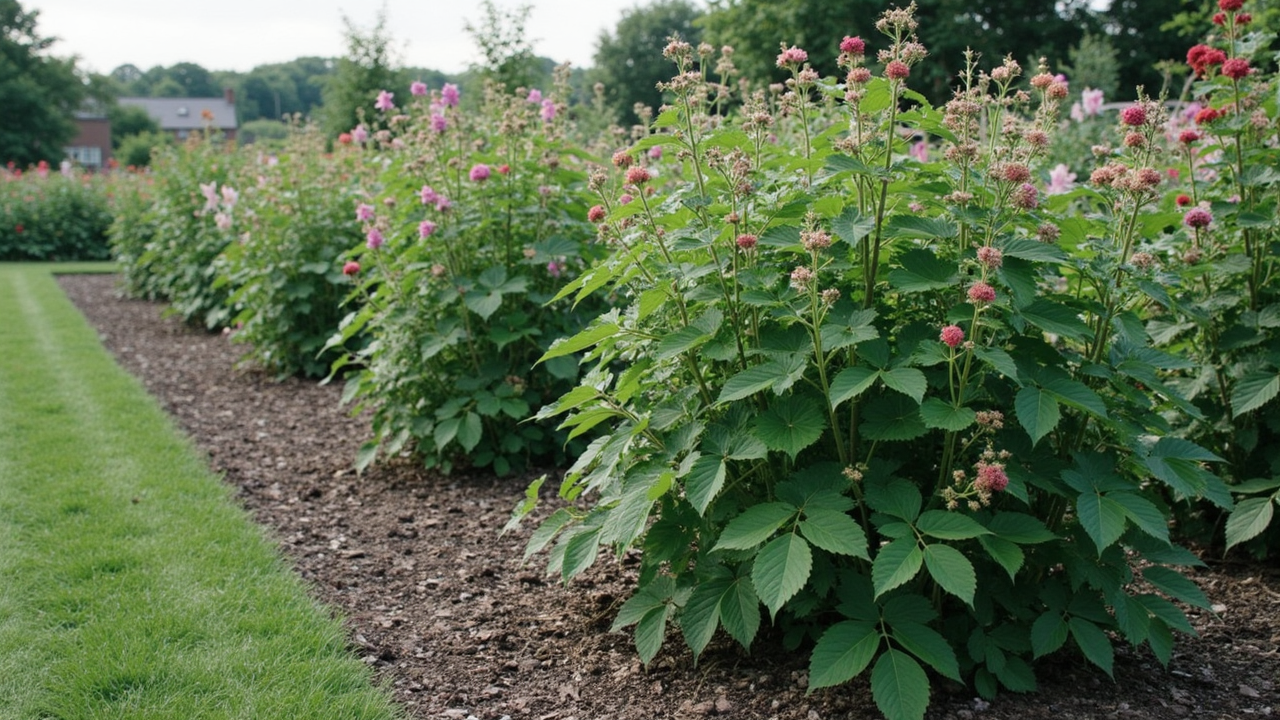
Plants are perennials with biennial stems, or canes, arising from a perennial root system. In the first year, a new, unbranched stem (primocane) grows vigorously to 1.5–2.5 metres (5–8 feet), bearing large pinnately compound leaves with five or seven leaflets but no flowers. In the second year, the stem becomes a floricane, ceasing vertical growth and producing side shoots bearing smaller leaves with three or five leaflets. Flowers appear in late spring on short racemes at the tips of these side shoots, each approximately 1 centimetre (3⁄8 inch) in diameter with five white petals. The fruit is red, edible, sweet but tart-flavoured, and technically an aggregate fruit composed of numerous drupelets surrounding a central core. The drupelets separate from the core when picked, leaving a hollow fruit. Wild fruits persist for an average of 12 days and contain an average of 35.2 seeds per fruit, with wild fruits comprising 76.3% water, 39.6% carbohydrates, and 2.2% lipids by dry weight.
Origin and Habitat
Native to Europe and northern Asia, Rubus idaeus is commonly cultivated in other temperate regions. As a wild plant, it typically grows in forests, forming open stands under tree canopies or denser stands in clearings. In southern parts of its range (southern Europe and central Asia), it occurs only at high altitudes in mountainous areas.
Cultivation
Commonly cultivated in temperate regions for its fruit. Commercial cultivars are primarily derived from hybrids between Rubus idaeus and Rubus strigosus.
Care and Maintenance
Prune after flowering to manage growth and encourage fruiting.
Uses
Primarily grown for its fruits, which are an important food crop. Wild fruits are sweet and aromatic. Occasionally, leaves, roots, or other parts are used; young roots have shown potential in preventing kidney stone formation in mouse models, and tiliroside from raspberry may have applications as a skin-whitening agent or for treating pigmentation.
#Raspberry #RubusIdaeus #PerennialPlant #TemperateFruit #AggregateFruit #Rubus #EdibleFruit #BotanicalReference #GardenWizz #UKGardening
Quick Care Summary
| Sunlight | Full sun, Partial shade |
|---|---|
| Soil | — |
| Hardiness | — |
| Sow | September–November |
| Plant | March–May |
| Prune | November–December |
Facts sourced from Wikipedia / Rubus idaeus (https://en.wikipedia.org/wiki/Rubus_idaeus)
As an Amazon Associate, GardenWizz earns from qualifying purchases made through the links above. This does not affect the price you pay. See our disclaimer for details.