
Blueberry
Vaccinium corymbosum · highbush blueberry · rabbiteye blueberry
At a Glance
| Botanical name | Vaccinium corymbosum |
|---|---|
| Common name(s) | highbush blueberry, rabbiteye blueberry |
| Family | — |
| Plant type | shrub |
| Height × Spread | 180–370 cm × 180–370 cm |
| Hardiness | — |
| Position | Full sun, Partial shade |
| Soil | moist acidic soils (pH 4.5 to 5.5) |
| Flowering | May |
| Toxicity | — |
| Native range | eastern Canada and the eastern and southern United States |
Overview
Vaccinium corymbosum is a North American species of blueberry that became commonly cultivated as a fresh fruit crop in the 20th century. Dozens of commercial cultivars exist. It has several common names, including highbush blueberry and rabbiteye blueberry. The species is tetraploid and does not self-pollinate. It is also cultivated as an ornamental plant for home and wildlife gardens and natural landscaping projects.
Botanical Description
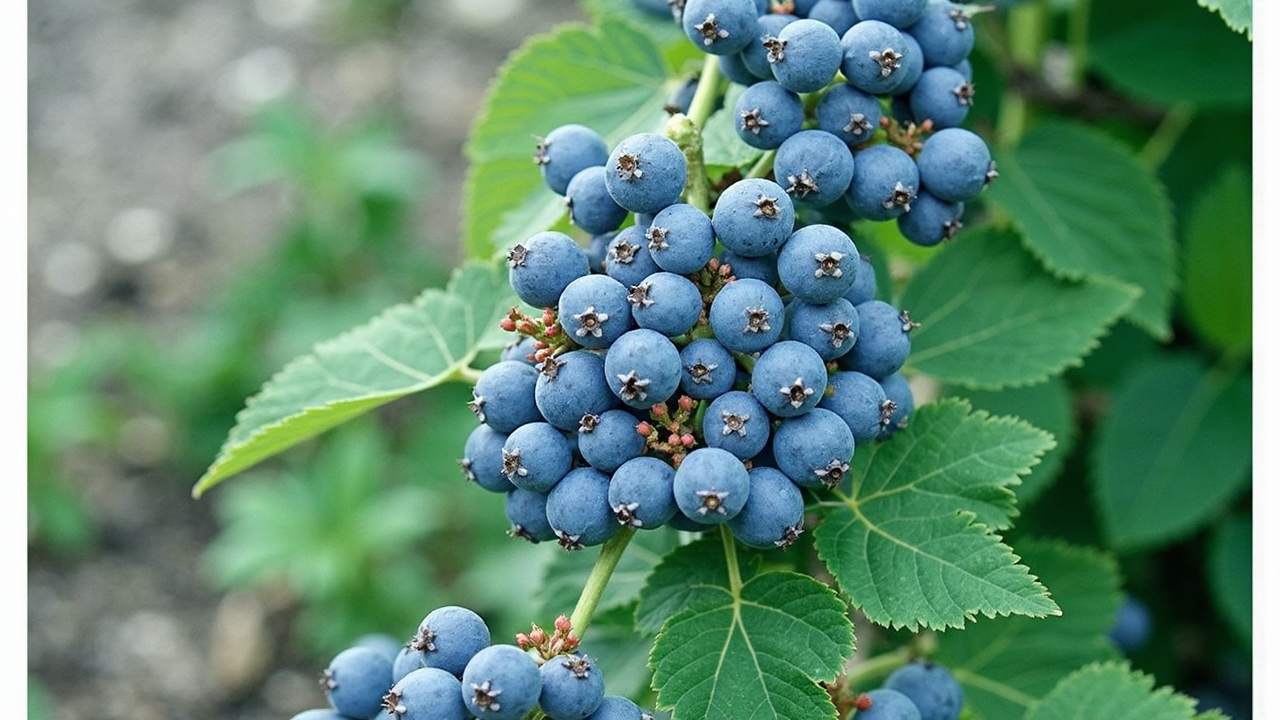
Vaccinium corymbosum is a deciduous shrub growing to 1.8–3.7 metres (6–12 ft) tall and wide. It is often found in dense thickets. The dark glossy green leaves are elliptical and up to 5 centimetres (2 in) long. In autumn, the leaves turn to a brilliant red, orange, yellow, and/or purple. The flowers are long bell- or urn-shaped white to very light pink, 8.5 mm (1⁄3 in) long. The fruit is a blue-black berry with a 6.4–12.7 mm (1⁄4–1⁄2 in) diameter.
Origin and Habitat
It is native to eastern Canada and the eastern and southern United States, from Ontario east to Nova Scotia and south as far as Florida and eastern Texas. It is also naturalized in other places, including Europe, Japan, New Zealand, and the North American Pacific Northwest. The plant is found in wooded or open habitats with moist acidic soils.
Cultivation
It requires moist acidic soils (pH 4.5 to 5.5) for cultivation. It can be grown in full sun or partial shade. Most cultivars have a chilling requirement greater than 800 hours.
Care and Maintenance
Prune after flowering. The species does not self-pollinate, requiring cross-pollination for fruit set.
Uses
The berries were collected and used in Native American cuisine in areas where V. corymbosum grew natively. Many wild species of Vaccinium are thought to have been cultivated by Native Americans for thousands of years. V. corymbosum was later studied and domesticated in 1908 by Elizabeth Coleman White and Frederick Vernon Coville. It became the most common commercially grown blueberry in North America. In natural habitats, the berries are a food source for native and migrating birds, bears, and small mammals. The foliage is browsed by deer and rabbits.
#Blueberry #Vaccinium #HighbushBlueberry #UKGardening #OrnamentalShrubs #AcidicSoil #NativeAmericanCuisine #RHS #GardenWizz #FruitShrubs
Cultivars and Varieties
| Cultivar | Height | Flower | Notes | AGM |
|---|---|---|---|---|
| 'Duke' → | — | — | Award of Garden Merit | ✓ |
| 'Spartan' → | — | — | Award of Garden Merit | ✓ |
Quick Care Summary
| Sunlight | Full sun, Partial shade |
|---|---|
| Soil | moist acidic soils (pH 4.5 to 5.5) |
| Hardiness | — |
| Sow | September–November |
| Plant | March–May |
| Prune | February |
Facts sourced from Wikipedia / Vaccinium corymbosum (https://en.wikipedia.org/wiki/Vaccinium_corymbosum)
As an Amazon Associate, GardenWizz earns from qualifying purchases made through the links above. This does not affect the price you pay. See our disclaimer for details.