
Wisteria 'Prolific'
Wisteria sinensis 'Prolific'
The Gardening Year
Best months in UK gardens · full planting calendar →
🖨 Printable care card (PDF)At a Glance
| Botanical name | Wisteria sinensis 'Prolific' |
|---|---|
| Common name(s) | Wisteria 'Prolific' |
| Family | Fabaceae |
| Plant type | climber (Deciduous) |
| Height × Spread | 8–12 m × — |
| Position | Full sun, Partial shade |
| Soil | fertile, moist but well-drained soil; Alkaline, Neutral |
| Flowering | May–June |
| Toxicity | Harmful if eaten |
| Native range | China |
Overview
Wisteria sinensis 'Prolific' is a selected cultivar of Chinese wisteria, valued in the UK for its reliably abundant displays of lilac-blue, pea-like flowers in late spring and a second, lighter flush in mid- to late summer. It is a vigorous, twining deciduous climber that needs a substantial support and is most often trained against a sunny house wall, over a pergola, or up a sturdy tree. Gardeners choose it in preference to seedling forms of the species because flowering tends to come earlier in its life and the racemes are notably long and densely packed.
Distinctive Features
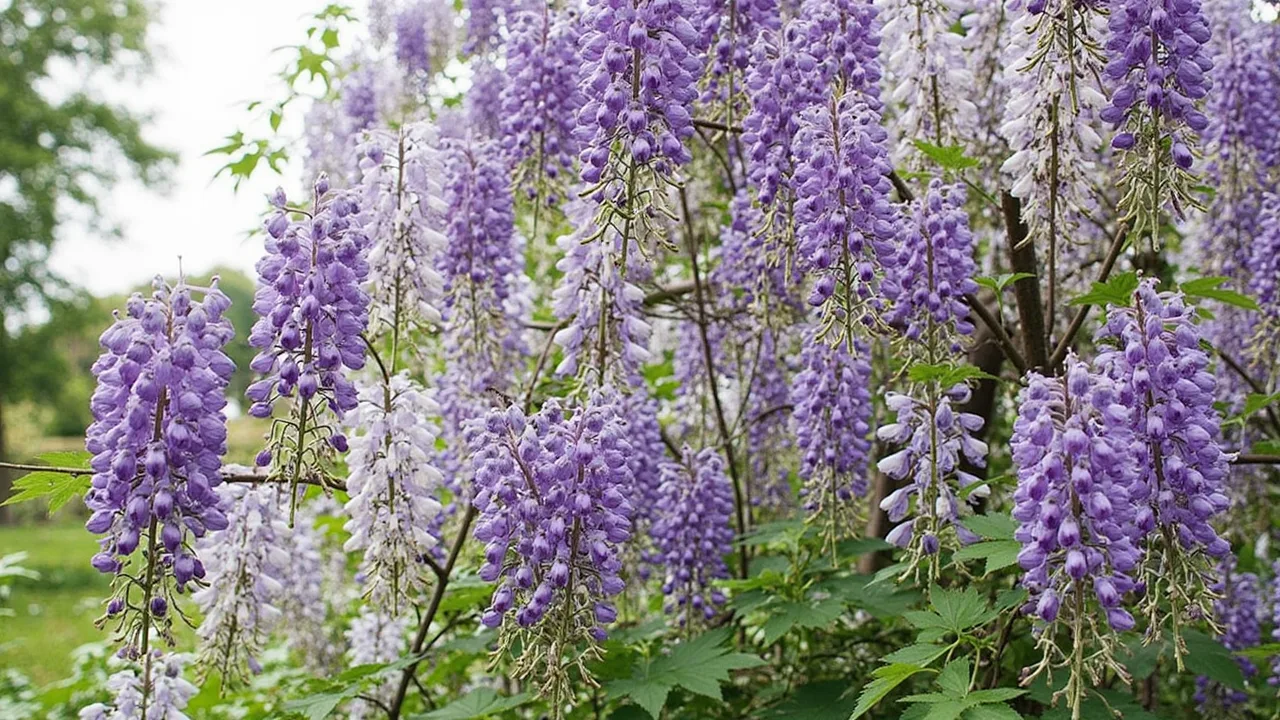
The flowers of 'Prolific' open in pendant racemes, typically 20–30 cm long, with a soft violet-blue keel and paler standard petals, and they carry a strong, sweet fragrance. A standard Chinese wisteria can be shy to flower in its first ten or more years when grown from seed; grafted plants of 'Prolific' are selected to flower from a young age, often within two to three years of planting. Compared with the better-known Wisteria sinensis 'Alba', which is white-flowered, 'Prolific' is bluer and more heavily cropped, and it flowers before the leaves fully emerge, giving a more dramatic spring show. Mature plants can reach around 8–10 m in height given time and a strong support, and the twining stems climb clockwise, which matters when fixing wires or trellis.
The cultivar has received the Royal Horticultural Society's Award of Garden Merit (AGM), recognising its reliability and garden value in UK conditions; any current holder status should be checked against the RHS website, as AGM listings are periodically reviewed.
Growing Notes
Like all Chinese wisterias, 'Prolific' prefers a sunny, sheltered position; flowering is reduced in shade and the second flush may be skipped entirely. It grows in any reasonably fertile, free-draining garden soil and tolerates a range of pH, though waterlogged ground should be avoided. A grafted plant is strongly preferable to a seed-raised one, as seedlings can take a decade or more to flower; when buying, check that the base of the stem shows the graft union just above soil level.
Pruning is what makes the difference between a leafy tangle and a floriferous specimen. In late winter (January or February), cut back the previous summer's side-shoots to two or three buds. In mid- to late summer, after the first flush has finished, shorten the same new shoots to five or six leaves to keep the plant tidy and to encourage flower buds for the following spring. A strong, fixed support is essential: tensioned horizontal wires at 30 cm intervals, a substantial wooden pergola, or a sound wall. Established plants are hardy across most of the UK, tolerating winter lows typical of RHS hardiness rating H6, though late spring frosts can damage early flower trusses in cold, exposed sites.
Best Used For
In a UK garden, Wisteria 'Prolific' is the classic choice for training across the front of a south- or west-facing house, where its fragrant May racemes can be appreciated at close range. It suits cottage and informal garden styles, drapes well over pergolas and walkways, and can be trained as a freestanding standard for a more formal setting, though this needs patience. The flowers are attractive to bumblebees and other pollinators, and the foliage turns a clear yellow in autumn before falling. It is generally considered toxic if ingested and should be sited with that in mind around pets and very young children.
Pests and Diseases
| Problem | Symptoms | Management |
|---|---|---|
| Non-flowering | The plant produces vigorous vegetative growth but fails to produce flower buds or blooms. | Ensure full sun, apply sulphate of potash in spring, and prune twice yearly in July/August and Jan/Feb. |
| Powdery mildew | A white fungal growth appears on leaves, though it can be difficult to see on wisteria. | Improve air circulation by pruning and dispose of infected material promptly to limit spread. |
| Vine weevil | Notches appear on leaf margins while larvae feed on roots underground. | Use nematodes in late summer or apply systemic insecticides to control larvae in the soil. |
| Wisteria scale | Small, immobile insects attach to stems and leaves, potentially causing yellowing or sooty mould. | Scrape off visible scales by hand or use a horticultural oil spray during dormancy. |
| Honey fungus | Sudden dieback of branches and white fungal growth under the bark at the base. | Remove infected roots and soil, and avoid replanting wisteria in the same spot for several years. |
For step-by-step help, read Treating Powdery Mildew. Or browse the full plant problem solver to diagnose an issue by symptom.
Wisteria 'Prolific' in our guides
As an Amazon Associate, GardenWizz earns from qualifying purchases made through links on this page (including links within the article). This does not affect the price you pay. See our disclaimer for details.