
Honeysuckle 'Graham Thomas'
Lonicera periclymenum 'Graham Thomas'
The Gardening Year
Best months in UK gardens · full planting calendar →
🖨 Printable care card (PDF)At a Glance
| Botanical name | Lonicera periclymenum 'Graham Thomas' |
|---|---|
| Common name(s) | Honeysuckle 'Graham Thomas' |
| Family | Caprifoliaceae |
| Plant type | climber (Deciduous) |
| Height × Spread | 4–8 m × 100–150 cm |
| Position | Partial shade, Full sun |
| Soil | fertile, moist but well-drained soil |
| Flowering | June–November |
| Toxicity | Fruit are ornamental - not to be eaten. Wear gloves and other protective equipment when handling. |
| Native range | — |
Overview
Honeysuckle 'Graham Thomas' (Lonicera periclymenum 'Graham Thomas') is a cultivar of the native common honeysuckle, prized in UK gardens for its long flowering season and richly coloured blooms. Selected and named in honour of the influential British garden writer Graham Stuart Thomas, it has become one of the most widely planted climbing honeysuckles in the country. Gardeners grow it primarily for its colour, scent, and reliability on a sunny wall, fence, or pergola.
Distinctive Features
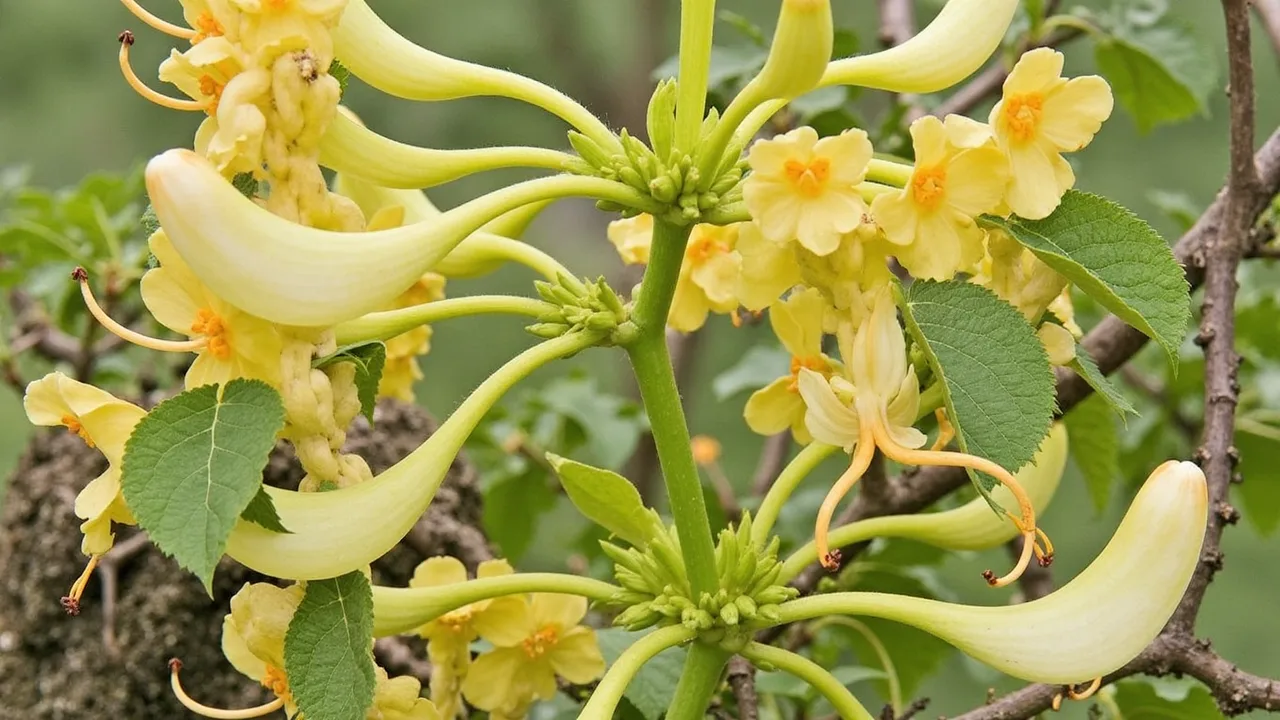
'Graham Thomas' is distinguished from the typical wild Lonicera periclymenum by its larger, more showy flowers and a longer display period, often flowering from early summer well into autumn. The blooms open creamy white and gradually deepen to a clear, buttery yellow as they mature, giving the plant a two-toned effect on the same truss. The flowers retain the strong, sweet fragrance characteristic of the species and are followed by small red berries in late summer.
In growth it is a twining, deciduous climber, generally reaching around 5–7 metres in height given suitable support, which is comparable to the species rather than a dwarf form. The mid-green leaves are oval and paired, sometimes fused around the stem in the manner typical of Lonicera periclymenum. It holds the Royal Horticultural Society's Award of Garden Merit (AGM), reflecting its performance in UK trial conditions.
Compared with the better-known 'Belgica' and 'Serotina', 'Graham Thomas' is valued for its softer yellow colouring and its later, extended flowering rather than a single heavy flush.
Growing Notes
This cultivar prefers a position in full sun or light dappled shade, with the roots kept cool and the top in light — a classic honeysuckle requirement. Plant it with the base shaded by lower perennials or by a paving slab, and train the twining stems onto wires, trellis, or an established host such as a tree or large shrub. It is hardy across most of the UK, suitable for typical British winters in reasonably drained soil, and tolerates clay provided the ground does not become waterlogged.
It is usually supplied as a container-grown plant and is best planted in autumn or spring, then watered through its first growing season to help it establish. Once settled, it flowers on wood made the previous year, so any pruning is best done lightly after the main flush has faded, removing only weak or congested stems. Container growing is possible with a large pot and a robust support, though growth will be more restrained. In the first year flowering may be modest; a strong display typically develops from the second season onwards.
Best Used For
'Graham Thomas' is ideal for clothing a sunny or partially shaded wall, fence, or pergola, particularly near a seating area or open window where the evening scent can be appreciated. It works well in cottage-style and informal planting, threaded through a mature shrub, or allowed to scramble over a low wall. The flowers are attractive to bees, moths, and other pollinators, and the late berries are taken by garden birds, giving it strong wildlife value in a UK setting.
Pests and Diseases
| Problem | Symptoms | Management |
|---|---|---|
| Powdery mildew | A white, dusty fungal growth appears on leaves and young shoots, often causing distortion. | Mulch in spring to reduce water stress and improve air circulation around the base. |
| Honeysuckle aphids | Clusters of small green or black insects cluster on new growth, causing leaves to curl. | Encourage natural predators like ladybirds or use a strong jet of water to dislodge them. |
| Silver leaf | Leaves develop a silvery sheen on the underside and may become distorted or die back. | Prune out affected branches well below the infection point and burn them immediately. |
| Fungal leaf spot | Small, dark spots appear on leaves which may turn yellow and drop prematurely. | Remove fallen leaves in autumn to reduce overwintering spores and avoid wetting foliage when watering. |
| Thrips | Tiny insects cause silvery or bronzed patches on leaves and flowers, often leaving black specks. | Use blue sticky traps to monitor populations and apply horticultural oil if infestations are severe. |
For step-by-step help, read Controlling Aphids Naturally and Treating Powdery Mildew. Or browse the full plant problem solver to diagnose an issue by symptom.
Honeysuckle 'Graham Thomas' in our guides
As an Amazon Associate, GardenWizz earns from qualifying purchases made through links on this page (including links within the article). This does not affect the price you pay. See our disclaimer for details.