
Sweet Pea
Lathyrus odoratus
At a Glance
| Botanical name | Lathyrus odoratus |
|---|---|
| Common name(s) | sweet pea |
| Family | Fabaceae |
| Plant type | climber |
| Height × Spread | 100–200 cm × — |
| Hardiness | — |
| Position | Full sun, Partial shade |
| Soil | — |
| Flowering | June–September |
| Toxicity | — |
| Native range | Sicily, southern Italy and the Aegean Islands |
Overview
Lathyrus odoratus is a flowering plant in the genus Lathyrus within the family Fabaceae (legumes). It is an annual climbing plant, typically reaching heights of 1–2 metres (3 ft 3 in – 6 ft 7 in) with suitable support. The species is cultivated for its highly variable flower colours, intense fragrance, and ornamental value. It is distinct from the perennial everlasting pea, Lathyrus latifolius.
Botanical Description
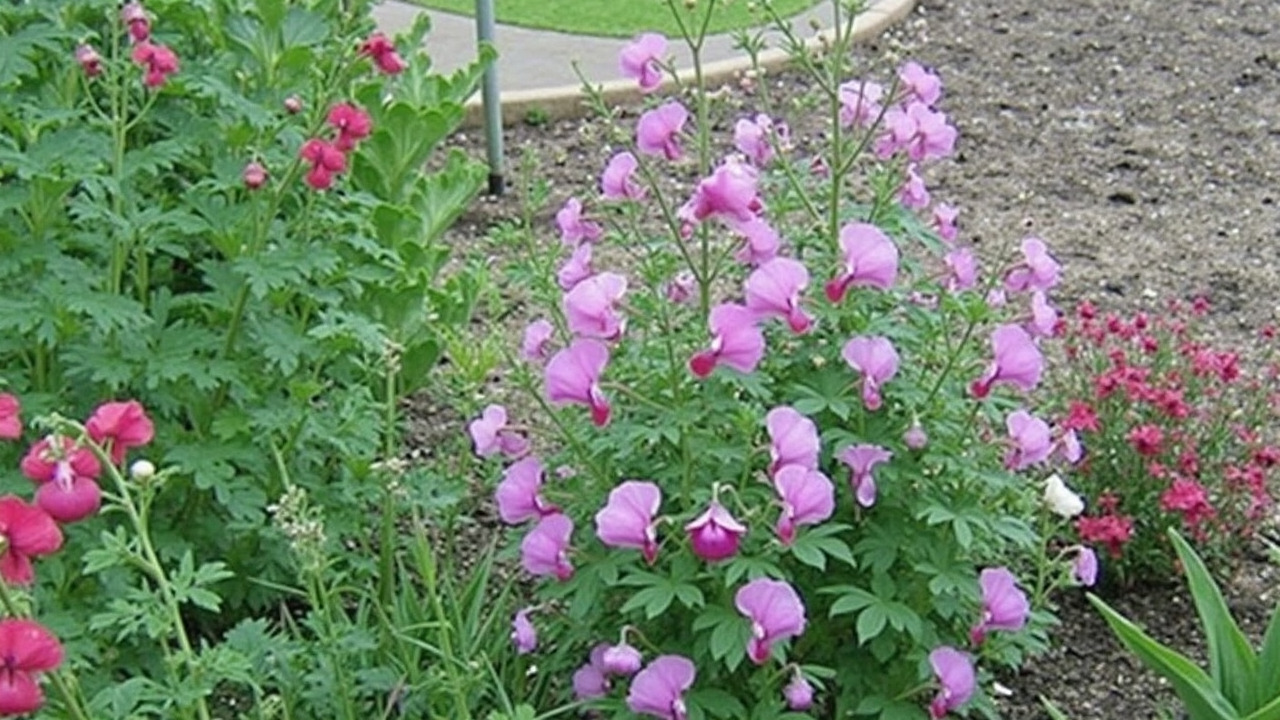
The plant features pinnate leaves with two leaflets and a terminal tendril that twines around supports to aid climbing. Wild specimens produce purple flowers, 2–3.5 cm (3⁄4–1+1⁄2 in) broad, while cultivated varieties exhibit larger, highly variable colours including pastel shades of blue, pink, purple, and white, often with bi-colours. Flowers are typically strongly scented. The large, pea-shaped seeds are characteristic of the genus.
Origin and Habitat
Native to Sicily, southern Italy, and the Aegean Islands, Lathyrus odoratus is indigenous to these regions. It has been cultivated since the 17th century, with historical records tracing its introduction to European gardens.
Cultivation
Sweet peas are grown from seeds sown in cold frames during spring or autumn, with seeds benefiting from pre-soaking or chipping. Young plants or plugs are also commercially available. They require support structures such as canes for climbing. Plants typically reach heights of 1–2 metres (3 ft 3 in – 6 ft 7 in). The flowers appear in midsummer and continue for several weeks with regular deadheading.
Care and Maintenance
Regular deadheading promotes prolonged flowering. New shoots should be pinched out to encourage a bushy habit and higher flower yields. Key pests include aphids, pollen beetles, caterpillars, thrips, slugs, and snails. Diseases involve mosaic virus (spread by greenfly), causing leaf yellowing and distortion, and powdery mildew, which occurs when plants are overcrowded. The species is susceptible to ethylene from senescing plants, necessitating separation from fruit trees or other plants prone to early dieback.
Uses
Primarily cultivated for ornamental purposes in private gardens, exhibitions, and the floristry trade due to its colour range and fragrance. Over 50 cultivars have received the Royal Horticultural Society's Award of Garden Merit. The plant has historical significance in genetics research, serving as a model organism for early studies of Mendelian inheritance and genetic linkage. Seeds are toxic in quantity, with evidence of lathyrism symptoms similar to scurvy when consumed in large amounts, though the species is not cultivated for food.
#SweetPea #Lathyrusodoratus #RHSAGM #UKGardening #ClimbingPlants #Floristry #GardenWizz #AnnualClimber #FragrantFlowers #GardenPlants
Cultivars and Varieties
| Cultivar | Height | Flower | Notes | AGM |
|---|---|---|---|---|
| 'Bronze Prince' | — | — | introduced by Henry Eckford in 1882 | |
| 'Dorothy Eckford' | — | — | named after a family member |
Pests and Diseases
| Problem | Symptoms | Management |
|---|---|---|
| aphids | suck the sap out of the plants, reducing growth | — |
| mosaic virus | yellowing of leaves, distortion of new shoots, and inhibited flowering | — |
| pollen beetle | eats the pollen and disfigures the flowers | — |
| caterpillars | — | — |
| thrips | — | — |
| slugs and snails | — | — |
| powdery mildew | white powdery coating that covers the leaves and slows down growth | — |
Quick Care Summary
| Sunlight | Full sun, Partial shade |
|---|---|
| Soil | — |
| Hardiness | — |
| Sow | March–May |
| Plant | March–May |
| Prune | October–December |
Facts sourced from Wikipedia / Lathyrus odoratus (https://en.wikipedia.org/wiki/Lathyrus_odoratus)
As an Amazon Associate, GardenWizz earns from qualifying purchases made through the links above. This does not affect the price you pay. See our disclaimer for details.