
Lupin
Lupinus · lupine · bluebonnet
At a Glance
| Botanical name | Lupinus |
|---|---|
| Common name(s) | lupin, lupine, bluebonnet |
| Family | Fabaceae |
| Plant type | perennial |
| Height × Spread | 30–150 cm × — |
| Hardiness | — |
| Position | Full sun, Partial shade |
| Soil | — |
| Flowering | April–August |
| Toxicity | Some lupins contain toxic alkaloids such as lupinine, anagyrine and sparteine. |
| Native range | North and South America |
Overview
Lupinus, commonly known as lupin, lupine, or regionally as bluebonnet, is a genus of plants in the legume family Fabaceae. The genus includes over 199 species, with centres of diversity in North and South America, and smaller centres in North Africa and the Mediterranean. Lupins are widely cultivated both as ornamental plants and for agricultural purposes, though some species are invasive in non-native regions, such as Iceland where they became an ecological problem from the early 21st century.
Botanical Description
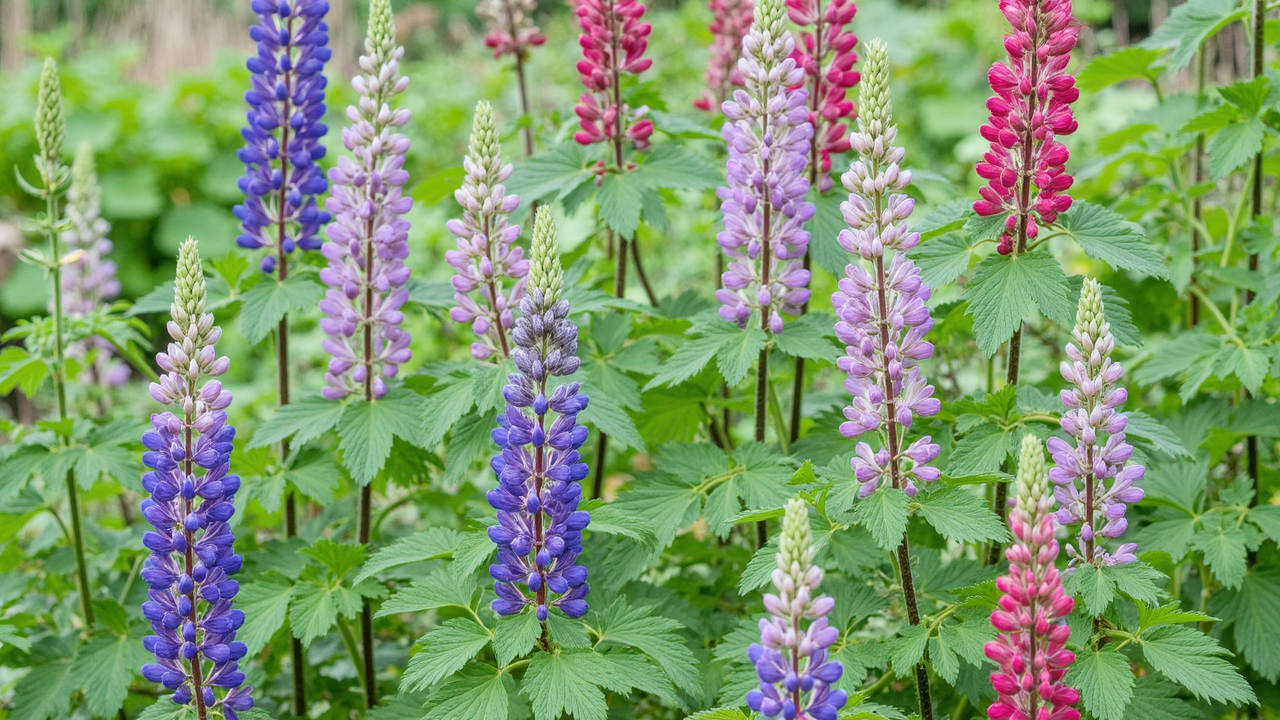
Species are mostly herbaceous perennials 0.3–1.5 metres tall, though some are annuals or shrubs up to 3 metres tall. An exception is Lupinus jaimehintonianus, a tree up to 8 metres tall. Leaves are soft green to grey-green, often coated in silvery hairs, with palmate division into five to 28 leaflets. Flowers are pea-like, produced in dense or open whorls on erect spikes, each 1–2 centimetres long, featuring an upper standard, lateral wings, and fused lower petals forming a keel. The fruit is a pod containing several seeds, which contain alkaloids causing a bitter taste.
Origin and Habitat
Native to North and South America, with centres of diversity in these continents, and smaller centres in North Africa and the Mediterranean. Some species, such as Lupinus arboreus and L. polyphyllus, have become invasive outside their native ranges, notably in New Zealand, Sweden, Finland, Norway, and parts of Australia, where they escape cultivation and spread along roadsides and waterways.
Cultivation
Lupinus polyphyllus (garden lupin) and Lupinus arboreus (tree lupin) are popular ornamental species, cultivated for their flowers and used in numerous hybrids and cultivars across a wide colour range. As legumes, lupins fix atmospheric nitrogen via rhizobium–root nodule symbiosis, making them beneficial companion plants for vegetables and other nitrogen-demanding species. They can be grown in garden beds or containers on balconies and patios.
Care and Maintenance
Prune after flowering to maintain plant vigour. Lupins tolerate infertile soils due to nitrogen-fixing capabilities but prefer full sun or partial shade.
Uses
Historically, lupin seeds were cultivated by the Romans and used as food in the Mediterranean for over 3,000 years and in the Andes for up to 6,000 years. The Andean Lupinus mutabilis (tarwi) was a significant food source in the Incan Empire. Modern agricultural use includes cultivating sweet lupin varieties (low alkaloid) for livestock feed, particularly for ruminants, and increasingly for human consumption due to their high protein, fibre, and antioxidant content. Approximately 85% of the world's lupin seeds are grown in Western Australia. Lupins also serve as larval food plants for several butterfly and moth species.
#Lupinus #Fabaceae #OrnamentalPlants #NitrogenFixing #UKGardening #GardenWizz #PerennialPlants #LegumeFamily #InvasiveSpecies #PlantTaxonomy
Pests and Diseases
| Problem | Symptoms | Management |
|---|---|---|
| Invasive species | — | — |
| Mycotoxicosis | — | — |
Quick Care Summary
| Sunlight | Full sun, Partial shade |
|---|---|
| Soil | — |
| Hardiness | — |
| Sow | January, September, October, November, December |
| Plant | March–May |
| Prune | — |
Facts sourced from Wikipedia / Lupinus (https://en.wikipedia.org/wiki/Lupinus)
As an Amazon Associate, GardenWizz earns from qualifying purchases made through the links above. This does not affect the price you pay. See our disclaimer for details.