Lemon Balm
Melissa officinalis
At a Glance
| Botanical name | Melissa officinalis |
|---|---|
| Common name(s) | Lemon balm |
| Family | Lamiaceae |
| Plant type | perennial |
| Height × Spread | 100 cm × — |
| Hardiness | — |
| Position | Full sun, Partial shade |
| Soil | rich, moist |
| Flowering | June |
| Toxicity | — |
| Native range | south-central Europe, the Mediterranean Basin, Central Asia and Iran |
Overview
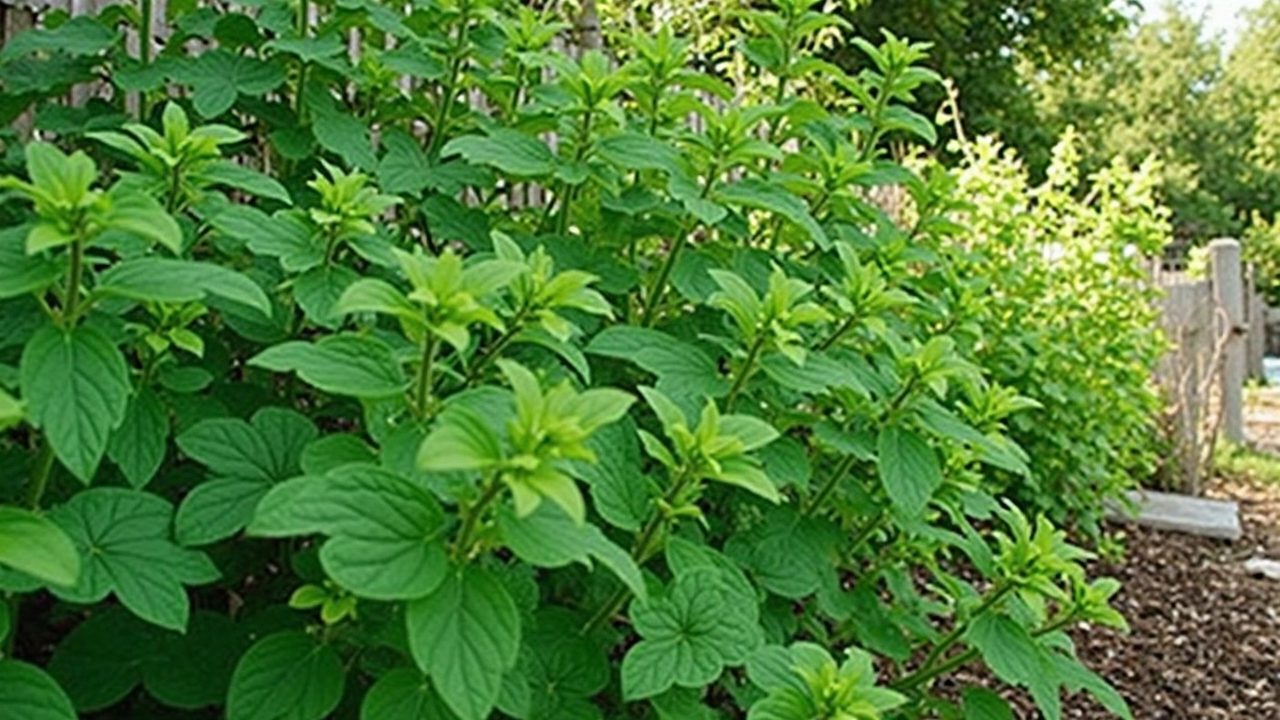
Lemon balm (Melissa officinalis) is a perennial herbaceous plant in the mint family, Lamiaceae. It possesses lemon-scented leaves and produces white or pale pink flowers. The plant contains essential oils and compounds including geranial and neral. It grows to a maximum height of 1 metre (100 centimetres).
Botanical Description
The plant features heart-shaped leaves measuring 2–8 centimetres in length, with a rough, veined surface, soft hairy texture, and scalloped edges. The leaves emit a mild lemon scent. During summer, small white or pale pink flowers appear. Lemon balm plants grow bushy and upright, living for up to ten years, though crop plants are typically replaced after five years.
Origin and Habitat
Native to south-central Europe, the Mediterranean Basin, Central Asia, and Iran, Melissa officinalis is now naturalized worldwide. It grows easily from seed in temperate zones, preferring rich, moist soil.
Cultivation
Lemon balm seeds require light and a minimum temperature of 20 °C (68 °F) to germinate. The plant grows vigorously in clumps, spreading vegetatively through fragments and by seed. In mild temperate zones, stems die back in winter but regrow in spring. It thrives in rich, moist soil.
Care and Maintenance
Harvest leaves by hand during dry weather in June and August in the northern hemisphere. The crop is harvested to prevent discoloration if damp. Plants are typically replaced after five years to rejuvenate the soil.
Uses
Lemon balm is used as an ornamental plant, in herbal teas, as a flavouring in ice cream and fish dishes, and in lemon balm pesto. Its essential oil, containing geraniol, neral, geranial, and citronellal, is used in aromatics. The leaves are also employed in traditional herbal remedies and as a bee-attracting plant in apothecaries.
#LemonBalm #MelissaOfficinalis #HerbGardening #UKGardening #MintFamily #EssentialOils #HerbalTea #CulinaryHerb #PerennialHerb #GardenWizz
Cultivars and Varieties
| Cultivar | Height | Flower | Notes | AGM |
|---|---|---|---|---|
| 'Aurea' | — | — | — | |
| 'Citronella' | — | — | — | |
| 'Lemonella' | — | — | — | |
| 'Lime' | — | — | — | |
| 'Mandarina' | — | — | — | |
| 'Quedlinburger' | — | — | — | |
| 'Quedlinburger Niederliegende' | — | — | bred for higher essential oil content | |
| 'Variegata' | — | — | — |
Quick Care Summary
| Sunlight | Full sun, Partial shade |
|---|---|
| Soil | rich, moist |
| Hardiness | — |
| Sow | February–December |
| Plant | February–December |
| Prune | — |
Facts sourced from Wikipedia / Melissa officinalis (https://en.wikipedia.org/wiki/Melissa_officinalis)