Parsley
Petroselinum crispum · garden parsley
At a Glance
| Botanical name | Petroselinum crispum |
|---|---|
| Common name(s) | garden parsley |
| Family | Apiaceae |
| Plant type | annual |
| Height × Spread | — × — |
| Hardiness | — |
| Position | Full sun |
| Soil | moist, well-drained |
| Flowering | April–September |
| Toxicity | — |
| Native range | Greece, the Balkans, Algeria and Morocco |
Overview
Parsley, or garden parsley (Petroselinum crispum), is a species of flowering plant in the family Apiaceae. It is native to Greece, the Balkans, Algeria and Morocco, and has been introduced and naturalized in Europe and elsewhere with suitable climates. It is widely cultivated as a herb and a vegetable.
Botanical Description
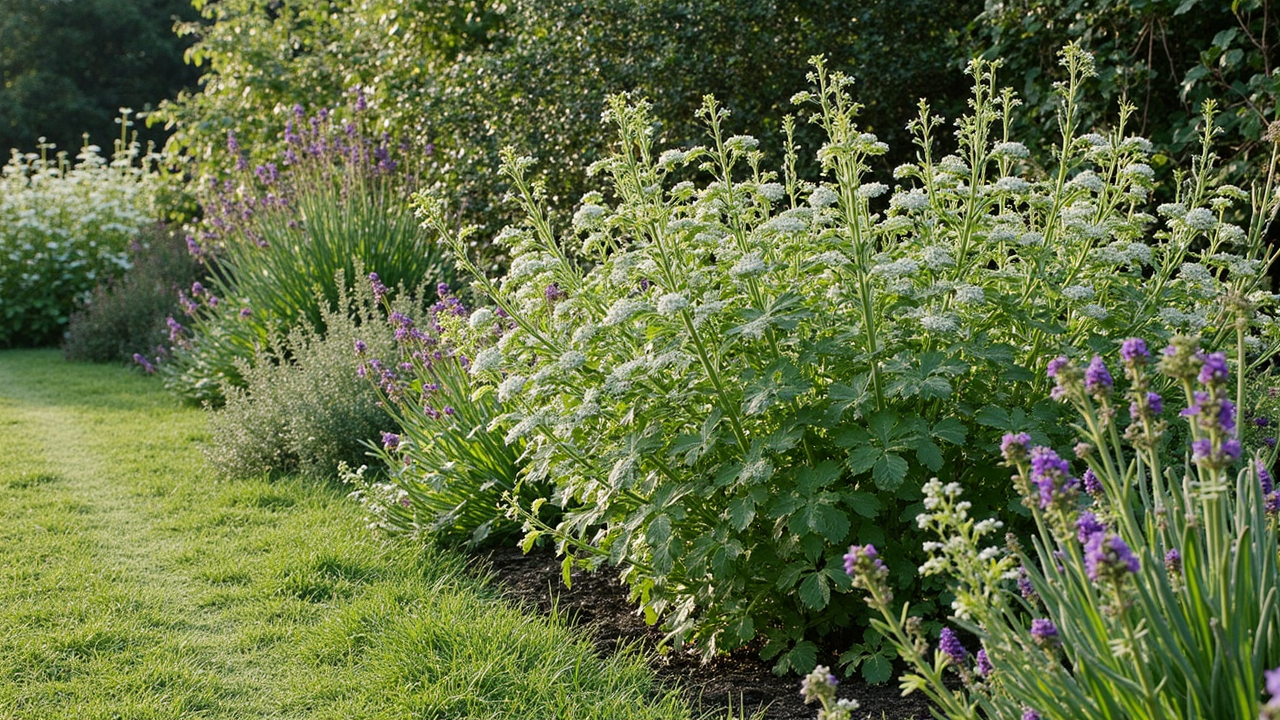
Garden parsley is a bright green, biennial plant in temperate climates, or an annual herb in subtropical and tropical areas. Where it grows as a biennial, in the first year it forms a rosette of tripinnate leaves 10–25 cm long with numerous 1–3 cm leaflets, and a taproot used as a food store over the winter. In the second year, it grows a flowering stem to 75 cm tall with sparser leaves and flat-topped umbels 3–10 cm in diameter bearing numerous 2 mm diameter yellow to yellowish-green flowers. The seeds are ovoid, 2–3 mm long, with prominent style remnants at the apex. The plant normally dies after seed maturation.
Origin and Habitat
Parsley is native to Greece, the Balkans, Algeria and Morocco. It is believed to have been originally grown in Sardinia, with cultivation dating to around the 3rd century BC. Linnaeus stated its wild habitat as Sardinia, though literary evidence suggests use in England during the Anglo-Saxon period. It was apparently first cultivated in Britain in 1548.
Cultivation
Parsley grows best in moist, well-drained soil with full sun. It grows best between 22–30 °C (72–86 °F) and is usually grown from seed. Plants grown for leaf crop are spaced 10 cm apart, while those grown as a root crop are spaced 20 cm apart to allow for root development.
Care and Maintenance
Germination is slow, taking four to six weeks, and often difficult due to furanocoumarins in the seed coat. Parsley attracts wildlife; some swallowtail butterflies use it as a host plant for larvae, and bees and other nectar-feeding insects visit the flowers.
Uses
Parsley is widely used in European, Middle Eastern, and American cuisine. Curly-leaf parsley is often used as a garnish, while flat-leaf parsley is preferred by chefs for its stronger flavour. Root parsley is common in central, eastern, and southern European cuisines, eaten as a snack or used in soups, stews, and casseroles. It is a key ingredient in dishes such as tabbouleh, ghormeh sabzi, and Italian salsa verde. Fresh parsley is used as a topping for potato dishes, rice, fish, meats, and salads, and is part of bouquet garni. In Brazilian cuisine, it is a main component of cheiro-verde seasoning. Parsley seeds impart a stronger flavour than leaves and are used in cooking. It is credited with neutralising garlic odours in cooking. Parsley is a component of the Seder plate, symbolising the flourishing of Jews after arrival in Egypt.
#Parsley #GardenHerb #Apiaceae #CulinaryHerb #UKGardening #GardenWizz #Petroselinum #HerbGardening #CookingHerb #GardenPlant
Cultivars and Varieties
| Cultivar | Height | Flower | Notes | AGM |
|---|---|---|---|---|
| 'French (curly leaf) parsley' | — | — | preferred by some gardeners as it is easier to cultivate, being more tolerant of both rain and sunshine, and is said to have a stronger flavor—although this is disputed—while curly leaf parsley is preferred by others because of its more decorative appearance in garnishing | |
| 'Hamburg root parsley' | — | — | produces much thicker roots than types cultivated for their leaves. Although seldom used in Britain and the United States, root parsley is common in central and eastern European cuisine, where it is used in soups and stews, or simply eaten raw, as a snack (similar to carrots) | |
| 'Italian (flat leaf) parsley' | — | — | preferred by some gardeners as it is easier to cultivate, being more tolerant of both rain and sunshine, and is said to have a stronger flavor—although this is disputed—while curly leaf parsley is preferred by others because of its more decorative appearance in garnishing |
Pests and Diseases
| Problem | Symptoms | Management |
|---|---|---|
| furanocoumarins | — | difficult because of furanocoumarins in its seed coat |
| excessive consumption | — | avoided by pregnant women, normal food quantities are safe for pregnant women, but consuming excessively large amounts may have uterotonic effects |
Quick Care Summary
| Sunlight | Full sun |
|---|---|
| Soil | moist, well-drained |
| Hardiness | — |
| Sow | January, February, March, October, November, December |
| Plant | January–June |
| Prune | — |
Facts sourced from Wikipedia / Petroselinum crispum (https://en.wikipedia.org/wiki/Petroselinum_crispum)
As an Amazon Associate, GardenWizz earns from qualifying purchases made through the links above. This does not affect the price you pay. See our disclaimer for details.