
Tomato
Solanum lycopersicum · love apple
At a Glance
| Botanical name | Solanum lycopersicum |
|---|---|
| Common name(s) | tomato, love apple |
| Family | nightshade |
| Plant type | annual (vulnerable to frost, though sometimes living longer in greenhouses) |
| Height × Spread | — × — |
| Hardiness | — |
| Position | Full sun |
| Soil | — |
| Flowering | June–August |
| Toxicity | — |
| Native range | western South America |
Overview
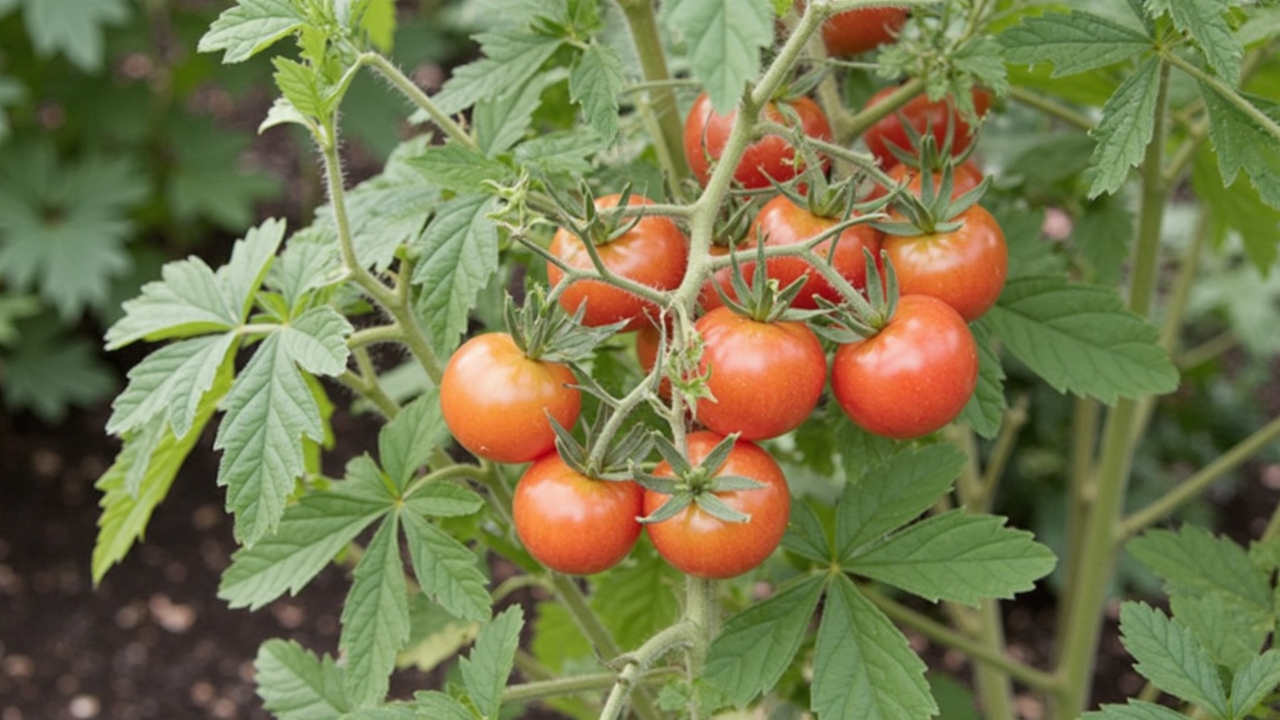
The tomato (Solanum lycopersicum) is an annual plant whose fruit is an edible berry commonly eaten as a vegetable. It belongs to the nightshade family (Solanaceae), which includes tobacco, potato, and chili peppers. The plant is a vine, largely annual, and vulnerable to frost. Modern varieties have been bred for uniform red ripening, a process that has impaired the fruit's sweetness and flavour.
Botanical Description
Tomato plants are vines, largely annual, and vulnerable to frost, though sometimes living longer in greenhouses. The flowers are capable of self-fertilisation. There are thousands of cultivars, varying in size, colour, shape, and flavour. Modern breeding for uniform red ripening has impaired the fruit's sweetness and flavour. The plant is attacked by many insect pests and nematodes and is subject to diseases caused by viruses, mildew, and blight fungi.
Origin and Habitat
The tomato originated from western South America, and may have been domesticated there, in Mexico, or in Central America. The likely wild ancestor, Solanum pimpinellifolium, is native to western South America. Genomic analysis suggests the cultivated tomato originated around 7,000 years ago (5,000 BCE), with substantial uncertainty regarding the domestication process.
Cultivation
Tomatoes require full sun for optimal growth. They are vulnerable to frost and are typically grown as annuals in temperate climates, though they may persist longer in greenhouse conditions. The plant is susceptible to various pests and diseases, including insect pests, nematodes, viruses, mildew, and blight fungi.
Care and Maintenance
Tomatoes require regular watering and well-drained soil. They are vulnerable to frost and should be protected from cold temperatures. The plant is subject to diseases caused by viruses, mildew, and blight fungi, and is attacked by many insect pests and nematodes. Modern varieties bred for uniform ripening may have reduced flavour.
Uses
Tomatoes have a strong savory umami flavour and are an important ingredient in cuisines worldwide. They are widely used in sauces for pasta and pizza, in soups such as gazpacho and tomato soup, in salads and condiments such as salsa and ketchup, and in various curries. Tomatoes are also consumed as juice and in beverages such as the Bloody Mary cocktail.
#Tomato #SolanumLycopersicum #NightshadeFamily #UKGardening #GardenWizz #CulinaryHerb #VegetableGardening #HomeCultivation
Cultivars and Varieties
| Cultivar | Height | Flower | Notes | AGM |
|---|---|---|---|---|
| 'Acme' | — | — | said to be in the parentage of most cultivars for the next twenty-five years, introduced in 1875 | |
| 'Paragon' | — | — | introduced in 1870 |
Pests and Diseases
| Problem | Symptoms | Management |
|---|---|---|
| insect pests | — | — |
| nematodes | — | — |
| diseases caused by viruses, mildew, and blight fungi | — | — |
Quick Care Summary
| Sunlight | Full sun |
|---|---|
| Soil | — |
| Hardiness | — |
| Sow | April–June |
| Plant | April–June |
| Prune | — |
Facts sourced from Wikipedia / Solanum lycopersicum (https://en.wikipedia.org/wiki/Solanum_lycopersicum)
As an Amazon Associate, GardenWizz earns from qualifying purchases made through the links above. This does not affect the price you pay. See our disclaimer for details.