
Strawberry 'Honeoye'
Fragaria ananassa 'Honeoye'
The Gardening Year
Best months in UK gardens · full planting calendar →
🖨 Printable care card (PDF)At a Glance
| Botanical name | Fragaria ananassa 'Honeoye' |
|---|---|
| Common name(s) | Strawberry 'Honeoye' |
| Family | Rosaceae |
| Plant type | perennial (Semi evergreen, stoloniferous perennial with leaves composed of three leaflets, and rounded white or pink flowers followed by edible red fruits.) |
| Height × Spread | 7–15 cm × 15–30 cm |
| Position | Full sun |
| Soil | fertile, moist but well-drained loam, neutral pH |
| Flowering | April–June |
| Toxicity | No specific toxicity is listed by the RHS. This is not a guarantee of safety — check with a vet or the ASPCA before pets or children eat any plant. |
| Native range | — |
Overview
Strawberry 'Honeoye' is a June-bearing dessert strawberry raised at Cornell University, New York, in 1979 and named after a town in Ontario. It is grown across the UK for its heavy, reliable early-to-mid season crops of medium-to-large, brightly coloured fruit. The cultivar is particularly valued by gardeners in cooler, wetter regions where many other strawberries struggle to ripen fully.
Distinctive Features
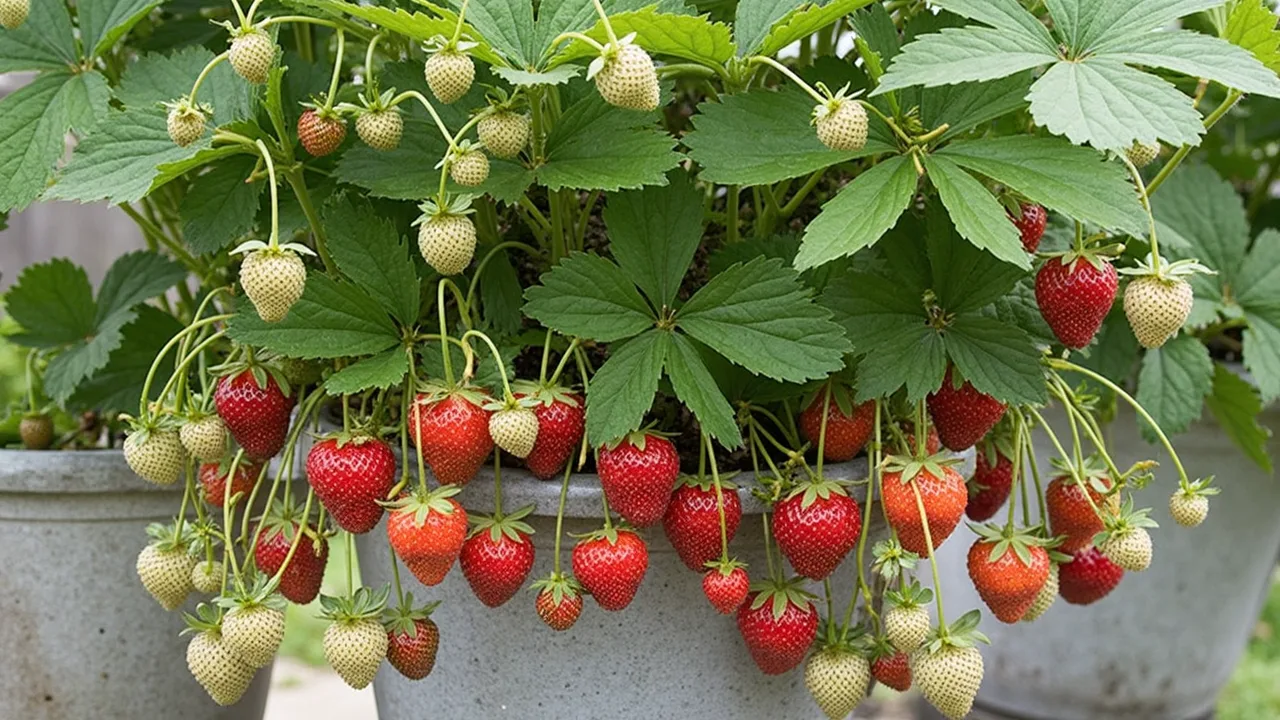
'Honeoye' is a vigorous, upright-to-spreading plant with a denser crown than many older June-bearers, producing a heavy first-year crop when planted as cold-stored runners. The fruit is short-conical to blocky, with a glossy, deep scarlet skin and firm, juicy flesh. Flavour is typically described as well-balanced: noticeably sweeter and more aromatic than cultivars such as 'Elsanta' when grown in similar conditions, though it can taste sharper on thin, dry soils.
The flowers are white, typical of the species, and borne in trusses held at or just above leaf level, which helps keep the developing fruit clean. Mature plants reach roughly 20–30 cm in height with a similar spread. Foliage is mid-green and relatively resistant to mildew in most UK seasons, although leaf spot can appear in wet summers. 'Honeoye' is widely considered hardy across most of Britain, but precise RHS hardiness ratings for this cultivar are not consistently published and should be checked with the supplier if growing in an exposed northern site.
Growing Notes
Plant cold-stored runners from late autumn to early spring, or pot-grown plants from spring once the soil is workable, spacing them about 40–45 cm apart in rows 75–90 cm apart on a sunny, free-draining site. Honeoye performs especially well on slightly acidic to neutral loam but tolerates a wider pH range than many dessert cultivars. Because it is a June-bearer, the main harvest is concentrated over roughly three to four weeks in June and early July in southern England, slightly later further north.
For the heaviest crop, remove the first flush of flowers on spring-planted runners to let the plants establish; fruit the plants in their second season. Straw the beds well before the fruit colours to keep berries clean and slugs at bay, and net against birds as the fruit ripens — 'Honeoye' is a known favourite of blackbirds and thrushes. After fruiting, cut back old leaves and remove straw to reduce overwintering disease. Renew the bed every three to four years by replanting with certified disease-free runners, as yields fall sharply on older plants.
Best Used For
'Honeoye' is an excellent choice for a traditional kitchen-garden strawberry bed, where its early, heavy crop suits jam-making, freezing and puddings in a short concentrated glut. It also performs well in large containers and grow-bags on a sunny patio, provided it is fed and watered consistently through fruiting. In colder, wetter parts of the UK — including much of Scotland, northern England and exposed coastal sites — it is often a more dependable cropper than 'Elsanta'. It is less suited to ornamental or edging plantings: the plant is grown for fruit rather than display, and the net protection required at ripening can interrupt flowering in mixed borders. The open flowers are visited by bees and other pollinators in spring, so it pulls its weight in a productive, wildlife-friendly plot.
Pests and Diseases
| Problem | Symptoms | Management |
|---|---|---|
| aphids | — | — |
| slugs | — | — |
| glasshouse red spider mite | — | — |
| vine weevil | — | — |
| strawberry viruses | — | — |
| root rot | — | — |
| grey moulds | Fruit prone to grey moulds | — |
| Verticillium wilt | — | — |
For step-by-step help, read Controlling Aphids Naturally and Dealing with Slugs and Snails. Or browse the full plant problem solver to diagnose an issue by symptom.
As an Amazon Associate, GardenWizz earns from qualifying purchases made through links on this page (including links within the article). This does not affect the price you pay. See our disclaimer for details.