
Marigold
Tagetes · marigolds
At a Glance
| Botanical name | Tagetes |
|---|---|
| Common name(s) | marigolds |
| Family | Asteraceae |
| Plant type | — |
| Height × Spread | 10–220 cm × — |
| Hardiness | — |
| Position | Full sun, Partial shade |
| Soil | almost any sort of soil with good drainage |
| Flowering | March–December |
| Toxicity | — |
| Native range | Central and Southern Mexico and several other Latin American countries |
Overview
Tagetes is a genus of 50 species of annual or perennial, mostly herbaceous plants in the family Asteraceae. It is among several groups of plants known in English as marigolds. The genus was formally named by Carl Linnaeus in 1753, citing earlier authors including Joseph Pitton de Tournefort and Johann Jacob Dillenius. The common name 'marigold' derives from 'Mary's gold', originally applied to Calendula officinalis, a European plant. Cultivated varieties are commonly referred to as African marigolds (primarily Tagetes erecta) or French marigolds (primarily Tagetes patula), with signet marigolds derived from Tagetes tenuifolia.
Botanical Description
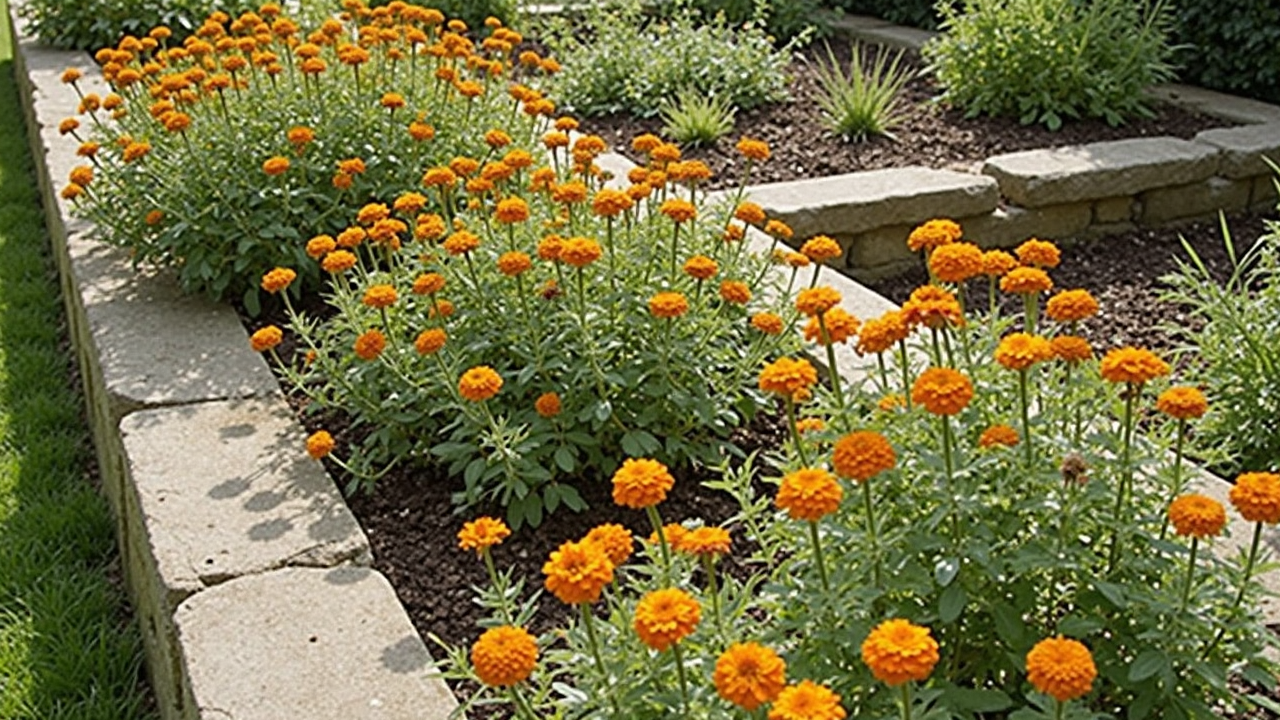
Species vary in height from 0.1 to 2.2 m. Most have pinnate green leaves and produce flower heads typically 1–6 cm in diameter, featuring both ray and disc florets. Blooms occur in golden, orange, yellow, and white colours, often with maroon highlights. All marigolds possess a fibrous root system. In horticulture, they are predominantly grown as annuals, though perennial species are increasingly popular.
Origin and Habitat
Native to Central and Southern Mexico and several other Latin American countries, Tagetes species were originally called cempōhualxōchitl by the Nahua people. Some species have become naturalised worldwide. One species, Tagetes minuta, is considered a noxious invasive species in certain regions.
Cultivation
Tagetes species grow well in almost any soil type with good drainage. Most horticultural selections thrive in well-drained soil, and some cultivars exhibit good drought tolerance. They tolerate full sun and partial shade.
Care and Maintenance
Prune after flowering. Ensure soil has good drainage to support healthy growth.
Uses
The florets of Tagetes erecta are rich in lutein and used as a food colour (INS E161b) in the European Union for products including pasta, oils, dairy, and confectionery. In the United States, such extracts are approved only for animal feed. Tagetes minuta is cultivated for essential oil (used in perfumery and food flavouring) and as a pioneer plant in land reclamation. Tagetes lucida is used to prepare a medicinal tea and as a culinary herb, substituting for tarragon. Tagetes erecta features in Day of the Dead celebrations in Mexico. In South Asia, marigolds are extensively cultivated for ornamental use in weddings, festivals, and religious events, particularly in India and Thailand. In Ukraine, certain species are regarded as national symbols.
#Marigold #Tagetes #Asteraceae #Botanical #GardenCare #UKGardening #PlantUses #FlowerColorant
Cultivars and Varieties
| Cultivar | Height | Flower | Notes | AGM |
|---|---|---|---|---|
| 'African marigolds' | — | — | usually referring to cultivars and hybrids of Tagetes erecta | |
| 'French marigolds' | — | — | usually referring to hybrids and cultivars of Tagetes patula, many of which were developed in France |
Pests and Diseases
| Problem | Symptoms | Management |
|---|---|---|
| legume crop | antibacterial thiophenes exuded by the roots | do not plant near legume crops |
| deer-, rabbit-, rodent- and javelina or peccary-resistant | — | — |
Quick Care Summary
| Sunlight | Full sun, Partial shade |
|---|---|
| Soil | almost any sort of soil with good drainage |
| Hardiness | — |
| Sow | March–December |
| Plant | March–December |
| Prune | — |
Facts sourced from Wikipedia / Tagetes (https://en.wikipedia.org/wiki/Tagetes)
As an Amazon Associate, GardenWizz earns from qualifying purchases made through the links above. This does not affect the price you pay. See our disclaimer for details.