
Thyme 'Silver Queen'
Thymus vulgaris 'Silver Queen'
The Gardening Year
Best months in UK gardens · full planting calendar →
🖨 Printable care card (PDF)At a Glance
| Botanical name | Thymus vulgaris 'Silver Queen' |
|---|---|
| Common name(s) | Thyme 'Silver Queen' |
| Family | Lamiaceae |
| Plant type | shrub |
| Height × Spread | 10–50 cm × 10–50 cm |
| Position | Full sun |
| Soil | well-drained, alkaline to neutral soils |
| Flowering | June–August |
| Toxicity | No specific toxicity is listed by the RHS. This is not a guarantee of safety — check with a vet or the ASPCA before pets or children eat any plant. |
| Native range | southern Europe from the western Mediterranean to southern Italy |
Overview
Thyme 'Silver Queen' is a variegated cultivar of common thyme (Thymus vulgaris) grown primarily for its decorative foliage rather than its culinary yield. The leaves are edged and splashed with silver-white, giving the low, bushy subshrub a pale, bright appearance that holds its own in a mixed planting long before the flowers appear. It is offered by UK nurseries as an ornamental edging and container plant, and it shares the drought-tolerance and sun-loving habit of the species.
Distinctive Features
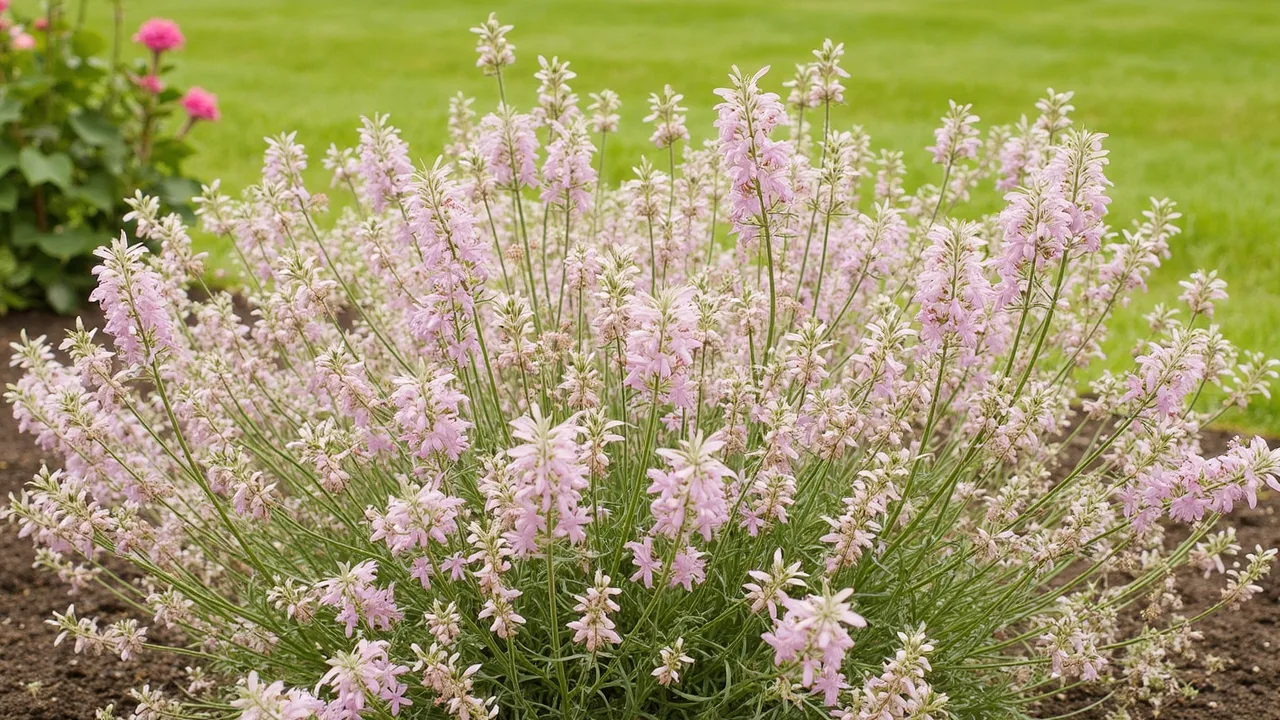
The defining trait is the foliage: 'Silver Queen' carries the typical small, narrow, grey-green leaves of common thyme, but each leaf is marked with silvery-white variegation, sometimes extending over most of the leaf surface and sometimes confined to the margins. The overall effect is a paler, slightly cooler-looking plant than the plain green species or the golden-variegated 'Golden King' (sometimes listed as 'Aureus').
In flower, the display is similar to that of common thyme — small, two-lipped, pale lilac to pinkish-mauve flowers borne in whorls along the stem tips in early to mid-summer, attractive to bees and other pollinators. Mature plants reach roughly 20–30 cm in height and spread to about the same width, forming a dense, mound-shaped subshrub with woody basal stems. Like other variegated thymes, it tends to be slightly less vigorous than the straight species, and the variegation is most pronounced on new growth; older or shaded wood may revert to plain green and is best trimmed out.
'Silver Queen' is not currently listed by the Royal Horticultural Society as holding an Award of Garden Merit, and growers should treat cultivar naming as occasionally inconsistent in trade — some stock sold under this name has historically been confused with the related cultivar 'Silver Posie', which has a more compact habit and more uniformly silvered leaves.
Growing Notes
Site 'Silver Queen' in full sun on sharply drained, preferably low-fertility soil; cold, wet ground in winter is the main cause of loss in UK gardens, particularly on heavier clay that has not been opened up with grit. Like the species, it is generally hardy across most of the UK, but variegated foliage tends to be a touch more sensitive to hard frost and prolonged wet than the plain green form, so a sheltered, free-draining position gives the best results. Container culture suits it well: use a loam-based potting mix with added grit, and raise the pot on feet so excess water can escape.
Trim lightly after flowering to keep the mound compact and to encourage fresh variegated shoots from low down; avoid cutting into old bare wood, which may not regenerate. New plants are best raised from softwood cuttings taken in late spring or early summer, as seed-raised plants will not come true to the variegation. Established plants do not usually flower heavily in their first season after propagation and reach a fuller display from the second year onwards. No staking or routine feeding is required.
Best Used For
In a UK garden, 'Silver Queen' earns its place at the front of a sunny border, along the edge of a raised bed, or in a terracotta trough on a patio, where the pale foliage can be appreciated close to. It works well in cottage-style and Mediterranean plantings combined with lavenders, santolina, hyssop and other sun-loving herbs, and it is a useful container plant for courtyards and roof gardens where drainage is good. The flowers still draw in honeybees and bumblebees, so it holds its own in pollinator schemes, though gardeners growing thyme primarily for the kitchen will usually find a plain green common thyme a heavier cropper.
Pests and Diseases
| Problem | Symptoms | Management |
|---|---|---|
| Damping off | Seedlings collapse and rot at the base due to fungal infection in damp conditions. | Use free-draining seed compost, avoid overwatering, and ensure good air circulation. |
| Powdery mildew | A white, powdery fungal growth appears on leaves and stems, often in humid conditions. | Ensure full sun exposure and good air circulation; prune to open up the plant structure. |
| Root rot | Leaves turn yellow or brown and wilt despite moist soil, indicating waterlogged roots. | Plant in well-drained, alkaline to neutral soil and avoid overwatering once established. |
| Slugs and snails | Irregular holes chewed into young leaves and seedlings, often with slimy trails. | Use physical barriers like copper tape or organic slug pellets to protect young plants. |
| Winter dieback | Stems become soft, brown, or mushy during wet winters due to poor drainage. | Ensure excellent drainage and avoid planting in heavy clay soils without amendment. |
For step-by-step help, read Dealing with Slugs and Snails and Treating Powdery Mildew. Or browse the full plant problem solver to diagnose an issue by symptom.
As an Amazon Associate, GardenWizz earns from qualifying purchases made through links on this page (including links within the article). This does not affect the price you pay. See our disclaimer for details.