
Wisteria 'Amethyst'
Wisteria sinensis 'Amethyst'
The Gardening Year
Best months in UK gardens · full planting calendar →
🖨 Printable care card (PDF)At a Glance
| Botanical name | Wisteria sinensis 'Amethyst' |
|---|---|
| Common name(s) | Wisteria 'Amethyst' |
| Family | Fabaceae |
| Plant type | climber (Deciduous) |
| Height × Spread | 20–30 m × 20 m |
| Position | Full sun, Partial shade |
| Soil | Moist but well-drained; fertile; tolerates Acid, Alkaline, Neutral pH; grows in Chalk, Clay, Loam, Sand |
| Flowering | May–June |
| Toxicity | Harmful if eaten. Wear gloves and other protective equipment when handling. |
| Native range | China |
Overview
Wisteria 'Amethyst' is a selected cultivar of Wisteria sinensis, the Chinese wisteria, valued in UK gardens for its early, heavy display of densely packed flower racemes. It is grown principally for its slightly later and longer flowering window compared with the typical species, which helps it miss the worst of the late-April frosts in colder parts of Britain. Gardeners usually choose it where a reliable, classic blue-purple wisteria is wanted but with a more concentrated floral show on a manageable framework.
Distinctive Features
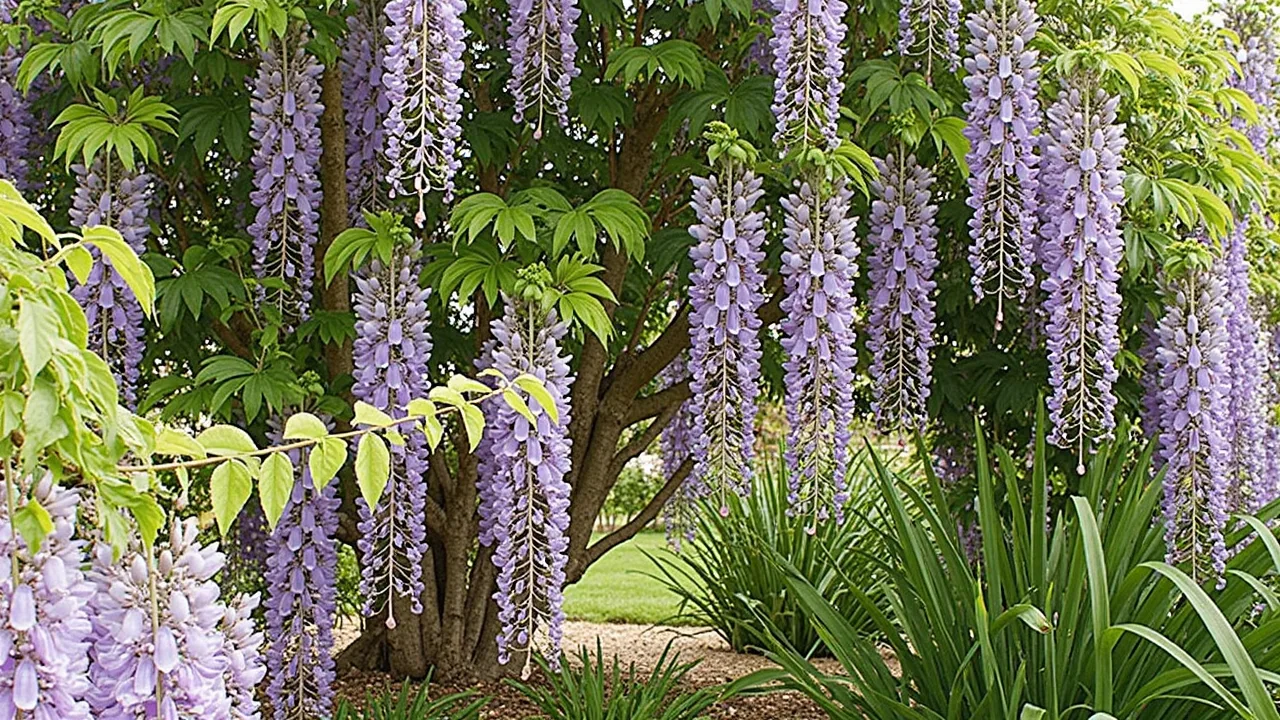
'Amethyst' is distinguished from the typical Wisteria sinensis by the colour and density of its racemes. The flowers open a deep violet-blue with a noticeable reddish-purple keel on the standard petal, giving the truss a richer, more amethyst tone than the paler lilac-blue of seedling Chinese wisterias. Individual racemes are short to medium length and carry a high number of closely spaced, sweetly scented flowers, so the overall effect at peak bloom is a solid curtain of colour rather than a sparse, dangling display.
In habit it is a vigorous twining climber, reaching the same general height as the species (around 9 m or more on a permanent support given enough years), but it is often reported by growers to flower at a younger age than seed-raised plants, including occasionally in its first year after planting from a grafted nursery specimen. Foliage is the typical pinnate, mid-green leaves of W. sinensis, emerging after the flowers and turning yellow in autumn before leaf fall.
Whether 'Amethyst' holds an RHS Award of Garden Merit has varied over the years as the AGM list is reviewed. The current RHS plant finder entries should be checked at the point of sale, as AGM status is periodically rescinded or reinstated and should not be assumed. It is sold as a grafted plant by several UK nurseries, which is the form most likely to flower reliably and true to name.
Growing Notes
'Amethyst' performs best in full sun with the root run kept cool, in a moist but free-draining soil of neutral to slightly acidic pH. It is hardy across most of the UK, coping with the conditions typical of RHS hardiness ratings H5 to H6 (roughly -15 to -20 °C), though late spring frosts can damage opening flower buds in exposed sites, which is one of the reasons its later flowering is a useful trait. Plant against a south- or west-facing wall, pergola post, or strong archway, and tie in the main framework of stems while allowing laterals to develop for spur pruning.
Pruning follows the standard Chinese wisteria method: in late summer, cut the current season's long, whippy growths back to five or six buds from the main stem, then in late winter shorten those same shoots further to two or three buds. This two-stage pruning is what concentrates the plant's energy into flower-bud formation rather than vegetative growth. Feeding with a high-potash fertiliser in spring, and avoiding excess nitrogen, also helps promote flowering over leafy growth.
Best Used For
'Amethyst' suits a sunny house wall, the sunny side of a pergola, or a robust arch over a path where its heavy racemes can hang freely into view. It is a strong choice for cottage garden and traditional English settings, where its colour complements pale stonework, brick, and mixed climbing roses. It is also useful in pollinator plantings, as bumblebees and solitary bees work the flowers readily in May and early June.
It is less suited to small containers long-term, as Chinese wisterias develop substantial woody frameworks and resent being confined, and it is not a plant for dense shade, where flowering will be poor. A mature, well-pruned 'Amethyst' can also produce short stems usable in large arrangements, though cutting significantly reduces the following year's display.
Pests and Diseases
| Problem | Symptoms | Management |
|---|---|---|
| Non-flowering | The plant produces abundant foliage but fails to produce flower racemes. | Ensure full sun, apply sulphate of potash in spring, and prune twice yearly to encourage spurs. |
| Powdery mildew | A white fungal growth appears on leaves, though it can be difficult to see on wisteria. | Improve air circulation by pruning and dispose of infected material promptly. |
| Vine weevil | Notched leaf margins and root damage causing wilting or poor growth in potted plants. | Use nematode treatments in soil or physical barriers to prevent adult beetles from laying eggs. |
| Wisteria scale | Small, immobile insect scales attach to stems and leaves, potentially weakening the plant. | Scrape off visible scales and apply horticultural oil during dormancy if infestation is severe. |
| Bud abortion | Developing flower buds drop or fail to open due to adverse conditions. | Water adequately during July to September when buds form and protect from sharp spring frosts. |
For step-by-step help, read Treating Powdery Mildew. Or browse the full plant problem solver to diagnose an issue by symptom.
As an Amazon Associate, GardenWizz earns from qualifying purchases made through links on this page (including links within the article). This does not affect the price you pay. See our disclaimer for details.