Common Alder
Alnus glutinosa
At a Glance
| Botanical name | Alnus glutinosa |
|---|---|
| Common name(s) | Common Alder |
| Family | Betulaceae |
| Plant type | tree (Deciduous; short-lived pioneer species.) |
| Height × Spread | 2000–3700 cm × — |
| Hardiness | H7 (to -20.0 °C) |
| Position | Full sun |
| Soil | Moist but well-drained; tolerates poor soils; pH Acid, Alkaline, Neutral. |
| Flowering | — |
| Toxicity | — |
| Native range | Most of Europe, southwest Asia and northern Africa |
The common alder is one of Britain's most useful native trees, particularly valued for wet, heavy soils where little else will thrive. It is a deciduous broadleaf species belonging to the birch family (Betulaceae) and is found naturally along rivers, streams, marshes and lowland wetlands throughout the British Isles. Its botanical name glutinosa refers to the stickiness of its young buds and leaves.
Alder grows vigorously when young and is an excellent choice for large gardens, waterlogged sites, hedgerow planting, native woodland schemes and urban planting where its tolerance of pollution is an asset. Its ability to fix atmospheric nitrogen through a symbiotic relationship with Frankia bacteria in its root nodules makes it genuinely soil-improving — a rare and useful trait among British trees.
Overview
The common alder is a medium-to-large deciduous tree native to the British Isles and much of Europe. It is unusual among our native broadleaves for thriving in soils that are periodically waterlogged, and for its nitrogen-fixing root nodules, which allow it to colonise and improve poor ground. Mature trees typically reach 15–20 m in UK gardens, with the tallest specimens attaining around 30 m on damp, fertile sites. Growth is fast in youth — commonly 40–60 cm of height per year — and the tree develops a conical crown that broadens with age.
Ecologically, alder is one of the most valuable native trees for early-season forage: its catkins supply nectar and pollen to bees and other insects in late winter and early spring, and its seeds sustain finches such as siskin and redpoll through the colder months. The wood is pale, close-grained and exceptionally durable underwater, a property that has been exploited since Roman times for piling, sluices and foundations in waterlogged ground.
Appearance
Alder has a distinctive silhouette, with a straight, often leaning trunk and a dense, slightly pendulous crown. The bark is dark grey-brown, smooth when young, and becomes deeply fissured and somewhat corky with age. Branchlets are characteristically sticky to the touch in winter and spring — a useful identification feature and the source of the specific epithet glutinosa.
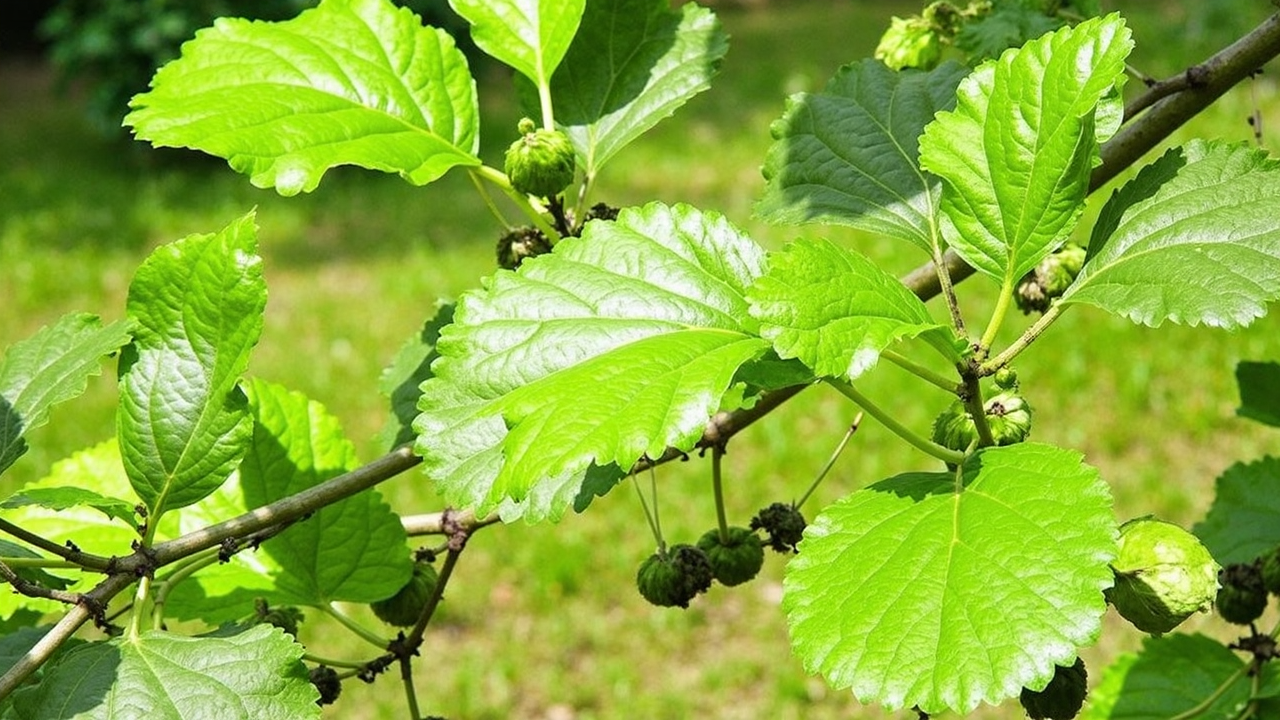
Leaves are rounded to oval, 5–10 cm long, with a serrated margin and a slightly wedge-shaped base. They are deep green and glossy on the upper surface when fully expanded, turning a clear, rather soft yellow in autumn before falling. Young leaves and shoots are noticeably gummy.
Flowers take the form of catkins and appear before the leaves. Male catkins are long (4–8 cm), pendulous and brownish-yellow, hanging in clusters from late February into March. Female catkins are much smaller, upright and reddish, and they develop after pollination into the woody, cone-like fruit (often called "alder cones") that ripen in autumn and persist on the tree through the following winter. These small woody cones are a useful winter identification feature.
Growing Conditions
Alder is one of the most tolerant British native trees when it comes to soil. It is happy in heavy clay, silt, loam and peaty ground, and it is the classic choice for sites with a high water table, including riverbanks, pond margins, ditches and areas that flood in winter. It tolerates a wide pH range, from strongly acid to alkaline. The one condition it will not tolerate indefinitely is drought on free-draining sandy soils, particularly when young.
The tree grows in full sun or partial shade, and it is fully hardy across the UK (RHS hardiness rating H7). It is well suited to the British maritime climate, performing best where summers are cool and soil moisture is reliable. It will also tolerate exposed sites and atmospheric pollution, which is why it is widely used in urban and roadside planting.
Because alder fixes its own nitrogen, it has an edge over most other native broadleaves on poor, degraded ground, including former industrial sites and restored mineral workings. It is frequently included in woodland and riparian planting schemes as a nurse species to improve conditions for slower-growing companions such as oak, ash and beech.
Planting and Care
Planting. The best time to plant bare-root alder is between November and March, when the tree is dormant and the ground is workable. Container-grown stock can be planted at any time of year provided the soil is moist and the tree is watered thoroughly during dry spells in its first season. Prepare a planting pit wider than the rootball, loosen the surrounding soil, and plant at the same depth the tree was growing in the nursery. Apply a thick organic mulch (well-rotted bark or compost) over the root area, keeping it clear of the trunk.
Watering. Young alders need consistent moisture for the first two to three years. Water deeply once a week during dry spells in the first two growing seasons, particularly on lighter soils. Once established, trees in damp ground are largely self-sufficient and need no supplementary watering.
Feeding. A general-purpose slow-release fertiliser applied in spring is beneficial for young trees on very poor soils, but it is rarely necessary on reasonable ground, especially given the species' nitrogen-fixing ability. An annual mulch of compost or leaf mould will generally supply all the nutrients an established alder needs.
Pruning. Alder needs little routine pruning. Remove dead, damaged or crossing branches in late summer (July to early September) when the sap is still flowing but active growth has slowed; this reduces bleeding. Avoid heavy winter pruning, when dormant trees can bleed sap from cuts. If a specimen is to be pollarded or coppiced, carry this out in late winter or early spring and expect vigorous regrowth.
Propagation. Alder is easily raised from seed: collect ripe woody cones in late winter and either sow them directly or extract the small winged seeds and sow in a moist seed compost with gentle bottom heat. Hardwood cuttings, 20–30 cm long, taken in midwinter from vigorous one-year-old shoots, will root reliably when inserted into a sheltered outdoor nursery bed.
Seasonal care. In spring, watch for frost damage to early catkins, though this is rarely a problem in the UK. In summer, check stakes and ties on young trees to prevent wind-rock on the shallow root system. In autumn, rake up fallen leaves only if you wish to keep the area tidy; otherwise leave them in place as a natural mulch.
Common Problems
Alder is generally a healthy and trouble-free tree, but a few problems are worth noting.
Alder canker (Thyronectria hippophae and related species) causes sunken, sometimes oozing cankers on stems and branches, with dieback beyond the affected area. Prune out infected wood promptly, cutting well below the visible canker into healthy tissue, and sterilise tools between cuts. Severely affected trees should be removed.
Phytophthora root rot can occur on sites that are waterlogged and poorly aerated, particularly on compacted soils. Although alder tolerates wet conditions, prolonged stagnation in heavy, airless ground can allow Phytophthora species to take hold. Avoid planting on compacted or contaminated sites, and improve drainage if possible before planting.
Alder leaf beetle (Agelastica alni) is a striking blue-black beetle, around 6–7 mm long, that skeletonises leaves in spring and summer. Heavy infestations can defoliate small specimens, but damage in the UK is rarely serious, and natural predators usually keep populations in check. Removing leaf litter in autumn can help reduce overwintering beetles.
Aphids may colonise tender new growth in late spring but rarely cause lasting harm to mature trees. On small specimen trees, a strong jet of water or encouragement of natural predators (ladybirds, lacewings, hoverflies) is usually sufficient.
Wind-rock. Young alders have a relatively shallow root system and can rock in exposed sites, leading to root damage and a stunted, lopsided form. Stake firmly with a low, short stake for the first two to three years, removing the stake once the tree is established.
Popular Varieties
Several alder cultivars and related species are of horticultural interest, though Alnus glutinosa itself is most often planted as the species or as selected native stock.
- Alnus glutinosa 'Imperialis' — A graceful, slow-growing cultivar with finely cut, almost fern-like leaves, giving a delicate, slightly weeping appearance. Reaches 6–10 m. Best in a sheltered site, as the lacy foliage is more susceptible to wind damage.
- Alnus glutinosa 'Laciniata' — Similar in character to 'Imperialis', with deeply lobed leaves. A useful specimen tree for larger gardens, particularly beside water.
- Alnus glutinosa 'Aurea' — A form with pale yellow-green young foliage and golden-yellow catkins in late winter. Slower-growing than the species and most effective as a specimen in a sheltered, sunny position.
- Alnus incana 'Aurea' (grey alder cultivar) — A related species occasionally sold in UK nurseries, with grey-green foliage and conspicuous golden catkins; tolerates drier and more alkaline soils than the common alder.
- Alnus cordata (Italian alder) — Not a cultivar of A. glutinosa but often considered alongside it; a neat, conical tree with glossy heart-shaped leaves, well suited to urban planting and tolerant of drier conditions. Frequently chosen where a tidy, formal shape is required.
For most garden and landscape purposes, the species Alnus glutinosa, raised from British native stock, is the most appropriate choice and supports local wildlife most effectively.
Pests and Diseases
| Problem | Symptoms | Management |
|---|---|---|
| Phytophthora root rot | Foliage turns brown and wilts, with dieback of branches and dark lesions forming under the bark. | Avoid waterlogged soils, ensure good drainage, and do not move infected soil or plant material. |
| Honey fungus | General decline in vigour with yellowing leaves, often accompanied by white fungal growth at the base. | Improve soil drainage and air circulation; remove infected roots if possible to prevent spread. |
| Alder leaf beetle | Leaves are skeletonised or eaten, leaving only the veins, causing significant defoliation. | Monitor for larvae in spring; severe infestations may require insecticidal treatment. |
| Alder sucker sawfly | Leaves are mined or eaten by caterpillars, leading to reduced vigour and potential suckering. | Encourage natural predators like birds; manual removal of larvae if populations are high. |
| Slugs and snails | Irregular holes in young leaves and seedlings, with slimy trails visible on foliage. | Use physical barriers, copper tape, or approved slug pellets around young plants. |
Quick Care Summary
| Sunlight | Full sun |
|---|---|
| Soil | Moist but well-drained; tolerates poor soils; pH Acid, Alkaline, Neutral. |
| Hardiness | H7 (-20.0 °C) |
| Sow | — |
| Plant | January, February, March, November, December |
| Prune | — |

As an Amazon Associate, GardenWizz earns from qualifying purchases made through the links above. This does not affect the price you pay. See our disclaimer for details.