
Carrot
Daucus carota · wild carrot · European wild carrot · bird's nest · bishop's lace
At a Glance
| Botanical name | Daucus carota |
|---|---|
| Common name(s) | wild carrot, European wild carrot, bird's nest, bishop's lace |
| Family | Apiaceae |
| Plant type | biennial |
| Height × Spread | 30–120 cm × — |
| Hardiness | — |
| Position | Full sun, Partial shade |
| Soil | — |
| Flowering | May–September |
| Toxicity | phytophotodermatitis |
| Native range | temperate regions of the Old World with a number of regional subspecies, and is naturalised widely elsewhere |
Overview
Daucus carota, commonly known as wild carrot, European wild carrot, bird's nest, bishop's lace, carrot flower, or Queen Anne's lace (in North America), is a flowering plant in the Apiaceae family. It is a biennial herbaceous species native to temperate regions of the Old World, featuring multiple regional subspecies. The cultivated carrot is a domesticated form derived from the wild species, specifically the subspecies Daucus carota subsp. sativus.
Botanical Description
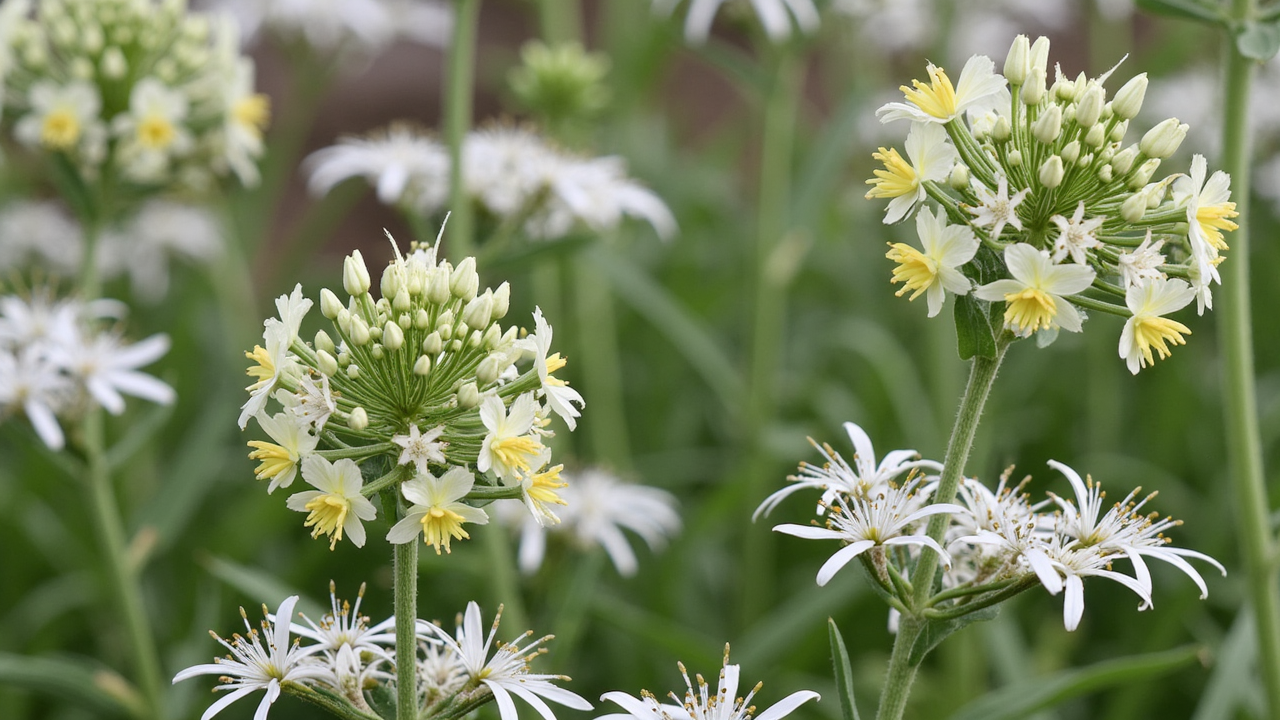
Wild carrot is a herbaceous biennial plant typically growing to 30–100 cm tall, rarely reaching 120 cm. It is somewhat hairy with a stiff, solid stem. The leaves are tripinnate, finely divided, lacy, and triangular, measuring 5–15 cm long, with bristly, alternate segments. The flowers are small, dull white, clustered in flat, dense umbels 8–15 cm wide, often with one pink, reddish, or purple flower (the 'ruby') in the centre. The umbels develop a concave surface as seeds mature. The fruit is a small, dry, bumpy, oval carpel 2.5–4 mm long, with short styles, hooked spines, and protective hairs. The dried umbels may detach and exhibit tumbleweed characteristics.
Origin and Habitat
Native to temperate regions of Europe, northern Africa (south to Ethiopia), and southwestern and eastern Asia, Daucus carota has become naturalised widely in North and South America, Australia, New Zealand, and South Africa. It commonly occurs in meadows, along roadsides, and in unused fields, thriving best in sun to partial shade.
Cultivation
Daucus carota thrives in positions of full sun or partial shade. It is naturalised in many temperate regions globally and is commonly found in disturbed habitats such as roadsides and fields.
Care and Maintenance
No specific care instructions are provided in the source beyond its natural habitat preferences. It persists in the soil seed bank for two to five years.
Uses
The young roots of wild carrot are edible, though they quickly become woody. The flowers may be battered and fried, and the leaves and seeds are also edible. Historically, seeds and flowers have been used as a contraceptive and abortifacient, though scientific evidence of efficacy or safety is lacking. The flowers yield a creamy, off-white dye when used as a dyestuff. As a companion plant, it attracts insects that may benefit nearby crops such as tomatoes and lettuce, though it is considered a noxious weed in some regions (e.g., Iowa, Michigan, Washington).
#DaucusCarota #WildCarrot #QueenAnnesLace #Apiaceae #BiennialPlant #EdibleWeeds #CompanionPlanting #CarrotFamily #OldWorldNative #NaturalisedSpecies
Quick Care Summary
| Sunlight | Full sun, Partial shade |
|---|---|
| Soil | — |
| Hardiness | — |
| Sow | — |
| Plant | — |
| Prune | — |
Facts sourced from Wikipedia / Daucus carota (https://en.wikipedia.org/wiki/Daucus_carota)
As an Amazon Associate, GardenWizz earns from qualifying purchases made through the links above. This does not affect the price you pay. See our disclaimer for details.