Coral Bells
Heuchera · Heuchera
At a Glance
| Botanical name | Heuchera |
|---|---|
| Common name(s) | Coral Bells, Heuchera |
| Family | Saxifragaceae |
| Plant type | perennial (largely evergreen perennial plants) |
| Height × Spread | 20–30 cm × 20–30 cm |
| Hardiness | — |
| Position | Partial shade |
| Soil | moist but well-drained soil |
| Flowering | June–November |
| Toxicity | — |
| Native range | North America (except Heuchera sichotensis native to the Russian Far East) |
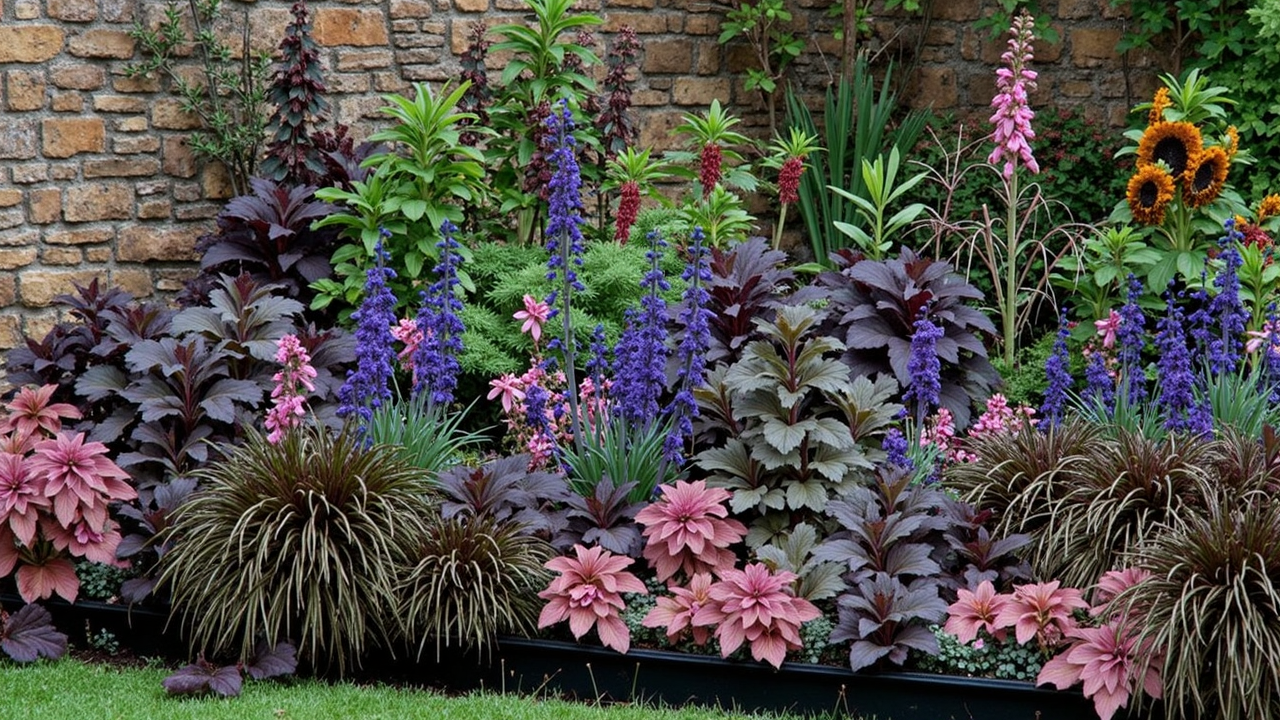
Coral bells (Heuchera) are evergreen, semi-evergreen perennial plants grown primarily for their striking foliage, although they also produce slender flower spikes in summer. Native to North America and members of the saxifrage family (Saxifragaceae), they have become a staple of UK garden design, valued for year-round leaf colour, tolerance of shade, and ease of cultivation in a wide range of conditions. Modern breeding has expanded the foliage palette well beyond the original green-leaved species to include deep purples, silvers, ambers, and near-blacks.
Overview
Heuchera is a genus of around 35–55 species of clump-forming perennials, the most commonly cultivated in British gardens being H. micrantha, H. sanguinea, H. americana, and the very large hybrid group often sold as H. × hybrida or simply "Heuchera". They form low mounds of palmately lobed leaves and, in early to mid-summer, send up wiry stems bearing small, bell-shaped flowers — usually red, pink, or white, depending on the variety. The flowers are attractive to bees and other pollinators.
In UK gardens coral bells are used as ground cover at the front of borders, as edging along paths, in container plantings, and as foliage contrasts against finer-textured plants such as grasses, ferns, and hostas. Their main ornamental feature is the foliage, which retains colour through much of the year in milder regions. They are generally hardy across the UK, though hardiness can vary by cultivar, and container-grown specimens may need winter protection in colder parts of Scotland and northern England.
Appearance
The leaves are the principal feature. They are rounded to heart-shaped, shallowly lobed, often with five to seven shallow lobes and a slightly ruffled or undulating margin. Leaf size varies but typically reaches 5–10 cm across on mature plants. Foliage colour spans a broad range: lime green, golden amber, caramel, bronze, deep burgundy, purple-black, silver, and variegated forms combining two or more of these tones. Many cultivars have a metallic sheen or contrasting veining on the upper leaf surface, with the underside often a paler or contrasting colour.
Plants form a neat, mounded rosette at or just above soil level, spreading slowly by short rhizomes. From this rosette rise slender, wiry flowering stems (called scapes) typically 30–60 cm tall, sometimes taller, bearing panicles of small, pendulous, tubular or bell-shaped flowers. The original H. sanguinea bears bright red flowers, but hybrids now include white, pink, and pale coral forms. The flowering period usually extends from late May or June through July, occasionally into August, with deadheading extending the display modestly.
Growing Conditions
Coral bells grow well throughout most of the UK, performing reliably in USDA-equivalent hardiness zones roughly 4–9 (corresponding to RHS hardiness ratings of H5 to H7, though specific cultivar ratings are not always published). They prefer a position in light dappled shade or with morning sun and afternoon shade, particularly for cultivars with paler or golden foliage, which can scorch in strong midday sun. Dark-leaved cultivars (those in the 'Obsidian' and 'Palace Purple' lineage) tolerate fuller sun better, though even these benefit from some shade in the hottest part of the day in southern England.
Soil should be fertile, humus-rich, and moisture-retentive but freely draining. Heuchera dislike waterlogged conditions, especially in winter, which can cause the crown to rot. They are not particular about pH and grow well in slightly acidic to neutral soils (approximately pH 6.0–7.5). Incorporating well-rotted garden compost or leaf mould at planting improves both structure and moisture retention. In heavy clay soils, grit or sharp sand worked into the planting area helps drainage; in light sandy soils, organic matter is the main requirement.
Container cultivation is straightforward. Use a loam-based compost such as John Innes No. 2 or No. 3 blended with multi-purpose compost, and ensure the pot has reliable drainage. Raise containers on pot feet over winter to prevent waterlogging.
Planting and Care
Plant heuchera in spring or autumn, avoiding the depths of summer and the wettest winter months. Container-grown plants from garden centres can go in at any time the soil is workable. Space plants 30–45 cm apart, depending on the vigour of the cultivar. Water in well and keep moist during the first growing season until established.
Watering: Once established, heuchera are moderately drought-tolerant but perform best with consistent moisture. Water during prolonged dry spells, particularly on light soils. Container plants need regular watering through the growing season.
Feeding: Apply a general-purpose slow-release fertiliser in spring, or top-dress with well-rotted compost or a balanced organic feed. Mulching with compost or leaf mould in spring conserves moisture and gradually improves the soil.
Pruning: Heuchera need little routine pruning. Remove any tatty or damaged leaves as they appear, and cut back the old flowering stems once the display is finished. In early spring, clear away any winter-damaged foliage to make room for the new season's growth.
Propagation: Mature plants develop a woody crown that can rise above soil level after several years, at which point the clump can become leggy and less vigorous. The standard remedy is to lift the plant in spring or early autumn, divide the clump, and replant the youngest, most vigorous sections with the crown set just at soil level. Discard the oldest, woodiest central portion. Division every three to four years keeps plants tidy and productive. Heuchera can also be raised from seed, although named cultivars will not come true.
Seasonal care: Spring is the main period for tidying, feeding, and division. Summer requires watering and deadheading of spent flower stems. In autumn, cut back old flower stems and any badly damaged leaves, but otherwise leave the foliage in place — it provides winter interest and protects the crown. In cold or wet regions, a loose mulch of bark or straw around (not over) the crown offers winter protection. Container-grown specimens benefit from being moved to a sheltered spot in colder districts.
Common Problems
Vine weevil is the most damaging pest of heuchera in the UK. Adult weevils notch the leaf edges, but the real damage is done by the soil-dwelling grubs, which feed on roots and can quickly kill container-grown plants. Plants in containers are particularly vulnerable, and a biological control (nematode application in late summer) or a drench treatment can be used. Inspect pot-grown plants regularly and be alert to wilting, which is often the first visible sign.
Crown rot, caused by various soil fungi and oomycetes, occurs in heavy, wet, or poorly drained soils and during wet winters. The crown turns mushy and the plant collapses. Prevention is mainly a matter of siting plants in well-drained soil, avoiding burying the crown, and lifting and dividing plants before they become woody and prone to rot at the base.
Leaf scorch can affect golden or paler-leaved cultivars in too much direct sun, and frost damage may brown leaf edges in exposed sites. Powdery mildew is occasionally seen, especially in dry conditions, but is rarely serious. Rust (Puccinia heucherae) is a more specific complaint, producing orange pustules on the underside of leaves; affected foliage should be removed and disposed of (not composted).
Heuchera are listed by various sources as potentially toxic to pets if ingested in quantity, but the level of risk is not well documented and they are not classified as highly toxic plants. As a precaution, gardeners with grazing pets or curious dogs may wish to position plants out of reach, but they are not considered a major poisoning hazard in UK gardening references.
Popular Varieties
There is a vast range of heuchera cultivars available in the UK. The following are widely sold, well-established, and reliably available from British nurseries and garden centres. Foliage colour is the principal point of difference; flowering is broadly similar across the group.
'Palace Purple' is one of the oldest and most familiar, with bronze-purple foliage and small white flowers in summer. It has received the Royal Horticultural Society's Award of Garden Merit and remains a popular choice for shaded borders.
'Obsidian' is widely grown for its near-black, glossy foliage, which provides a strong contrast in planting schemes. It retains its dark colour well through the season and tolerates more sun than many paler cultivars.
'Caramel' is a vigorous cultivar with large, apricot- to caramel-coloured leaves that mature to a paler gold. It performs particularly well in partial shade and is among the more sun-tolerant of the lighter-leaved varieties.
'Lime Marmalade' is a bright lime-green cultivar with ruffled foliage, useful for lighting up darker corners of the garden.
'Sugar Plum' bears silvery-purple foliage with darker veining and is noted for good summer colour retention.
'Paris' is grown as much for its flowers as its leaves, producing a long succession of bright coral-pink blooms above green foliage from late spring into autumn.
'Plum Pudding' is a long-established cultivar with metallic plum-purple leaves, often used in mixed container plantings.
'Marmalade' is a larger-leaved cultivar with bronze-amber foliage that deepens in cooler weather.
Specific RHS hardiness ratings for individual cultivars are not always published; gardeners in colder or exposed sites should check the supplier's description when buying.
Pests and Diseases
| Problem | Symptoms | Management |
|---|---|---|
| Vine weevil | Adults chew notches in leaf edges while larvae feed on roots, causing wilting and collapse. | Cover pot compost with gravel to prevent egg-laying and treat with nematodes or systemic insecticides. |
| Heuchera rust | Orange-brown pustules on leaves that may turn brown, shrivel, or develop a shot-hole appearance. | Remove infected foliage and old leaves in autumn to reduce overwintering spores. |
| Frost heaving | Plants are pushed out of the soil by freezing ground, exposing roots to drying winds. | Mound soil around exposed roots in winter and ensure planting in well-drained locations. |
| Leaf scorch | Pale or light-coloured foliage turns brown and crispy at the edges due to excessive sun exposure. | Plant in dappled shade and water regularly during dry spells to prevent stress. |
Quick Care Summary
| Sunlight | Partial shade |
|---|---|
| Soil | moist but well-drained soil |
| Hardiness | — |
| Sow | — |
| Plant | May–September |
| Prune | September–November |
As an Amazon Associate, GardenWizz earns from qualifying purchases made through the links above. This does not affect the price you pay. See our disclaimer for details.